

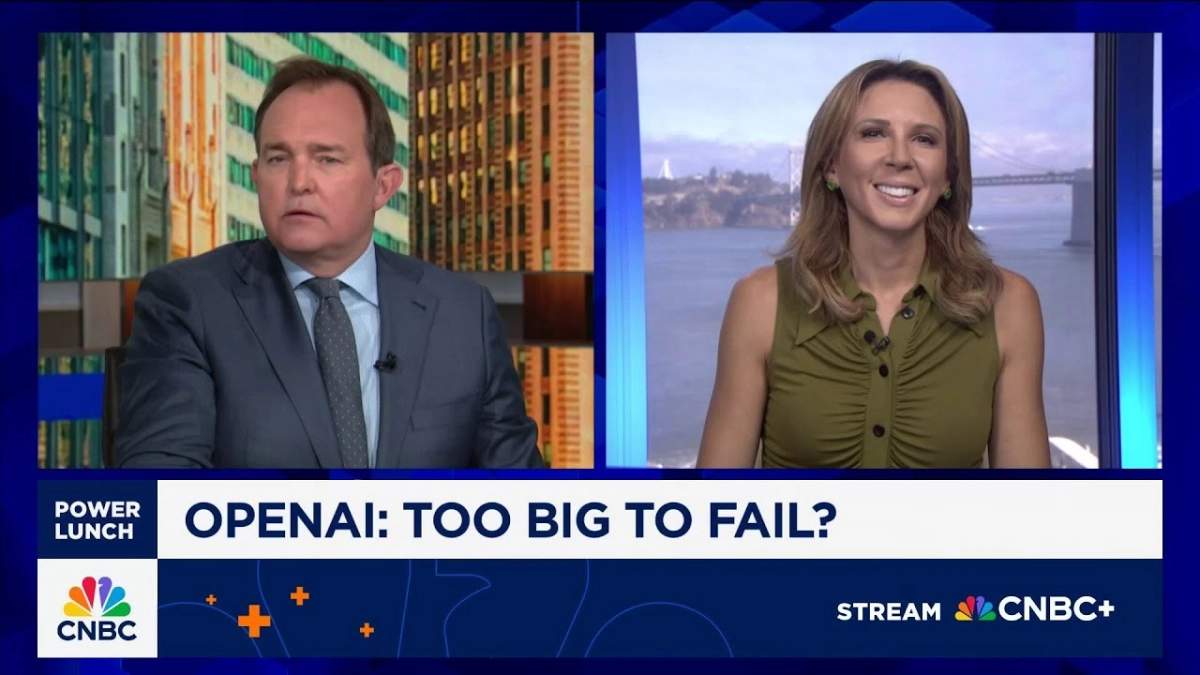
OpenAI's audacious financial projections, targeting $20 billion in annualized revenue this year and "hundreds of billions by 2030," have ignited a fierce debate on Wall Street, challenging the very math underpinning its staggering $1.4 trillion compute bill. This ambitious roadmap, articulated by CEO Sam Altman, suggests a future where the AI giant’s revenue alone will fund its immense infrastructure needs, a claim that has quickly drawn both admiration and intense scrutiny.
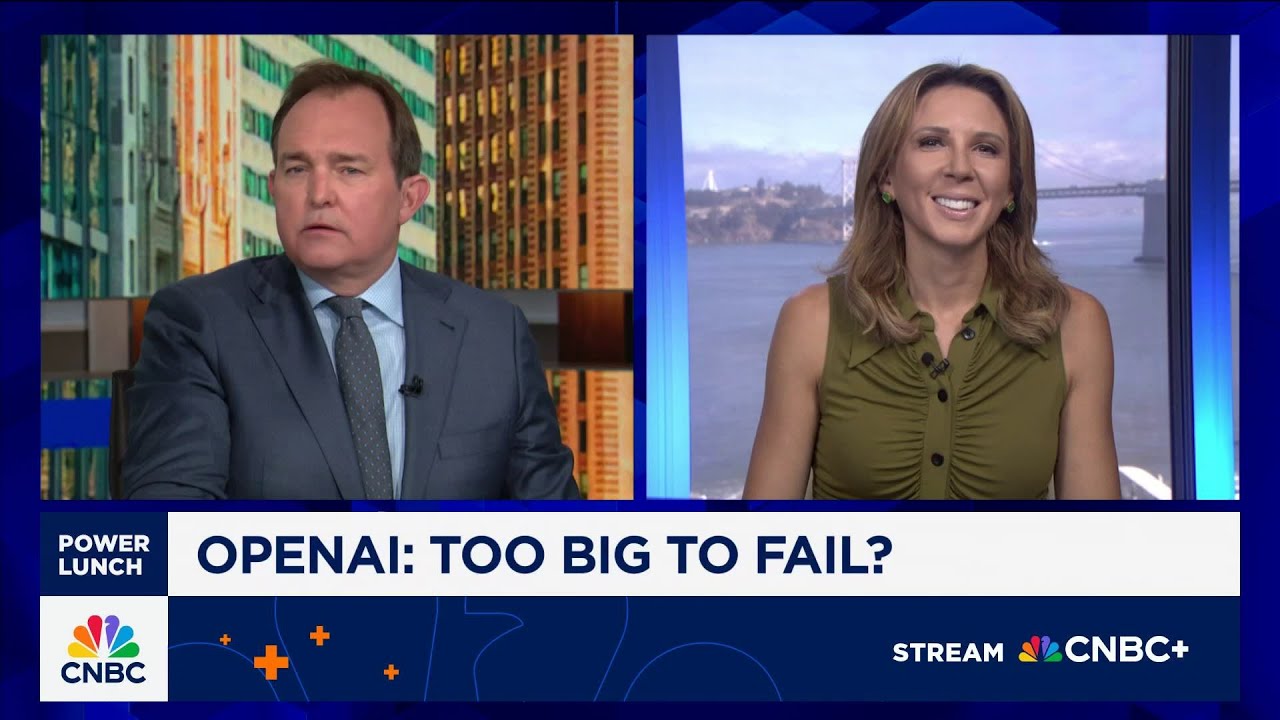
CNBC’s Brian Sullivan, speaking with reporter MacKenzie Sigalos, framed the crux of the investor concern: can OpenAI truly self-fund its massive AI buildout, or is a federal backstop inevitable? This question became particularly acute after OpenAI CFO Sarah Friar floated the idea of U.S. government support for the nation’s AI infrastructure, only for the company to swiftly disavow the comments. The rapid retraction underscores the delicate balance between private sector innovation and public sector reliance, especially in a domain as strategically critical as artificial intelligence.
The notion of a federal bailout for AI was met with immediate and unequivocal rejection from figures like White House AI Czar David Sacks, who tweeted, "There will be no federal bailout for AI. The U.S. has at least 5 major frontier model companies. If one fails, others will take its place." This stance highlights a prevailing sentiment within policy circles: while AI is vital, market competition and private enterprise should drive its development, rather than taxpayer-funded lifelines. The market's reaction was swift, with shares of key partners like Oracle and Broadcom experiencing declines, reflecting a nervousness about the financial stability of the AI ecosystem and the potential for a "single point of failure" if OpenAI's lofty revenue targets are not met.
Brad Gerstner, founder and CEO of Altimeter Capital and an investor in OpenAI, offered a more tempered yet equally demanding view of entrepreneurial ambition. He acknowledged the drive of visionary leaders like Altman, stating, "I like somebody who's feisty and says we're going to blow those numbers away, but at the end of the day they have to deliver." Gerstner's perspective, while supportive of bold goals, implicitly recognizes the immense pressure on OpenAI to translate its technological prowess into tangible, sustainable revenue streams, especially when facing such colossal infrastructure costs. The question isn't merely about ambition, but execution at an unprecedented scale.
The financial entanglement extends deep into the tech supply chain, creating a complex web of interdependence. MacKenzie Sigalos detailed how these deals are "structured in a way that we haven't seen before. Essentially swapping equity for chips." This novel approach sees major players like NVIDIA, AMD, Samsung, SK Hynix, and even cloud giants like Microsoft and Amazon Web Services, entering into massive compute contracts with OpenAI. For instance, Microsoft, a significant investor in OpenAI, reportedly signed a $250 billion cloud compute deal, while Amazon Web Services inked a $38 billion partnership. NVIDIA, a critical chip supplier, has a $100 billion deal, and AMD is granting OpenAI up to a 10% equity stake in exchange for 6 gigawatts of compute power.