

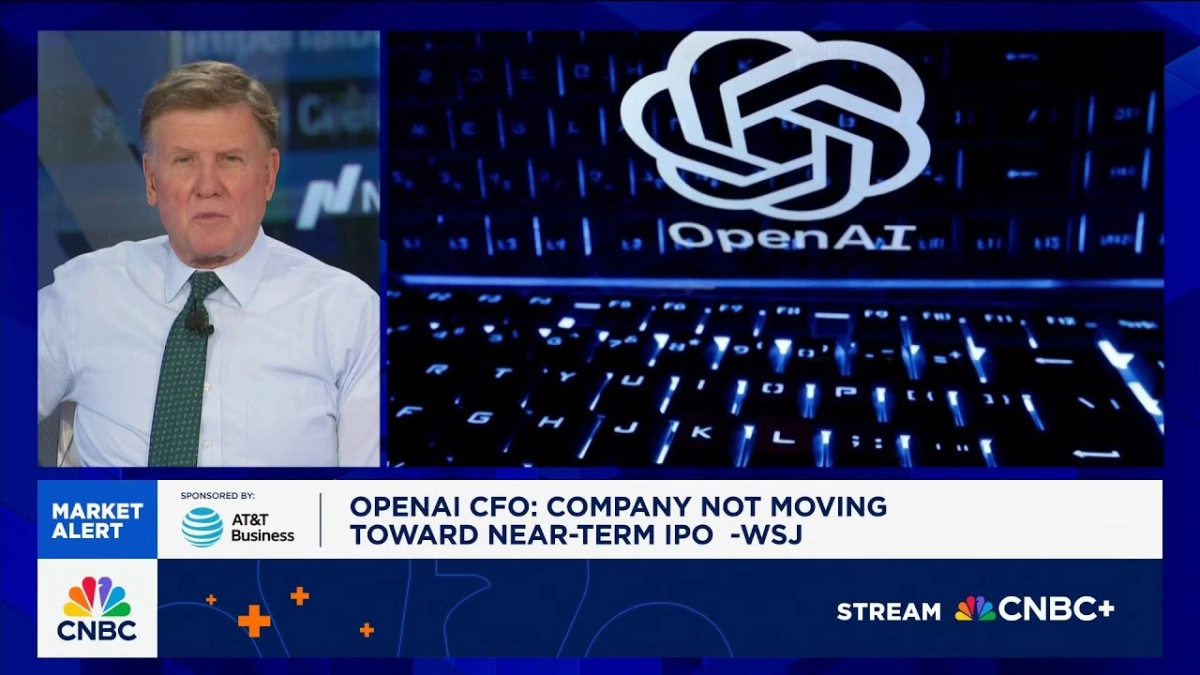
The pursuit of artificial general intelligence, a mission fraught with both immense promise and profound uncertainty, appears to demand a patience that often eludes the public markets. This sentiment was underscored in a recent CNBC segment where Joe Kernen reported on a Wall Street Journal exclusive, detailing remarks from OpenAI CFO Sarah Friar regarding the company's public market intentions, with OpenAI Board of Directors Chairman Bret Taylor slated for further discussion. Friar’s explicit statement that OpenAI is not pursuing a near-term initial public offering sends a clear signal to the tech and investment communities: the company prioritizes its ambitious long-term vision over the immediate pressures of a public listing.
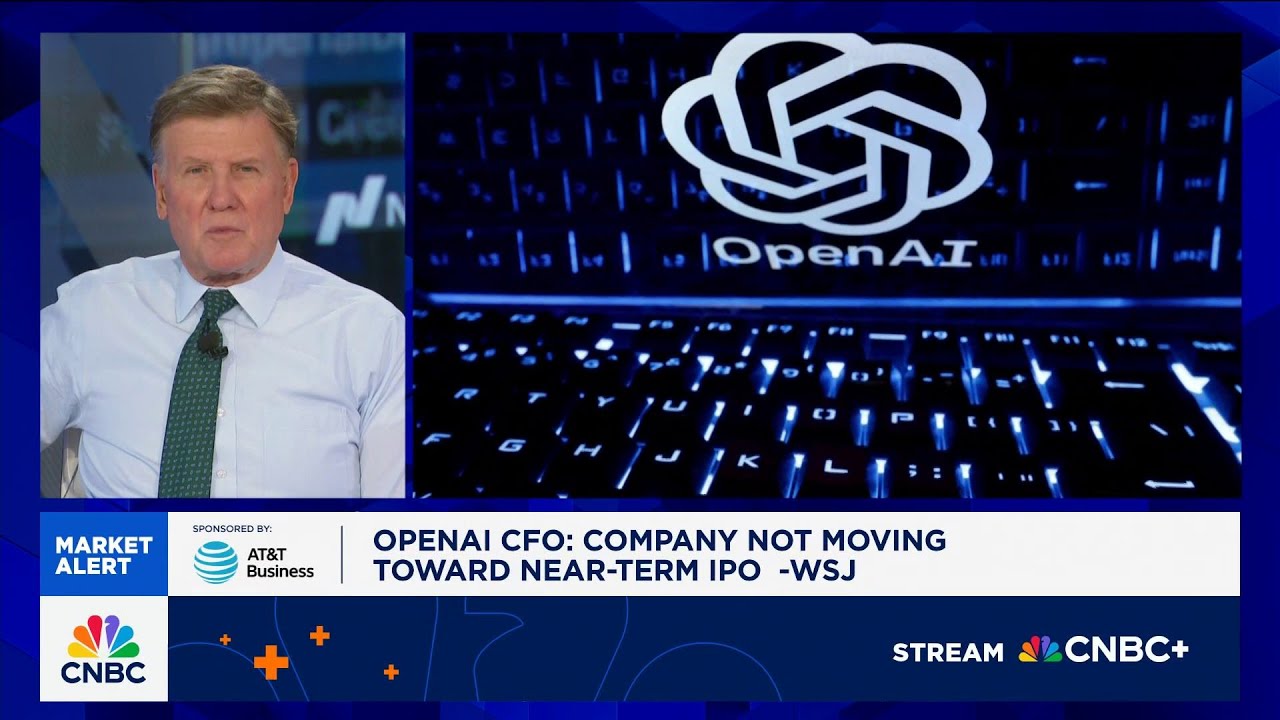
The news arrives amidst a whirlwind of speculation and intense investor interest in foundational AI companies. OpenAI, having established itself as a frontrunner with products like ChatGPT, is undoubtedly one of the most closely watched entities in the technology sector. Previous reports, including one cited by the Wall Street Journal, had suggested a potential public debut as early as 2027, fueling anticipation among those eager to gain exposure to the rapidly expanding AI market. However, Friar’s commentary firmly pushes back against such immediate timelines.
This deliberate deceleration from a potential IPO path can be interpreted as a strategic maneuver, allowing OpenAI to maintain its focus on fundamental research and development in a field that requires colossal capital expenditure and a long investment horizon. Developing advanced AI models and eventually AGI is not a quarterly earnings game; it is a multi-decade endeavor demanding sustained, patient capital and freedom from the relentless scrutiny of public shareholders. Such a strategy enables the company to continue pouring resources into compute infrastructure, talent acquisition, and safety research without having to constantly justify these investments against short-term profitability metrics.
OpenAI’s unique corporate structure, a hybrid of a non-profit parent and a capped-profit subsidiary, further illuminates this strategic patience. This model was specifically designed to attract significant investment while preserving the organization’s core mission of developing safe and beneficial AGI for humanity. Major investors like Microsoft have injected billions, providing the necessary runway without the traditional equity demands of an IPO. “OpenAI CFO Sarah Friar said the company is not working on an IPO in the near-term,” Kernen relayed, a statement that underscores the efficacy of their current funding model in sustaining their capital needs.
The CFO also addressed the company’s recent transition to a "more traditional corporate structure," clarifying that this move does not inherently signal an imminent public offering. This internal restructuring is likely aimed at enhancing operational efficiency, governance, and scalability as the company grows, rather than preparing for a liquidity event. It reflects a maturing organization, but one still firmly anchored to its original, complex mission.
