

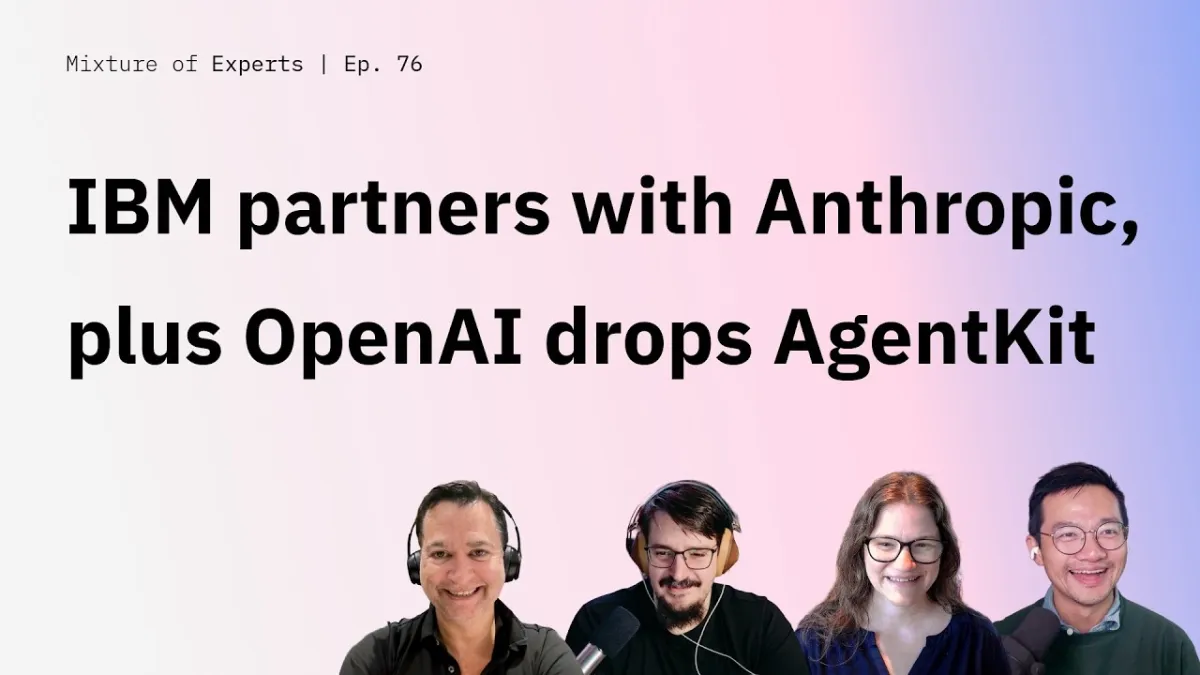
"Machine learning is fundamentally probabilistic and humans are not," stated Olivia Buzek in a recent "Mixture of Experts" podcast. This statement underscores the central theme of the discussion: the inherent limitations of AI and the challenges of completely replacing human expertise.
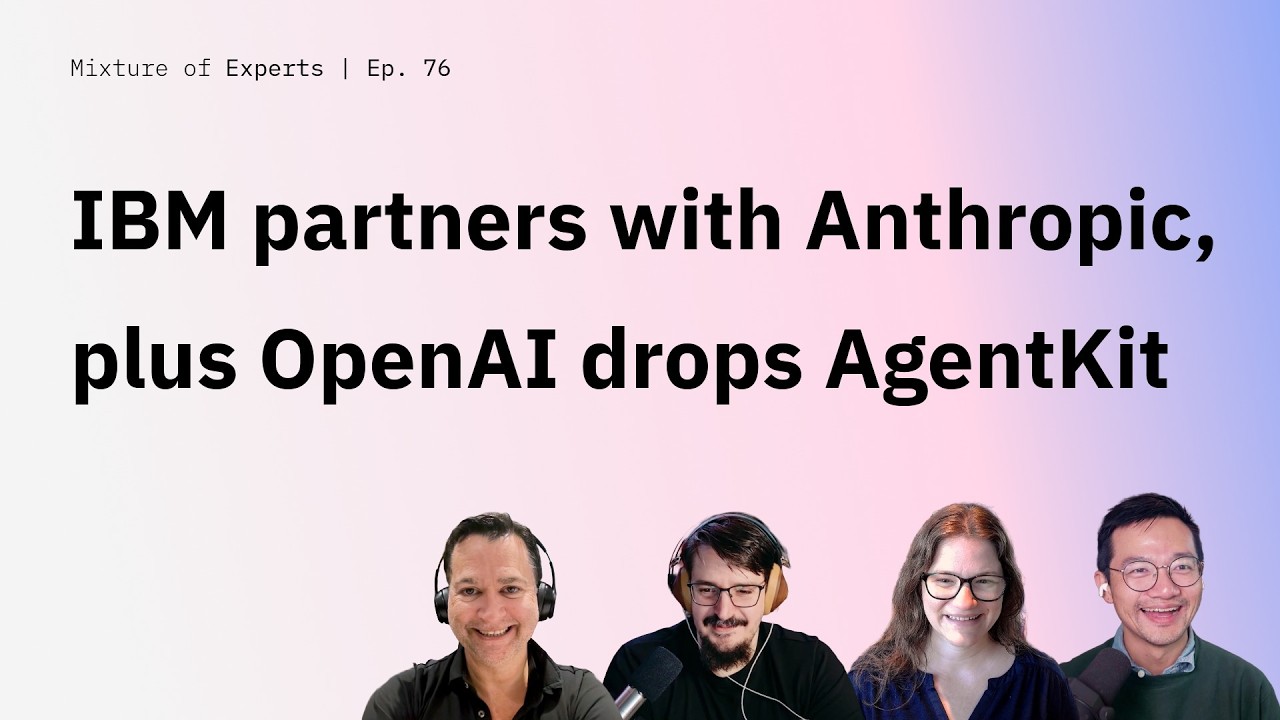
The latest episode of "Mixture of Experts" featured Tim Hwang, Olivia Buzek, Chris Hay, and Mihai Criveti who analyzed OpenAI's new AgentKit, and IBM's partnership with Anthropic. The analysts also discussed modular manifolds and AI's potential role in healthcare.
The discussion highlighted the advancements in AI agents, including OpenAI's AgentKit. This toolkit aims to simplify the development of AI agents, offering "a clean sort of user experience for designing agents," as Tim Hwang noted. However, the conversation quickly shifted to the inherent limitations of these tools.
The partnership between IBM and Anthropic, focused on securing enterprise AI architectures, further emphasizes the need for AI governance. This partnership acknowledges that AI, while powerful, needs careful oversight to ensure responsible and ethical deployment. "There is always going to be an error rate with machine learning techniques as they have currently been developed," Buzek explained.
Chris Hay then delved into the concept of modular manifolds, a complex topic that underscores the intricate mathematical underpinnings of AI. This discussion served as a reminder of the depth and complexity involved in AI development, highlighting that even with advanced tools, a comprehensive understanding of the underlying principles is essential.