

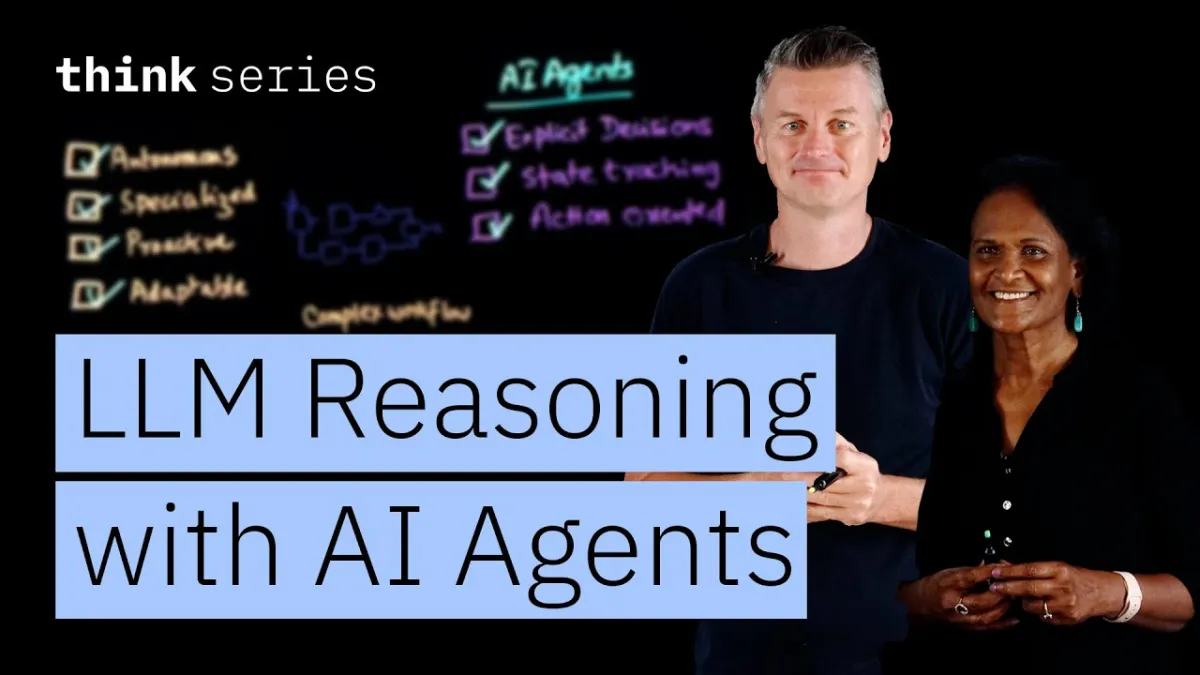
"AI agents are really important," explains Suj Perepa, Distinguished Engineer at IBM, "They take the large language models to the next step of execution: autonomous decision-making and execution." This pivotal shift from mere information retrieval to active problem-solving and task completion formed the core discussion between Perepa and Martin Keen, Master Inventor at IBM, in a recent deep dive into the evolving landscape of artificial intelligence. Their conversation illuminated how AI agents are poised to redefine business processes by transforming complex workflows into autonomous operations.
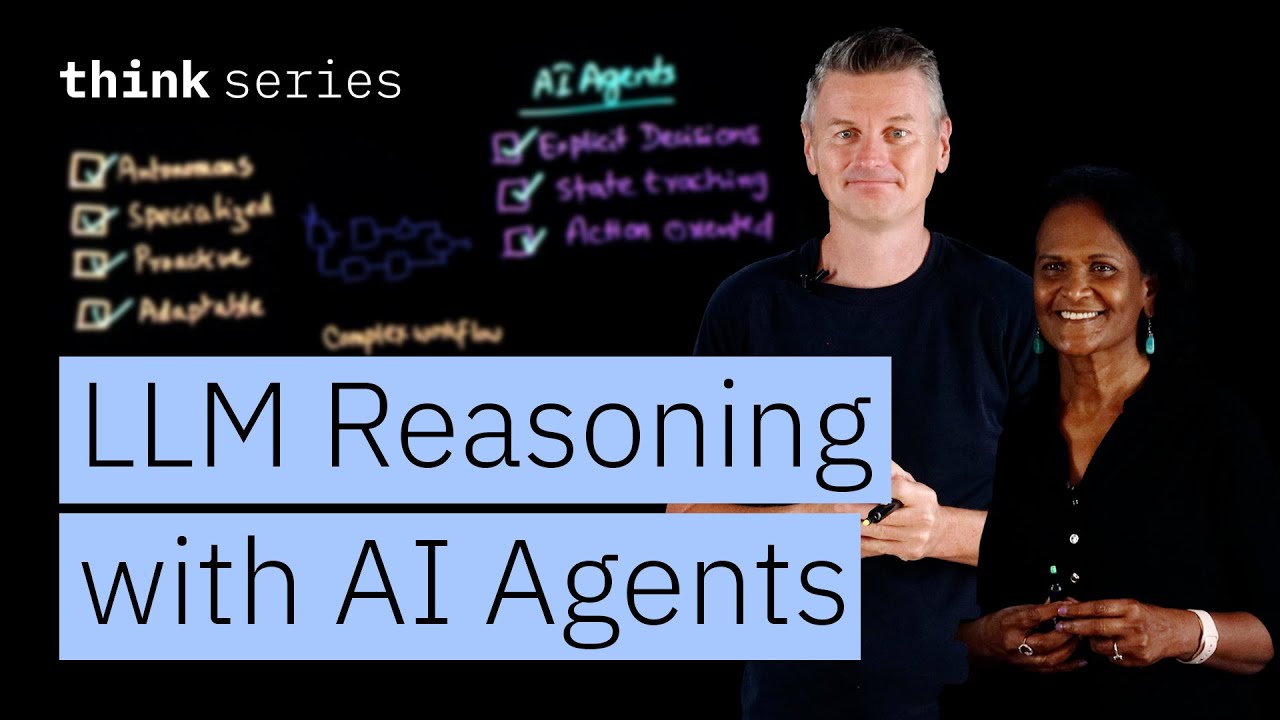
Keen and Perepa underscored that while large language models excel at pattern matching and in-context reasoning, their memory is often implicit and non-persistent, making them primarily task-oriented for singular outputs like translation or summarization. AI agents, however, transcend these limitations by becoming action-oriented entities. They are designed to be autonomous, specialized, proactive, and remarkably adaptable, moving beyond generating text to actively "doing stuff," as Keen succinctly put it.
The essence of an AI agent's capability lies in its ability to integrate with diverse applications and navigate intricate enterprise workflows. These agents leverage external tools, adhere to predefined business rules, and access vast pools of data to make multi-step decisions. This integration allows them to remember previous decisions, track the state of ongoing tasks, and proactively address challenges, facilitating an entirely autonomous operational flow.
A critical distinction in reasoning capabilities separates traditional LLMs from AI agents. Where an LLM’s reasoning is largely informed by pattern matching within its pre-training data and current context window, AI agents engage in explicit decision-making. They track the state of their operations, maintain a persistent memory of past actions and outcomes, and are fundamentally action-oriented. This allows them to execute decisions and accomplish tasks rather than merely generating responses.
The power of AI agents is further amplified by advanced reasoning techniques. Beyond simple conditional logic (if-then-else statements) and heuristics (rules of thumb for quick decisions), agents employ sophisticated strategies like ReAct prompting, self-reflection, and multi-agent collaboration. ReAct, standing for Reason and Act, is a particularly potent variation of chain-of-thought prompting. It enables an agent to not only reason through a problem but also to immediately act on its conclusions, constantly refining its approach based on the evolving situation.