
Omar Sanseviero on Google's AI Strategy

Omar Sanseviero from Google DeepMind discusses Google's AI strategy, focusing on efficient models, multimodality, and open innovation in AI.

7 min read
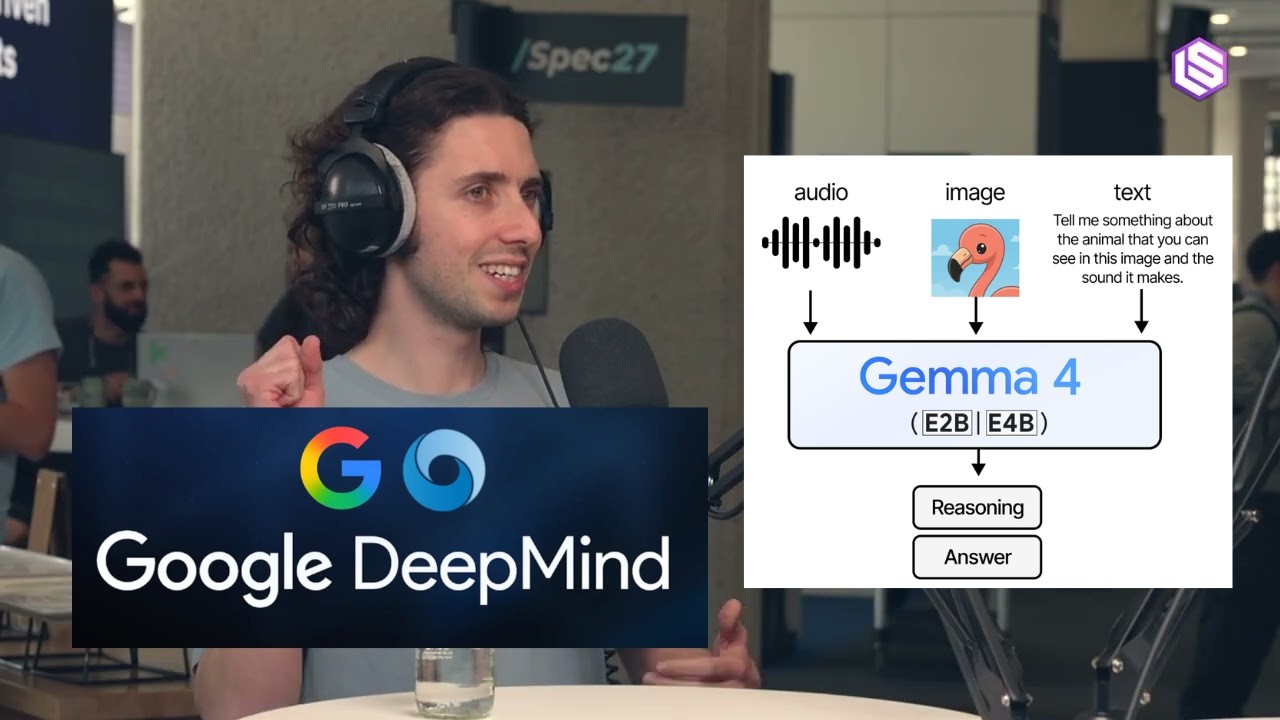
Omar Sanseviero speaking into a microphone with headphones on.
Latent Space

Omar Sanseviero, Lead of Developer Experience at Google DeepMind, recently shared insights into Google's evolving AI strategy, highlighting the company's commitment to pushing the boundaries of AI research and development. Speaking on the Latent Space podcast, Sanseviero outlined key areas of focus, including the creation of more efficient and adaptable AI models.

Omar Sanseviero on Google's AI Strategy - Latent Space
Omar Sanseviero on Google's AI Strategy — from Latent Space

Visual TL;DR. Google's AI Strategy focuses on Efficient Models. Efficient Models aims for Intelligence per Parameter. Efficient Models enables On-Device AI. Google's AI Strategy includes Multimodality. Google's AI Strategy promotes Open Innovation. Efficient Models leads to Future of AI. Multimodality shapes Future of AI.

  1. Google's AI Strategy: Omar Sanseviero discusses pushing AI research and development boundaries
  2. Efficient Models: developing smaller, highly capable models for wider deployment
  3. Intelligence per Parameter: maximizing model effectiveness relative to size and computational needs
  4. On-Device AI: optimizing AI for low latency and enhanced privacy applications
  5. Multimodality: integrating diverse data types like text, images, and audio
  6. Open Innovation: fostering collaboration and sharing advancements in AI development
  7. Future of AI: Google's role in shaping the next generation of AI
Visual TL;DR
Visual TL;DR — startuphub.ai Google's AI Strategy focuses on Efficient Models. Efficient Models enables On-Device AI. Google's AI Strategy includes Multimodality. Efficient Models leads to Future of AI. Multimodality shapes Future of AI focuses on enables includes leads to shapes Google's AI Strategy Efficient Models On-Device AI Multimodality Future of AI From startuphub.ai · The publishers behind this format
Visual TL;DR — startuphub.ai Google's AI Strategy focuses on Efficient Models. Efficient Models enables On-Device AI. Google's AI Strategy includes Multimodality. Efficient Models leads to Future of AI. Multimodality shapes Future of AI focuses on enables includes leads to shapes Google's AIStrategy Efficient Models On-Device AI Multimodality Future of AI From startuphub.ai · The publishers behind this format
Visual TL;DR — startuphub.ai Google's AI Strategy focuses on Efficient Models. Efficient Models enables On-Device AI. Google's AI Strategy includes Multimodality. Efficient Models leads to Future of AI. Multimodality shapes Future of AI focuses on enables includes leads to shapes Google's AI Strategy Omar Sanseviero discusses pushing AIresearch and development boundaries Efficient Models developing smaller, highly capable modelsfor wider deployment On-Device AI optimizing AI for low latency and enhancedprivacy applications Multimodality integrating diverse data types like text,images, and audio Future of AI Google's role in shaping the nextgeneration of AI From startuphub.ai · The publishers behind this format
Visual TL;DR — startuphub.ai Google's AI Strategy focuses on Efficient Models. Efficient Models enables On-Device AI. Google's AI Strategy includes Multimodality. Efficient Models leads to Future of AI. Multimodality shapes Future of AI focuses on enables includes leads to shapes Google's AIStrategy Omar Sansevierodiscusses pushingAI research and… Efficient Models developing smaller,highly capablemodels for wider… On-Device AI optimizing AI forlow latency andenhanced privacy… Multimodality integrating diversedata types liketext, images, and… Future of AI Google's role inshaping the nextgeneration of AI From startuphub.ai · The publishers behind this format
Visual TL;DR — startuphub.ai Google's AI Strategy focuses on Efficient Models. Efficient Models aims for Intelligence per Parameter. Efficient Models enables On-Device AI. Google's AI Strategy includes Multimodality. Google's AI Strategy promotes Open Innovation. Efficient Models leads to Future of AI. Multimodality shapes Future of AI focuses on aims for enables includes promotes leads to shapes Google's AI Strategy Omar Sanseviero discusses pushing AIresearch and development boundaries Efficient Models developing smaller, highly capable modelsfor wider deployment Intelligence per Parameter maximizing model effectiveness relative tosize and computational needs On-Device AI optimizing AI for low latency and enhancedprivacy applications Multimodality integrating diverse data types like text,images, and audio Open Innovation fostering collaboration and sharingadvancements in AI development Future of AI Google's role in shaping the nextgeneration of AI From startuphub.ai · The publishers behind this format
Visual TL;DR — startuphub.ai Google's AI Strategy focuses on Efficient Models. Efficient Models aims for Intelligence per Parameter. Efficient Models enables On-Device AI. Google's AI Strategy includes Multimodality. Google's AI Strategy promotes Open Innovation. Efficient Models leads to Future of AI. Multimodality shapes Future of AI focuses on aims for enables includes promotes leads to shapes Google's AIStrategy Omar Sansevierodiscusses pushingAI research and… Efficient Models developing smaller,highly capablemodels for wider… Intelligence perParameter maximizing modeleffectivenessrelative to size… On-Device AI optimizing AI forlow latency andenhanced privacy… Multimodality integrating diversedata types liketext, images, and… Open Innovation fosteringcollaboration andsharing… Future of AI Google's role inshaping the nextgeneration of AI From startuphub.ai · The publishers behind this format

From Large-Scale Models to Efficient Deployment

Sanseviero detailed Google DeepMind's efforts to move beyond massive, computationally intensive models. The strategy involves developing smaller, yet highly capable models that can be deployed across a wider range of devices and scenarios. This includes optimizing AI for on-device inference, a critical step for applications requiring low latency and enhanced privacy.

Related startups

He elaborated on the concept of "intelligence per parameter," suggesting that the goal is to maximize the effectiveness of AI models relative to their size and computational requirements. This focus on efficiency is crucial for democratizing AI and making its benefits accessible to a broader audience and a wider array of hardware.

The Rise of Multimodality and Open Innovation

A significant theme in Google's AI strategy, as described by Sanseviero, is the advancement of multimodal AI. These models are designed to understand and process information from various sources, such as text, images, audio, and video, simultaneously. This capability is seen as key to developing more sophisticated and human-like AI systems.

Sanseviero also emphasized Google's open innovation approach, highlighting the importance of collaboration with external researchers and the broader AI community. This collaborative spirit extends to working with open-source partners and contributing to the development of shared AI resources and benchmarks.

Addressing the Challenges of On-Device AI

The conversation touched upon the inherent challenges of running advanced AI models on consumer devices. Sanseviero noted that while large models offer significant capabilities, their computational demands often make them unsuitable for direct deployment on smartphones or embedded systems. This has driven research into techniques like quantization and model distillation to create smaller, more efficient versions without sacrificing performance.

He further explained that the development of specialized architectures and training methodologies is crucial for optimizing AI models for specific hardware constraints. This includes exploring methods to reduce memory footprint and computational overhead, enabling AI to run effectively even on resource-limited devices.

The Future of AI and Google's Role

Sanseviero expressed optimism about the future of AI, particularly in its potential to revolutionize various industries and improve human lives. He suggested that the ongoing advancements in AI research, coupled with the increasing availability of powerful yet efficient models, will unlock new applications and possibilities.

The strategy involves not only pushing the frontiers of AI research but also ensuring that these advancements are translated into practical, accessible tools for developers and users. This includes building robust infrastructure and developer tools that empower the community to build and deploy AI-powered applications.

Sanseviero concluded by emphasizing the dynamic nature of the AI field and Google DeepMind's continued commitment to innovation and collaboration in shaping the future of artificial intelligence.

© 2026 StartupHub.ai. All rights reserved. Do not enter, scrape, copy, reproduce, or republish this article in whole or in part. Use as input to AI training, fine-tuning, retrieval-augmented generation, or any machine-learning system is prohibited without written license. Substantially-similar derivative works will be pursued to the fullest extent of applicable copyright, database, and computer-misuse laws. See our terms.