


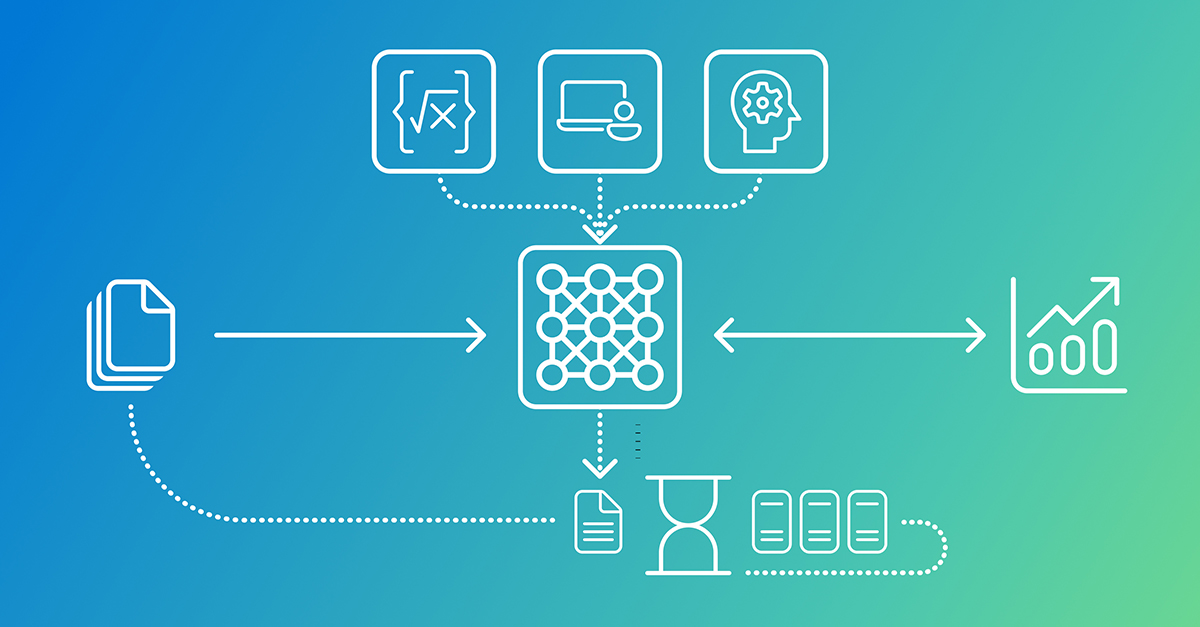
Microsoft Research has unveiled Phi-4-reasoning-vision-15B, a 15 billion parameter open-weight multimodal model designed for efficient reasoning across vision and language tasks. This compact AI model, available on platforms like HuggingFace and GitHub, aims to deliver strong performance without the substantial compute and data demands of larger models. It excels in areas like math and science reasoning, and understanding user interfaces, positioning itself as a competitive option in the rapidly evolving AI landscape. According to Microsoft Research, the model provides an appealing value proposition, pushing the Pareto frontier between accuracy and computational cost.
The development of Phi-4-reasoning-vision-15B addresses a growing trend towards larger, more resource-intensive models. Microsoft Research emphasizes a counter-movement focused on smaller, efficient models, building on the success of its previous Phi family of language models. This new multimodal offering demonstrates that capable vision-language tasks, including image captioning, document reading, and interactive screen understanding, can be achieved without relying on massive datasets or complex architectures. The goal is to enable structured reasoning on more accessible hardware.
Efficiency Through Design and Data
Phi-4-reasoning-vision-15B was trained using significantly less data than many comparable open-weight models, consuming 200 billion tokens of multimodal data. This efficiency was achieved through strategic design choices. The team adopted a mid-fusion architecture, which integrates pre-trained vision encoders with large language models. This approach offers a practical balance for performance while managing computational resources.
A critical aspect was the vision encoder. The researchers opted for the SigLIP-2 Naflex variant, finding that dynamic resolution encoders significantly improve performance, particularly on high-resolution and information-dense images like screenshots. This allows the model to better extract and utilize relevant perceptual details, a common challenge for other multimodal models.
Lessons in Data Curation
Data quality and composition were paramount. Microsoft Research meticulously filtered and improved open-source datasets, supplemented with high-quality internal data and targeted acquisitions. This process involved identifying and correcting errors, regenerating responses using advanced models like GPT-4o, and repurposing high-quality images to create new data formats. The strategy focused on enhancing existing data through reformatting, diversification, and generating detailed descriptions, especially for math and science content.