

AI Pioneers Debate Transformer's Future, Urge New Architectures

AI pioneers Jerry Tworek and Rohan Anil discuss the limitations of current Transformer architectures and the need for new models that can learn from real-world experience.

8 min read
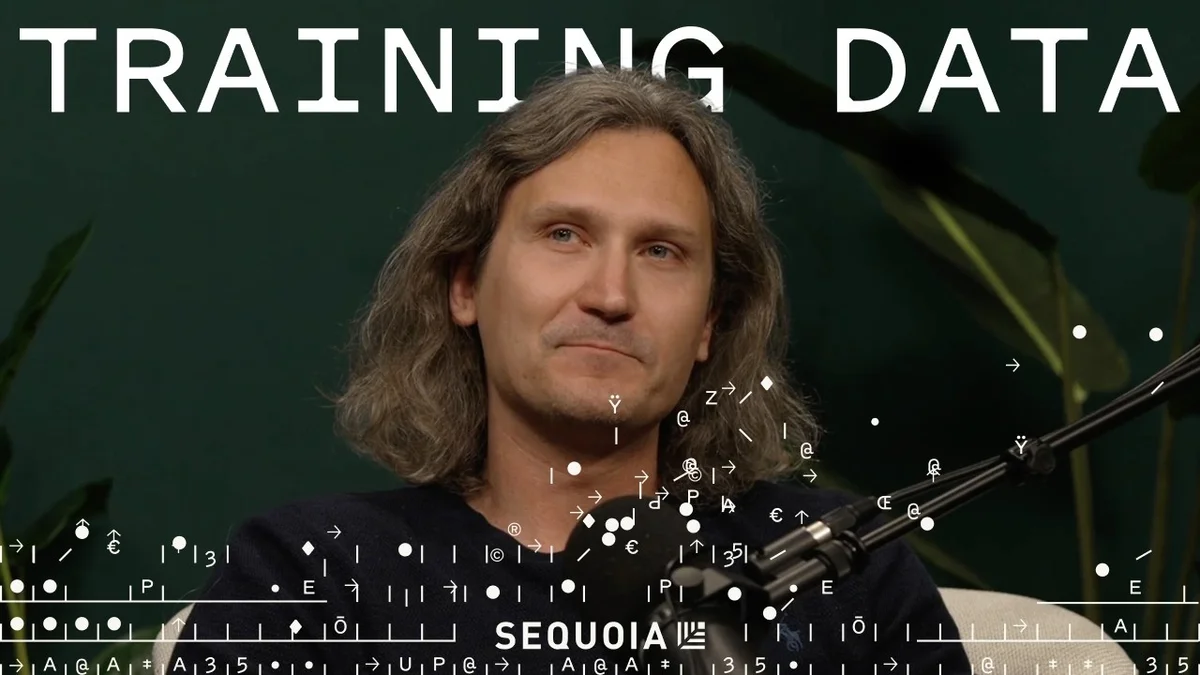
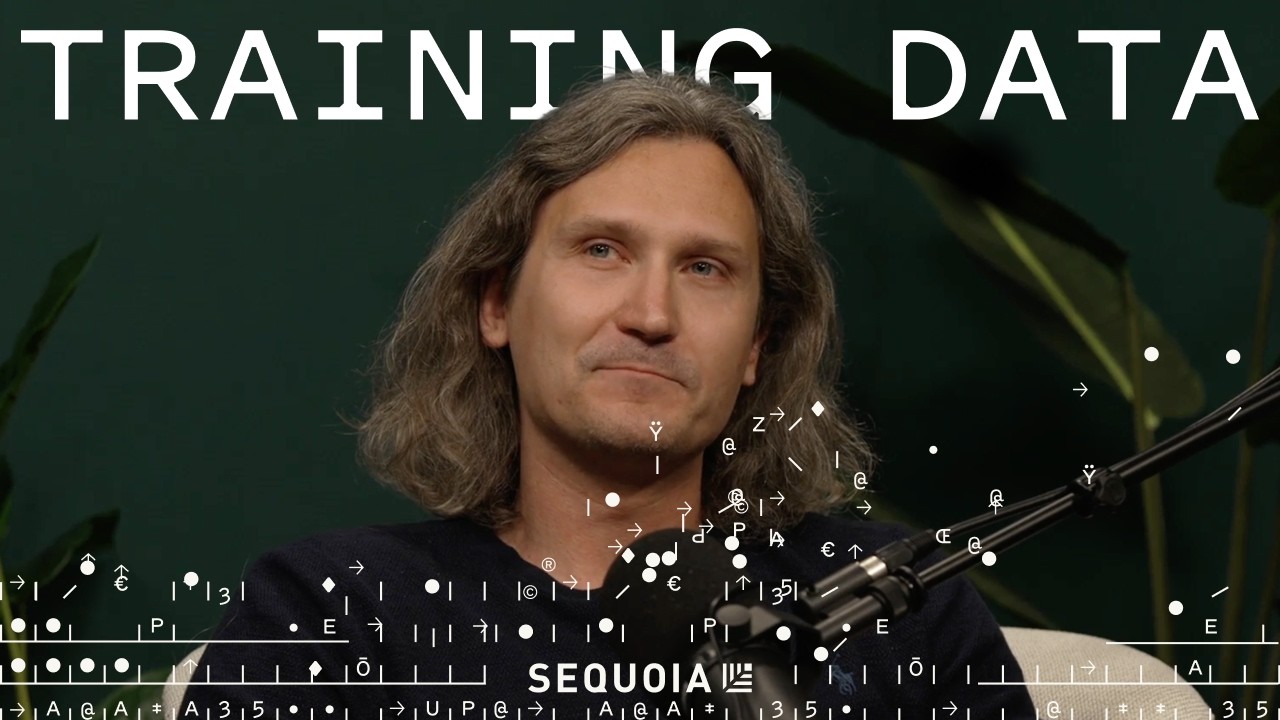
Jerry Tworek and Rohan Anil discussing AI architecture
Sequoia Capital

Visual TL;DR. AI pioneers debate discuss Transformer architecture limits. Transformer architecture limits leads to Architecture is bottleneck. Architecture is bottleneck requires Need new architectures. Need new architectures enables Beyond static data. AI pioneers debate are Core Animation founders. Need new architectures achieves Future AI advancements.

  1. Transformer architecture limits: current Transformer architecture approaching its limits for AI advancements
  2. AI pioneers debate: Jerry Tworek and Rohan Anil discuss current AI development trajectory
  3. Architecture is bottleneck: the architecture itself is now the primary constraint to smarter systems
  4. Need new architectures: urge new models that can learn from real-world experience
  5. Beyond static data: models need to learn at test time, not just from pre-training
  6. Core Animation founders: Tworek and Anil from OpenAI, Gemini, Google Brain backgrounds
  7. Future AI advancements: new architectures will enable more capable and intelligent AI systems
Visual TL;DR
Visual TL;DR, startuphub.ai AI pioneers debate discuss Transformer architecture limits. Need new architectures achieves Future AI advancements discuss achieves Transformer architecture limits AI pioneers debate Need new architectures Future AI advancements From startuphub.ai · The publishers behind this format
Visual TL;DR, startuphub.ai AI pioneers debate discuss Transformer architecture limits. Need new architectures achieves Future AI advancements discuss achieves Transformerarchitecture… AI pioneersdebate Need newarchitectures Future AIadvancements From startuphub.ai · The publishers behind this format
Visual TL;DR, startuphub.ai AI pioneers debate discuss Transformer architecture limits. Need new architectures achieves Future AI advancements discuss achieves Transformer architecture limits current Transformer architectureapproaching its limits for AI advancements AI pioneers debate Jerry Tworek and Rohan Anil discusscurrent AI development trajectory Need new architectures urge new models that can learn fromreal-world experience Future AI advancements new architectures will enable more capableand intelligent AI systems From startuphub.ai · The publishers behind this format
Visual TL;DR, startuphub.ai AI pioneers debate discuss Transformer architecture limits. Need new architectures achieves Future AI advancements discuss achieves Transformerarchitecture… current Transformerarchitectureapproaching its… AI pioneersdebate Jerry Tworek andRohan Anil discusscurrent AI… Need newarchitectures urge new modelsthat can learn fromreal-world… Future AIadvancements new architectureswill enable morecapable and… From startuphub.ai · The publishers behind this format
Visual TL;DR, startuphub.ai AI pioneers debate discuss Transformer architecture limits. Transformer architecture limits leads to Architecture is bottleneck. Architecture is bottleneck requires Need new architectures. Need new architectures enables Beyond static data. AI pioneers debate are Core Animation founders. Need new architectures achieves Future AI advancements discuss leads to requires enables are achieves Transformer architecture limits current Transformer architectureapproaching its limits for AI advancements AI pioneers debate Jerry Tworek and Rohan Anil discusscurrent AI development trajectory Architecture is bottleneck the architecture itself is now the primaryconstraint to smarter systems Need new architectures urge new models that can learn fromreal-world experience Beyond static data models need to learn at test time, notjust from pre-training Core Animation founders Tworek and Anil from OpenAI, Gemini,Google Brain backgrounds Future AI advancements new architectures will enable more capableand intelligent AI systems From startuphub.ai · The publishers behind this format
Visual TL;DR, startuphub.ai AI pioneers debate discuss Transformer architecture limits. Transformer architecture limits leads to Architecture is bottleneck. Architecture is bottleneck requires Need new architectures. Need new architectures enables Beyond static data. AI pioneers debate are Core Animation founders. Need new architectures achieves Future AI advancements discuss leads to requires enables are achieves Transformerarchitecture… current Transformerarchitectureapproaching its… AI pioneersdebate Jerry Tworek andRohan Anil discusscurrent AI… Architecture isbottleneck the architectureitself is now theprimary constraint… Need newarchitectures urge new modelsthat can learn fromreal-world… Beyond staticdata models need tolearn at test time,not just from… Core Animationfounders Tworek and Anilfrom OpenAI,Gemini, Google… Future AIadvancements new architectureswill enable morecapable and… From startuphub.ai · The publishers behind this format

In a candid discussion that offers a glimpse into the future of artificial intelligence, the founders of Core Animation, Jerry Tworek and Rohan Anil, have articulated a contrarian view on the current trajectory of AI development. Speaking on a recent podcast, the duo, who boast an impressive pedigree from leading AI research labs like OpenAI, Gemini, and Google Brain, suggested that the Transformer architecture, while foundational to recent AI advancements, may be approaching its limits.
AI Pioneers Debate Transformer's Future, Urge New Architectures - Sequoia Capital
AI Pioneers Debate Transformer's Future, Urge New Architectures — from Sequoia Capital

The Bottleneck of Architecture

Tworek, formerly VP at OpenAI, expressed his belief that the AI community has become exceptionally adept at training large models using established methods like pre-training and reinforcement learning at scale. However, he posited that the architecture itself is now the primary constraint. "I think at this moment, what the bottleneck is to better models and to smarter systems is the architecture itself," Tworek stated. He criticized the prevalent trend of optimizing existing Transformer models for cost and efficiency, arguing for a shift towards enhancing their fundamental capabilities and expressiveness.

Anil, a former pre-training lead at Gemini and a key figure in AI research at Google Brain, echoed this sentiment, drawing parallels to human learning. He contrasted the iterative, trial-and-error nature of learning through experience, akin to playing football, with the deep conceptual understanding required in mathematics. Both, he noted, are forms of learning from experience, but vastly different.

Beyond Static Data: Learning at Test Time

A significant point of discussion revolved around the limitations of current models in adapting to the messy and dynamic nature of the real world. Tworek shared his personal disappointment stemming from the realization that scaling up reinforcement learning, which he once believed was the direct path to Artificial General Intelligence (AGI), hadn't fully solved real-world tasks. He observed that benchmarks often mirror training data, failing to capture the true complexity of real-world use cases.

This disconnect, they argued, necessitates models that can learn continuously and adapt at test time, learning directly from users and their specific data. "My conclusion is we need to have models that learn at test time. We need to have models that learn with users on their data, on their real-world tasks, on the real world distribution," Tworek explained. He highlighted the limitations of current adaptation methods like in-context learning and fine-tuning, pointing to issues like catastrophic forgetting and data efficiency constraints.

The Transformer's Legacy and the Path Forward

Tworek acknowledged the immense value and scalability that Transformers brought to AI, enabling the current era of large language models. He noted that while technically other architectures like LSTMs could have been scaled, Transformers proved more economically viable and performed better. "The majestic thing about Transformer... is that Transformers are economically valuable. The training them, the cost of training them is lower than the revenue that they generate," he said.

However, he stressed that this success shouldn't preclude exploration of new avenues. The founders believe that much architectural research has been conducted at too small a scale, hindering the discovery of potentially superior models. They emphasized the need for a baseline level of computational power to even reveal the capabilities of new architectures, a hurdle that often prevents innovative ideas from emerging.

The Case for Core Animation

Addressing the question of why they chose to launch a company rather than pursue this research within a large lab, the founders pointed to market dynamics. They believe that major labs, focused on scaling profitable existing technologies like Transformers to maintain market dominance, are less incentivized to explore alternative, potentially disruptive architectures. Meanwhile, smaller labs often try to replicate the success of larger ones, creating a lack of diversity in research paths.

Core Animation aims to fill this gap by focusing on fundamental architectural research and developing models capable of learning more effectively and over longer horizons, potentially leading to more adaptable and truly intelligent systems. StartupHub.ai data indicates that while Codex, a related technology from OpenAI, scores 47/100, the Transformer architecture itself scores 35/100, suggesting that while Transformers have been impactful, there is indeed room for architectural evolution.

© 2026 StartupHub.ai. All rights reserved. Do not enter, scrape, copy, reproduce, or republish this article in whole or in part. Use as input to AI training, fine-tuning, retrieval-augmented generation, or any machine-learning system is prohibited without written license. Substantially-similar derivative works will be pursued to the fullest extent of applicable copyright, database, and computer-misuse laws. See our terms.