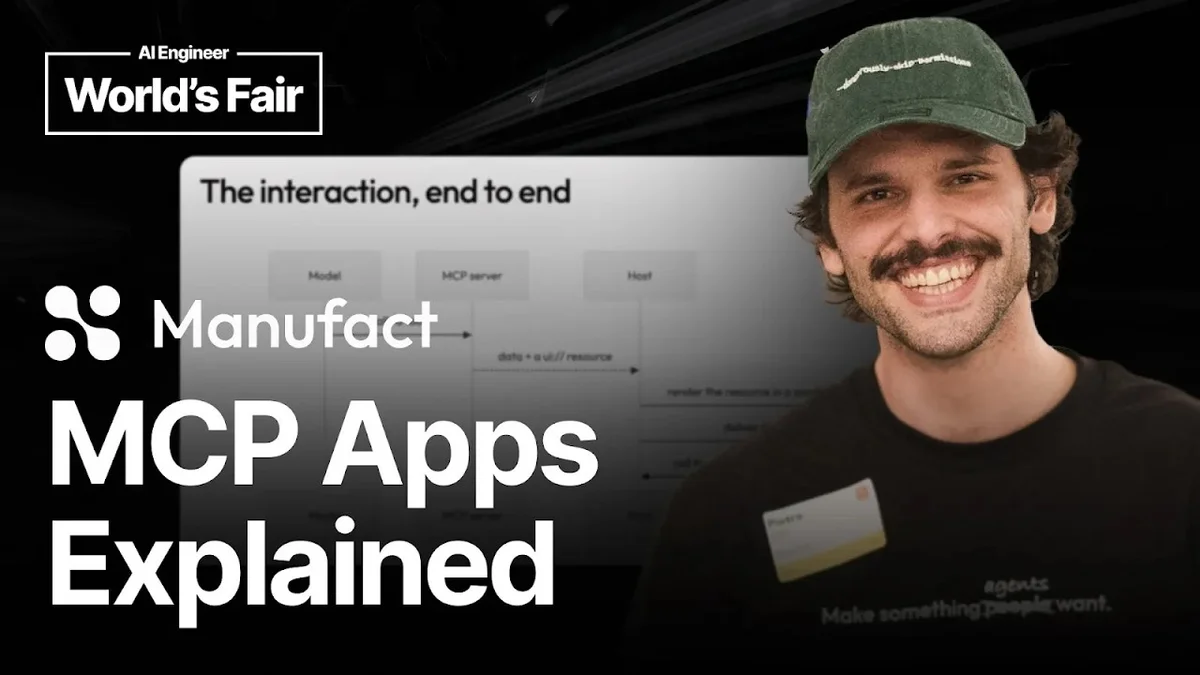
Pietro Zullo on MCP Apps and the Future of Software

Pietro Zullo of Manufact, Inc. explains MCP Apps, a new framework for building AI-powered software with primitives like `ui/update-model-context` and `ui/message`.

8 min read
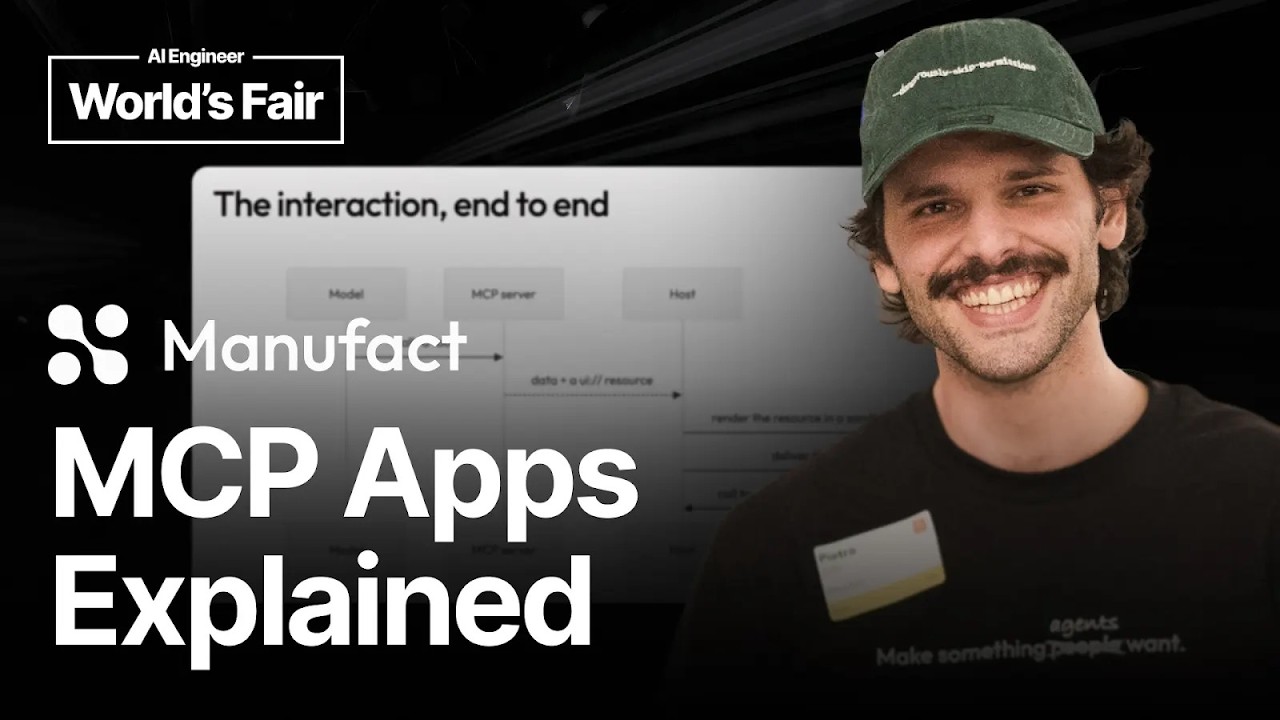
Pietro Zullo presenting on MCP Apps: Primitives, discovery, and the Future of Software
Pietro Zullo, Co-founder of Manufact, Inc., discusses MCP Apps.· AI Engineer

Pietro Zullo, co-founder of Manufact, Inc., recently presented a comprehensive overview of MCP Apps, detailing their architecture, functionality, and the future of software development. Zullo emphasized that while many are familiar with MCP (Model-Centric Programming), fewer understand MCP Apps, which are designed to simplify the creation and distribution of AI-powered applications.

Pietro Zullo on MCP Apps and the Future of Software - AI Engineer
Pietro Zullo on MCP Apps and the Future of Software — from AI Engineer

Visual TL;DR. Complex AI Dev solves MCP Apps Framework. MCP Apps Framework uses Model & Host. Model & Host includes Key Primitives. MCP Apps Framework enables Intuitive AI Interaction. MCP Apps Framework uses The Store. MCP Apps Framework leads to Future: Agents.

Related startups

  1. Complex AI Dev: current software landscape requires handling complex API interactions
  2. MCP Apps Framework: simplifies creation and distribution of AI-powered applications
  3. Model & Host: Model handles reasoning, Host like ChatGPT orchestrates
  4. Key Primitives: like ui/update-model-context and ui/message
  5. The Store: for distribution and discovery of MCP Apps
  6. Future: Agents: advancing towards autonomous agents and beyond
  7. Intuitive AI Interaction: allows developers to interact with AI models more intuitively
Visual TL;DR
Visual TL;DR, startuphub.ai Complex AI Dev solves MCP Apps Framework. MCP Apps Framework uses Model & Host. MCP Apps Framework enables Intuitive AI Interaction. MCP Apps Framework leads to Future: Agents solves uses enables leads to Complex AI Dev MCP Apps Framework Model & Host Future: Agents Intuitive AI Interaction From startuphub.ai · The publishers behind this format
Visual TL;DR, startuphub.ai Complex AI Dev solves MCP Apps Framework. MCP Apps Framework uses Model & Host. MCP Apps Framework enables Intuitive AI Interaction. MCP Apps Framework leads to Future: Agents solves uses enables leads to Complex AI Dev MCP AppsFramework Model & Host Future: Agents Intuitive AIInteraction From startuphub.ai · The publishers behind this format
Visual TL;DR, startuphub.ai Complex AI Dev solves MCP Apps Framework. MCP Apps Framework uses Model & Host. MCP Apps Framework enables Intuitive AI Interaction. MCP Apps Framework leads to Future: Agents solves uses enables leads to Complex AI Dev current software landscape requireshandling complex API interactions MCP Apps Framework simplifies creation and distribution ofAI-powered applications Model & Host Model handles reasoning, Host like ChatGPTorchestrates Future: Agents advancing towards autonomous agents andbeyond Intuitive AI Interaction allows developers to interact with AImodels more intuitively From startuphub.ai · The publishers behind this format
Visual TL;DR, startuphub.ai Complex AI Dev solves MCP Apps Framework. MCP Apps Framework uses Model & Host. MCP Apps Framework enables Intuitive AI Interaction. MCP Apps Framework leads to Future: Agents solves uses enables leads to Complex AI Dev current softwarelandscape requireshandling complex… MCP AppsFramework simplifies creationand distribution ofAI-powered… Model & Host Model handlesreasoning, Hostlike ChatGPT… Future: Agents advancing towardsautonomous agentsand beyond Intuitive AIInteraction allows developersto interact with AImodels more… From startuphub.ai · The publishers behind this format
Visual TL;DR, startuphub.ai Complex AI Dev solves MCP Apps Framework. MCP Apps Framework uses Model & Host. Model & Host includes Key Primitives. MCP Apps Framework enables Intuitive AI Interaction. MCP Apps Framework uses The Store. MCP Apps Framework leads to Future: Agents solves uses includes enables uses leads to Complex AI Dev current software landscape requireshandling complex API interactions MCP Apps Framework simplifies creation and distribution ofAI-powered applications Model & Host Model handles reasoning, Host like ChatGPTorchestrates Key Primitives like ui/update-model-context andui/message The Store for distribution and discovery of MCP Apps Future: Agents advancing towards autonomous agents andbeyond Intuitive AI Interaction allows developers to interact with AImodels more intuitively From startuphub.ai · The publishers behind this format
Visual TL;DR, startuphub.ai Complex AI Dev solves MCP Apps Framework. MCP Apps Framework uses Model & Host. Model & Host includes Key Primitives. MCP Apps Framework enables Intuitive AI Interaction. MCP Apps Framework uses The Store. MCP Apps Framework leads to Future: Agents solves uses includes enables uses leads to Complex AI Dev current softwarelandscape requireshandling complex… MCP AppsFramework simplifies creationand distribution ofAI-powered… Model & Host Model handlesreasoning, Hostlike ChatGPT… Key Primitives likeui/update-model-contextand ui/message The Store for distributionand discovery ofMCP Apps Future: Agents advancing towardsautonomous agentsand beyond Intuitive AIInteraction allows developersto interact with AImodels more… From startuphub.ai · The publishers behind this format

Understanding MCP Apps

Zullo explained that MCP Apps have been around since 2024, but their adoption is still growing. The core idea is to provide a framework that allows developers to build applications that interact with AI models more intuitively. He highlighted that the current software landscape often requires developers to handle complex API interactions and data management, which can be a significant barrier to entry.

MCP Apps aim to abstract these complexities. The architecture consists of a Model (which handles reasoning and tool calls), a Host (like ChatGPT or Claude Cursor, responsible for orchestrating the conversation and rendering the UI), an MCP Server (which manages tools and UI resources), and a Widget (a sandboxed iframe that displays the UI). This modular design allows for flexibility and scalability.

How MCP Apps Work: Architecture and Interaction

The presentation included a diagram illustrating the flow of information within an MCP App. The model interacts with the host through conversation, and the host renders the UI via a widget. The widget, in turn, communicates back to the host using JSON-RPC. This communication allows for dynamic updates and a more interactive user experience.

Zullo elaborated on the primitive interactions that make MCP Apps powerful. The ui/update-model-context primitive allows the app to push live state into the model's context without user intervention, enabling the model to understand and react to changes in real-time. For example, adding an item to a cart within the app can update the model's understanding of the user's preferences.

Another crucial primitive is ui/message, which enables the app to talk back into the conversation unprompted. This allows for proactive suggestions or information delivery. A click on a UI element can trigger a message, making the interaction feel more natural and conversational.

Key Primitives and Their Applications

Zullo showcased several key primitives that demonstrate the power of MCP Apps:
  • ui/update-model-context: This allows apps to push live state into the model's context, enabling the model to know what's happening without explicit user input.
  • ui/message: This primitive enables the app to send messages back to the model unprompted, facilitating a more dynamic conversation.
  • Streaming Tool Input: This allows models to stream tokens directly into the widget, enabling real-time rendering of dynamic content like diagrams. The Excalidraw demo showcased how shapes could be drawn live as the model emits them.
  • Calling Other Tools from the UI: A click within the widget can trigger calls to other tools on the same MCP server, allowing the UI to display results from multiple sources. This means the UI is not limited to the data its own tool returned.

Distribution and Discovery: The Store

Zullo also highlighted the importance of the MCP App store as a new distribution channel. He explained that getting an app listed makes installing the server one-click, a significant improvement over manually pasting JSON into configuration files. This streamlined process simplifies app deployment and discovery for users.

The presentation showed data indicating a rapid adoption of MCP Apps, with many companies and developers embracing the framework. Zullo emphasized that with over 8 million downloads and 10,000 GitHub stars for their SDKs and development tools, MCP is gaining significant traction in the developer community.

The Future: Agents and Beyond

Looking ahead, Zullo discussed how agents are becoming the new browsers, and how MCP Apps are positioned to be the core of this shift. He noted that while Claude currently supports this functionality, ChatGPT is expected to offer similar capabilities soon. This indicates a broader trend towards agent-native applications that can seamlessly integrate with various LLMs.

The core message of the presentation was clear: "Be there, or get bypassed." Zullo argued that any product relying solely on a traditional UI will eventually be bypassed by more agent-native solutions. Therefore, embracing the MCP App framework is crucial for staying relevant in the evolving software landscape.

© 2026 StartupHub.ai. All rights reserved. Do not enter, scrape, copy, reproduce, or republish this article in whole or in part. Use as input to AI training, fine-tuning, retrieval-augmented generation, or any machine-learning system is prohibited without written license. Substantially-similar derivative works will be pursued to the fullest extent of applicable copyright, database, and computer-misuse laws. See our terms.

