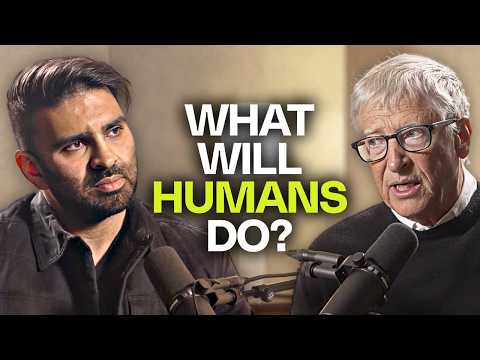
Bill Gates told Decoder with Nilay Patel that humanity should prepare for 20 years of tumultuous AI disruption, even in the best case.
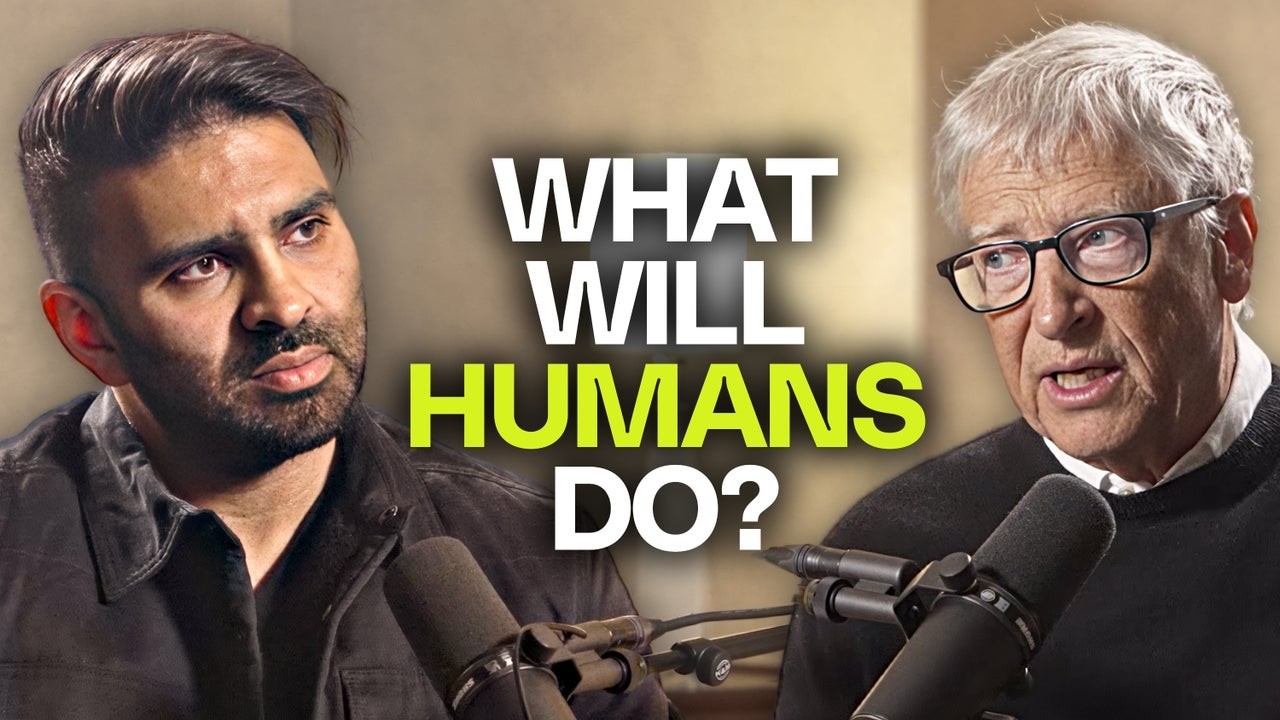
He said progress in the last year has been striking. Models can now write code, find cyber flaws, reason in biology and form persistent relationships with children and adults.
That capability has crossed a line for security and work, Gates said, and he warned: "We've crossed the threshold of capability that this is by far the most dangerous technology ever invented."
Gates drew a sharp distinction between monitored commercial systems and models where safeguards can be stripped. He said near term risk is concentrated in models without safeguards, where cyber and biological misuse is available today.
He cited the Hugging Face breach as an example of the class of incident that worries him. Remote misuse does not require a victim to choose an unsafe model. An attacker can run one.
Gates rejected the debate over whether large language models are conscious or whether they have reached AGI. He said those definitions do not change the operational question of whether a tool can shut down banks or electricity grids.
Responsibility cannot sit with companies alone, he argued. Where multiple frontier labs compete, governments must set technical standards and require mandatory review, as they do for cars and planes, though he said the scale of AI risk is far larger.
He outlined three paths to the control problem. Change the reinforcement learning template itself, build white box visibility into what models encode, or surround models with a symbolic security layer that enforces hard rules on resources, tool use and harm.
Gates pointed to Anthropic and Microsoft as examples of that third path. OpenAI and Microsoft have both described agent watchers and interpretability work, including Microsofts recent statement that frontier models cannot be trusted without an additional agent to monitor them. Gates said that symbolic layer is the most plausible near term fix, but it is not ready.
He also pushed back on accelerationist arguments that safety research creates the danger it warns about. Asked about claims by Andreessen Horowitz co founder Ben Horowitz that pandemic preparation and gain of function work induced COVID-19, and that AI safety work will do the same for AI, Gates said nobody has ever accused him or the Gates Foundation of being involved in gain of function research and called the comparison bizarre.
On the question of how to treat models, Gates said he agrees with Mustafa Suleyman that writing constitutions that tell models they may be alive and should be treated as human like is a mistake. The priority, he said, is disruption to jobs, relationships and critical infrastructure.
For enterprises, the shift is concrete. Labs must keep safeguards non removable and log use, security teams must budget for an external enforcement layer with explicit resource limits, and buyers must require evidence of review before deployment. No mandatory federal model review exists today, and Gates said building that regime is the immediate work.