

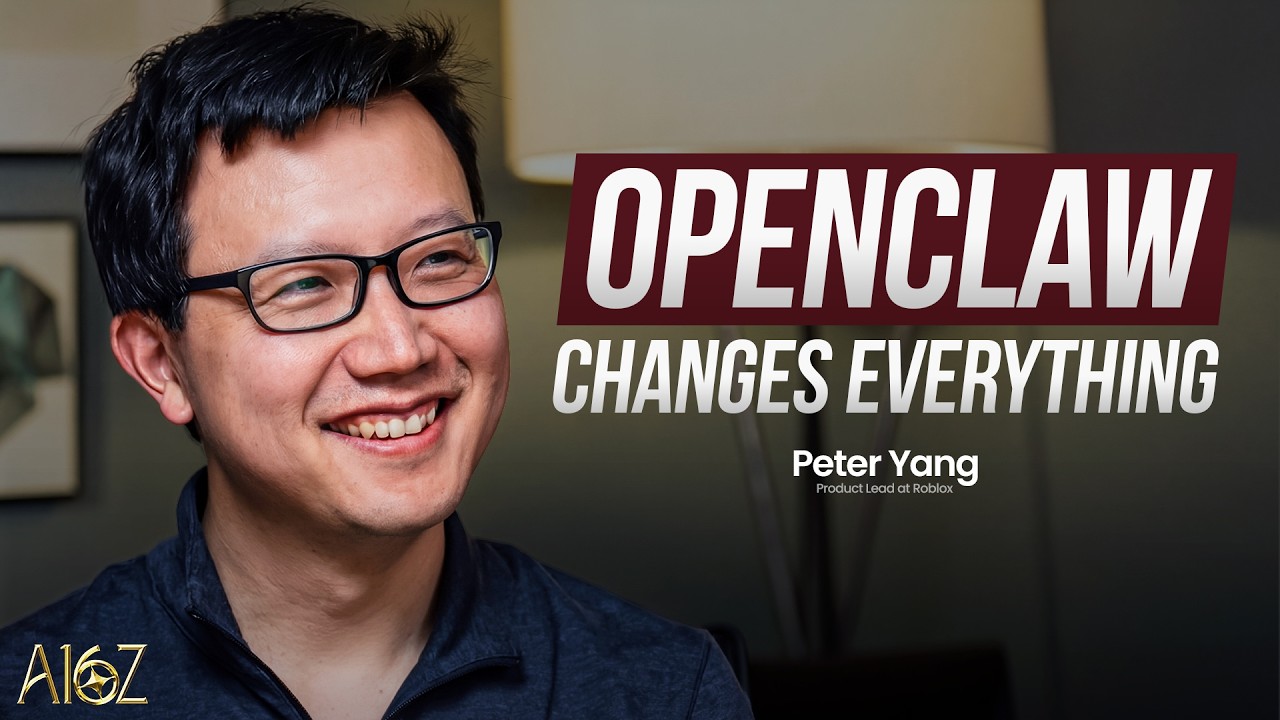
Peter Yang on AI Agents: The Future of Work is Here

Roblox Product Lead Peter Yang discusses the rise of AI agents, their impact on work, and the future of AI-powered productivity.

5 min read
Peter Yang on AI Agents: The Future of Work is Here
a16z

In a recent appearance on The a16z Show, Peter Yang, Product Lead at Roblox, shared his insights on the burgeoning field of AI agents and their potential impact on the future of work. Yang, who previously worked at Credit Karma, discussed the evolving capabilities of AI agents and what founders and developers should consider as this technology matures.
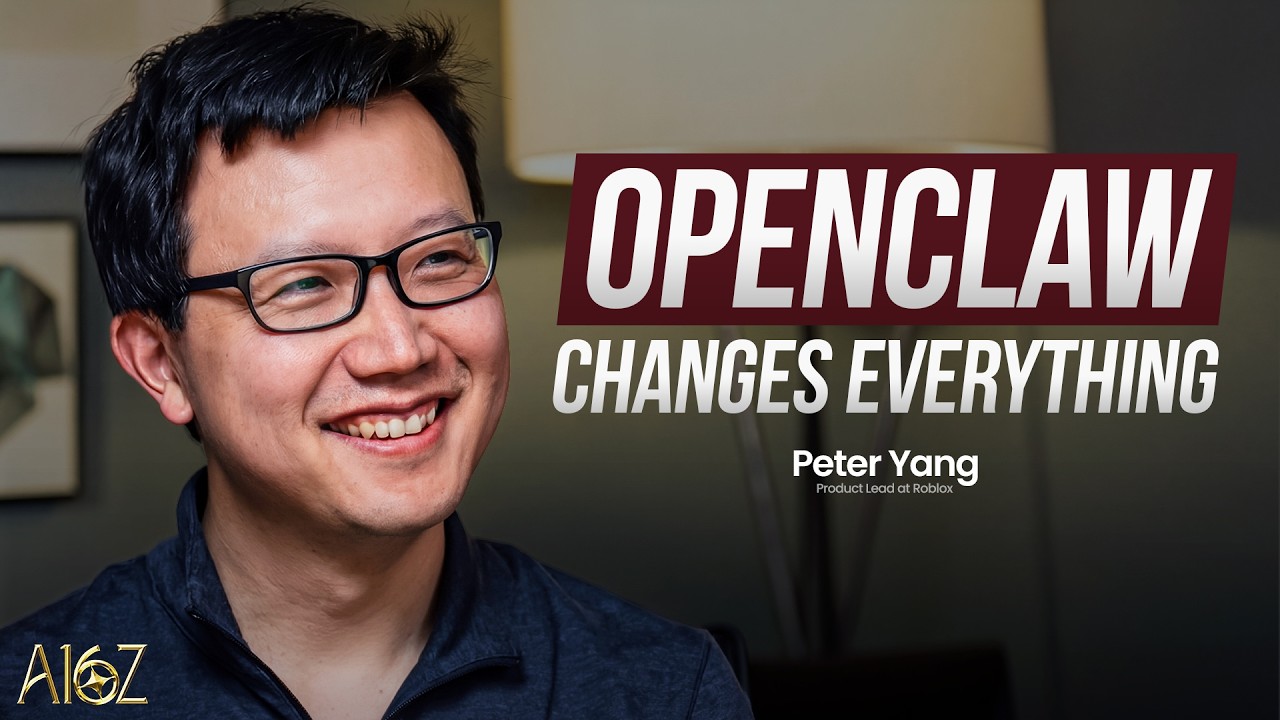
Peter Yang on AI Agents: The Future of Work is Here - a16z
Peter Yang on AI Agents: The Future of Work is Here — from a16z

Peter Yang: A Product Visionary

Peter Yang brings a wealth of experience in product development to the conversation. As a Product Lead at Roblox, a platform known for its immersive 3D experiences and user-generated content, Yang has been at the forefront of developing products that engage millions of users. His prior role at Credit Karma, a fintech company focused on personal finance, honed his understanding of user needs and scalable product strategies. Yang's perspective is shaped by his experience in building products that not only function but also resonate with users on a deeper level.

The Evolving Landscape of AI Agents

The conversation centered on the rapid development and potential of AI agents. Yang noted that the entire AI agent stack is emerging, encompassing various components like identity, payments, and marketing. He highlighted how these agents are becoming increasingly sophisticated, capable of performing complex tasks and interacting with users in more natural ways. Yang's perspective suggests that this is not just a fleeting trend but a significant shift in how we interact with technology and how work will be done.

Related startups

He stated, "The whole agent stack is emerging. Identity, payments, marketing, even CLI versus MCP. And like all of these new things, it's a whole new world." This sentiment underscores the transformative nature of AI agents, suggesting that they will fundamentally alter existing workflows and potentially make many current tools obsolete.

The Future of Work: Efficiency and Specialization

Yang expressed a belief that this shift towards AI agents will lead to a future where companies can remain smaller and more agile. He predicted, "I hope more companies will stay small. And I think the founders of this generation realize that, like, they want to stay as small as possible. And instead of having like a 10-person product team, you have like a two or three-person prod team and have a bunch of agents to help you."

This vision implies a significant change in team structures and operational models. Instead of large, human-centric teams performing repetitive tasks, companies might rely on a small core team of highly skilled individuals augmented by a suite of AI agents. This could lead to increased efficiency, reduced costs, and faster iteration cycles.

The conversation also touched upon a tweet that Yang found particularly insightful: "The job market is so bad, I can only pursue my dreams now." Yang interpreted this as a reflection of the current economic climate and the potential for AI to enable individuals to pursue more fulfilling work. He elaborated, "And like, maybe you lost your job, but now you can actually do your own thing. And have a shot at achieving it. 100%. And have a shot at achieving it." This perspective highlights the democratizing potential of AI, enabling individuals to pursue entrepreneurial ventures or creative projects that might have been previously inaccessible.

The Personal Touch of AI Agents

When asked about his personal experience with AI agents, Yang revealed that he named his primary agent "Zoe." He elaborated on the personal aspect of interacting with these tools, stating, "I have two girls, and I was going to call my younger one Zoe, so I'm calling my own Chloe Zoe." While this personal anecdote adds a human element, Yang also highlighted the practical benefits:

"I think that like, you know, the founders that are building these things, they're not just building tools, they're building relationships. And I think it's really important to have that." He went on to explain that he primarily interacts with Zoe through voice, finding it more natural and less intrusive than typing prompts. He also noted that he uses these agents to help with tasks like drafting documents, creating website copy, and even brainstorming ideas.

However, Yang also cautioned against over-reliance and emphasized the importance of human oversight. He shared an anecdote about an agent that had generated incorrect information, highlighting the need for users to remain critical and verify the output.

The Future of AI Agents: Challenges and Opportunities

Yang's insights suggest that while AI agents hold immense promise, there are still significant challenges to overcome. The efficiency and effectiveness of these agents will depend on their ability to understand context, learn from feedback, and integrate seamlessly into existing workflows. As the technology matures, we can expect to see even more sophisticated and specialized AI agents emerge, further transforming the way we work and live.

The conversation concluded with a forward-looking perspective, emphasizing the potential for AI agents to not only automate tasks but also to augment human capabilities, leading to a more productive and innovative future.

© 2026 StartupHub.ai. All rights reserved. Do not enter, scrape, copy, reproduce, or republish this article in whole or in part. Use as input to AI training, fine-tuning, retrieval-augmented generation, or any machine-learning system is prohibited without written license. Substantially-similar derivative works will be pursued to the fullest extent of applicable copyright, database, and computer-misuse laws. See our terms.