

FARS Data for Autonomous Vehicle Testing Drives New Industry Standards

Applied Intuition is urging the autonomous vehicle industry to integrate the National Highway Traffic Safety Administration's (NHTSA) Fatality Analysis Reporting System (FARS) data into their testing protocols. This extensive dataset, containing details on every fatal U.S. crash since 1975, offers a real-world foundation for developing and validating autonomous systems. The announcement highlights that while synthetic simulation is valuable for exploring edge cases, it cannot replicate the full diversity of actual driving conditions documented in FARS.

5 min read
FARS Data for Autonomous Vehicle Testing Drives New Industry Standards
Applied Intuition
Visual TL;DR
AV Industry TestingDriver
current AV testing relies heavily on synthetic simulation for edge cases
From the article 9 mentionsApplied Intuition is urging the autonomous vehicle industry to integrate the National Highway Traffic Safety Administration's (NHTSA) Fatality Analysis Reporting System (FARS) data into their testing protocols.
Applied Intuition UrgesCore
Applied Intuition advocates for integrating real-world crash data into AV testing
From the article 7 mentionsApplied Intuition argues that this granularity allows for more targeted and effective testing, especially for complex challenges like predicting following distances, detecting cut-ins, and understanding urban intersection behaviors.
Integrate FARS DataContext
From the article 4 mentionsApplied Intuition is urging the autonomous vehicle industry to integrate the National Highway Traffic Safety Administration's (NHTSA) Fatality Analysis Reporting System (FARS) data into their testing protocols.
Real-World FoundationEffect
FARS data provides details on every fatal US crash since 1975
From the article 5 mentionsThis extensive dataset, containing details on every fatal U.S. crash since 1975, offers a real-world foundation for developing and validating autonomous systems.
Targeted TestingEffect
From the article 8 mentionsApplied Intuition argues that this granularity allows for more targeted and effective testing, especially for complex challenges like predicting following distances, detecting cut-ins, and understanding urban intersection behaviors.
Validate AV SystemsEffect
develop and validate autonomous systems based on actual driving conditions
From the article 4 mentionsIt details specific demographic and environmental conditions associated with these fatalities, enabling AV developers to refine perception and prediction systems for scenarios involving senior pedestrians, children, and cyclists.
New Industry StandardsOutcome
shifts focus from hypothetical scenarios to addressing documented failure modes
From the article 2 mentionsApplied Intuition's mission is to help the industry deploy safe machines by using this historical data as a blueprint for future safety improvements.

Applied Intuition is urging the autonomous vehicle industry to integrate the National Highway Traffic Safety Administration's (NHTSA) Fatality Analysis Reporting System (FARS) data into their testing protocols. This extensive dataset, containing details on every fatal U.S. crash since 1975, offers a real-world foundation for developing and validating autonomous systems. The announcement highlights that while synthetic simulation is valuable for exploring edge cases, it cannot replicate the full diversity of actual driving conditions documented in FARS.

This approach shifts the focus from hypothetical scenarios to addressing documented failure modes. FARS data provides specific insights into crash types, such as rear-end collisions, roadside departures, and intersecting-path crashes. Applied Intuition argues that this granularity allows for more targeted and effective testing, especially for complex challenges like predicting following distances, detecting cut-ins, and understanding urban intersection behaviors.

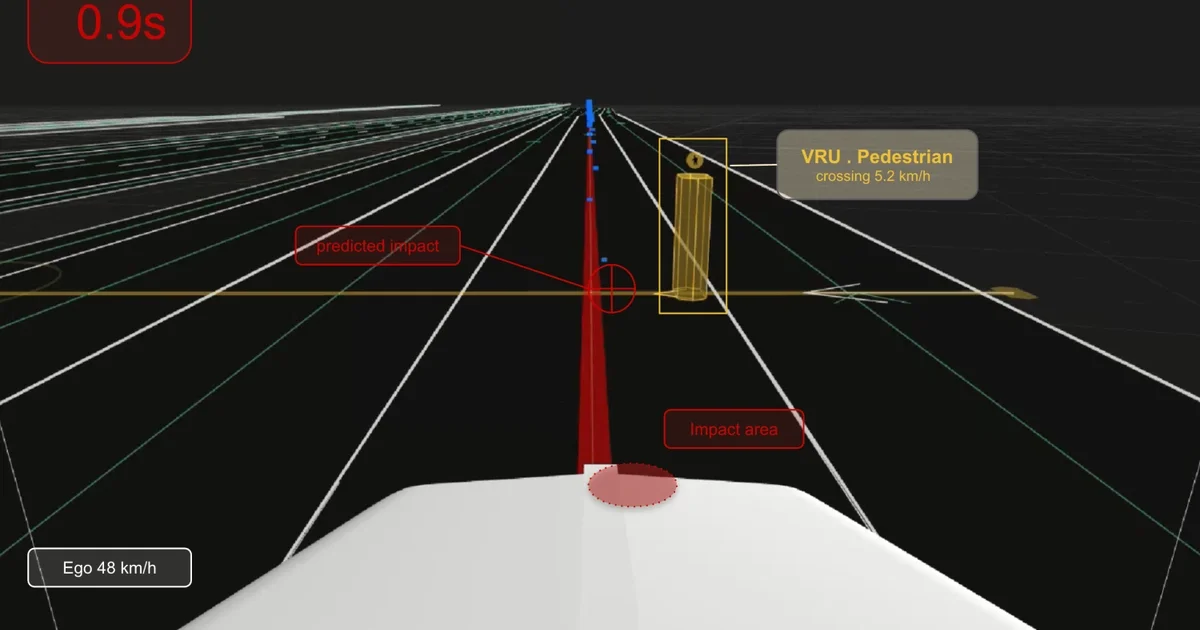
The company emphasizes that FARS data is precise enough to inform testing for vulnerable road users (VRUs) like pedestrians and cyclists. It details specific demographic and environmental conditions associated with these fatalities, enabling AV developers to refine perception and prediction systems for scenarios involving senior pedestrians, children, and cyclists. Applied Intuition's platform aims to translate these real-world crash records into parameterized simulation scenarios, allowing for large-scale testing and variation analysis.

This data-driven validation strategy moves beyond theoretical performance to assess how an AV system would have performed in actual, documented incidents. By ingesting real-world failure modes, AV developers can identify gaps in their existing test libraries and ensure their simulation programs accurately reflect the distribution of risks on public roads. Applied Intuition's mission is to help the industry deploy safe machines by using this historical data as a blueprint for future safety improvements.

This announcement from Applied Intuition could significantly influence how companies like Waymo and Cruise approach their testing methodologies. While Waymo's comprehensive simulation and real-world testing are well-documented, the direct integration of FARS data could refine their scenario generation. Cruise, having faced recent challenges, might find this a critical framework for rebuilding public trust through demonstrably safer testing. StartupHub.ai data indicates that companies focused on advanced simulation and validation tools, similar to Applied Intuition's focus, often score higher in our competitive analysis. For instance, Every, a company specializing in AV testing and simulation, holds a StartupHub score of 56/100, having raised $175M in verified Series C funding in 2021. Applied Intuition's push for real-world data integration strengthens the argument for data-centric approaches in the competitive AV simulation market.

© 2026 StartupHub.ai. All rights reserved. Do not enter, scrape, copy, reproduce, or republish this article in whole or in part. Use as input to AI training, fine-tuning, retrieval-augmented generation, or any machine-learning system is prohibited without written license. Substantially-similar derivative works will be pursued to the fullest extent of applicable copyright, database, and computer-misuse laws. See our terms.