


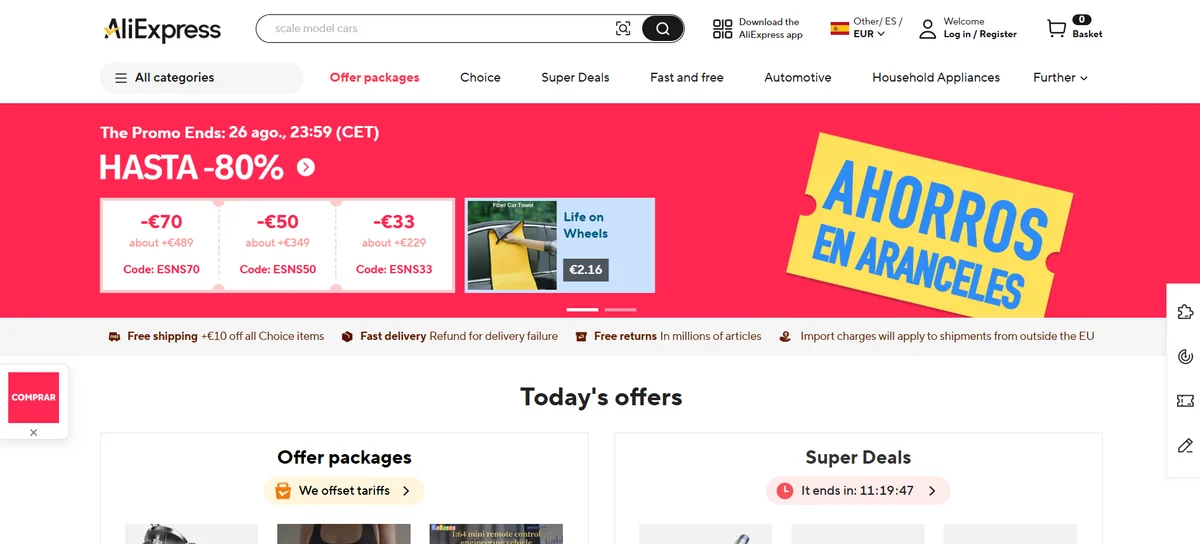
Online retail giant Alibaba Group Holding Limited (HKG:9988) subsidiary AliExpress has been caught employing a nearly invisible method to identify users: silent audio fingerprinting. This sophisticated tracking technique, which bypasses traditional ad blockers and privacy settings, came to light when users noticed their Bluetooth headphones disconnecting from their phones while browsing the site, switching instead to their PC.
The mechanism involves JavaScript generating an inaudible sound. While the volume is set to zero, the sound still gets processed by the computer's audio hardware. Every CPU and browser combination processes audio with minute, unique variations. AliExpress exploited these differences to create a persistent digital fingerprint of a user's device. This goes beyond common tracking methods like cookies, combining with other identifiers like canvas and WebGL data to build a comprehensive user profile.
Browser Defenses Against Fingerprinting
The discovery quickly drew responses from privacy-focused browsers. Brave (BATS:BATS), a browser known for its built-in privacy protections, confirmed that it has been defending against audio fingerprinting for over six years. Brave achieves this by injecting random data into the browser's audio output, making each fingerprint appear different across sites and resetting it across sessions. The browser also specifically blocks the scripts AliExpress used for this tracking method.
Firefox also highlighted its anti-fingerprinting technology thwarted AliExpress's efforts. These browser-level interventions are becoming increasingly critical as trackers develop more elusive methods. Beyond audio, Brave recently added defenses against GPU fingerprinting, which stops sites from identifying users based on their graphics card or drivers. This ongoing arms race between trackers and privacy tools defines much of the modern web experience.
StartupHub.ai data shows Brave holds a score of 62/100, indicating its strong position in the privacy browser market. When compared to competitors we track, Brave performs comparably to LayerX (score 63/100) and slightly ahead of Octen (score 54/100) and Parallel Web Systems (score 54/100). This places Brave among the stronger players in privacy-focused web browsing, far outpacing others like Looknetwork (score 7/100).