Netflix is overhauling its homepage generation with GenPage, an end-to-end generative AI model. This new system, detailed in a Netflix Tech Blog post, fundamentally rethinks how users discover content, moving from a multi-stage pipeline to a single transformer model.
The traditional method for constructing the Netflix homepage involved complex, separate components for candidate generation and ranking across rows and individual entities. GenPage consolidates this into one generative model, directly answering: "Given everything we know about this user and this request, what homepage should we generate to maximize user satisfaction?"
Generative Approach and Benefits
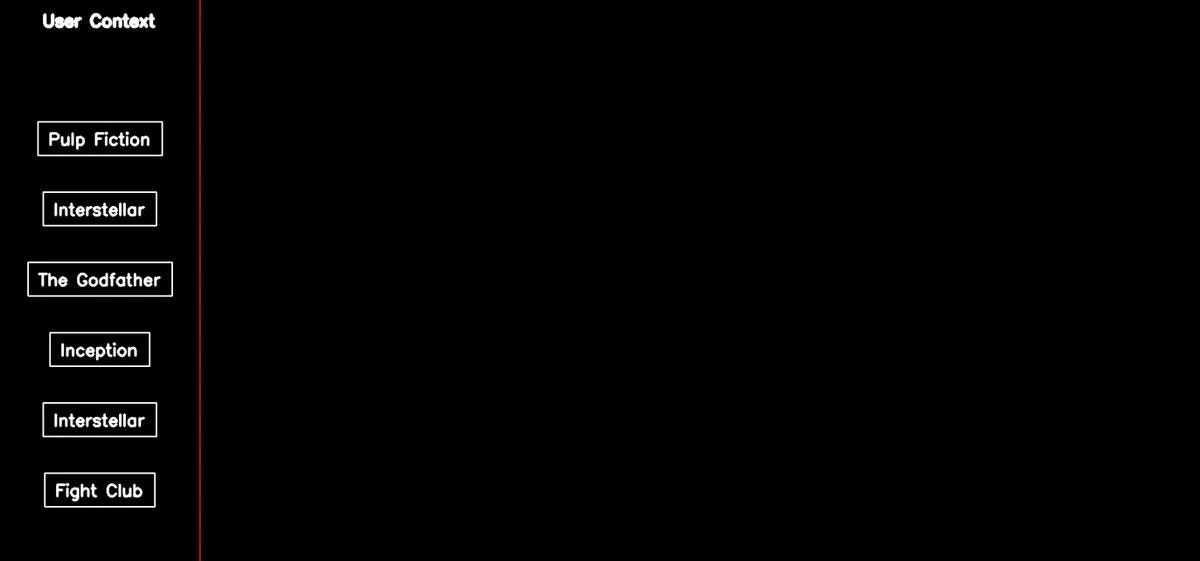
GenPage treats user history and request context as a prompt, then autoregressively generates the entire homepage. Unlike other generative recommenders that produce flat lists, GenPage constructs rows, entities, and their layout simultaneously.
This shift offers several advantages. End-to-end modeling reduces the number of machine learning models to maintain and eliminates much of the traditional feature engineering. It also aligns objectives across stages, preventing misalignments common in multi-stage systems.
Whole-page optimization is achieved via reinforcement learning (RL), allowing GenPage to consider interactions across rows and entities, such as content diversity or the balance of different row types. This directly links system output to overall user satisfaction.
The generative transformer model scales more effectively, improving quality through increased data, compute, and model capacity without requiring system redesigns. Its prompt-response paradigm also enhances flexibility, simplifying support for new content types like live events and games, or personalized UI components.
Production Impact and Technical Details
Despite challenges like real-time serving latency and handling cold-start entities, GenPage has shown significant production impact. In A/B tests, it delivered statistically significant gains in core user engagement metrics and reduced end-to-end serving latency by 20%.
GenPage represents user context and homepage elements as a sequence of discrete tokens, similar to how large language models process text. This domain-specific tokenization improves computational efficiency and allows for precise product control over generated content.
The training recipe mirrors LLM development: pretraining teaches the model the "language" of the Netflix homepage, followed by post-training to align outputs with user satisfaction. This post-training utilizes weighted binary classification or reinforcement learning.