


Netflix Engineer: AI Agents for Performance

8 min read
Netflix Engineer: AI Agents for Performance
AI Engineer

Visual TL;DR. Performance Bottlenecks leads to Manual Performance Engineering. Performance Bottlenecks solved by AI Agents for Performance. Manual Performance Engineering replaced by AI Agents for Performance. AI Agents for Performance enables Faster Shipping Cycles. AI Agents for Performance drives Reduced Infra Costs. Faster Shipping Cycles contributes to Real-World Savings. Reduced Infra Costs contributes to Real-World Savings. AI Agents for Performance requires Integrating AI Dev Cycle. Integrating AI Dev Cycle needs Guardrails & Best Practices.

  1. Performance Bottlenecks: AI agents lack platform-specific knowledge, creating non-performant code
  2. Manual Performance Engineering: time-consuming process of profiling, analyzing flame graphs, reactive 2 a.m. fixes
  3. AI Agents for Performance: integrating AI agents into performance engineering workflows for optimization
  4. Faster Shipping Cycles: streamlined development process by proactively addressing performance issues
  5. Reduced Infra Costs: optimizing code performance directly lowers infrastructure expenditure
  6. Real-World Savings: Netflix's findings demonstrate significant cost reductions and efficiency gains
  7. Integrating AI Dev Cycle: embedding AI agents throughout the software development lifecycle for continuous improvement
  8. Guardrails & Best Practices: establishing guidelines for safe and effective deployment of AI performance agents
Visual TL;DR
Visual TL;DR, startuphub.ai Performance Bottlenecks solved by AI Agents for Performance. AI Agents for Performance enables Faster Shipping Cycles. AI Agents for Performance drives Reduced Infra Costs solved by enables drives Performance Bottlenecks AI Agents for Performance Faster Shipping Cycles Reduced Infra Costs From startuphub.ai · The publishers behind this format
Visual TL;DR, startuphub.ai Performance Bottlenecks solved by AI Agents for Performance. AI Agents for Performance enables Faster Shipping Cycles. AI Agents for Performance drives Reduced Infra Costs solved by enables drives PerformanceBottlenecks AI Agents forPerformance Faster ShippingCycles Reduced InfraCosts From startuphub.ai · The publishers behind this format
Visual TL;DR, startuphub.ai Performance Bottlenecks solved by AI Agents for Performance. AI Agents for Performance enables Faster Shipping Cycles. AI Agents for Performance drives Reduced Infra Costs solved by enables drives Performance Bottlenecks AI agents lack platform-specificknowledge, creating non-performant code AI Agents for Performance integrating AI agents into performanceengineering workflows for optimization Faster Shipping Cycles streamlined development process byproactively addressing performance issues Reduced Infra Costs optimizing code performance directlylowers infrastructure expenditure From startuphub.ai · The publishers behind this format
Visual TL;DR, startuphub.ai Performance Bottlenecks solved by AI Agents for Performance. AI Agents for Performance enables Faster Shipping Cycles. AI Agents for Performance drives Reduced Infra Costs solved by enables drives PerformanceBottlenecks AI agents lackplatform-specificknowledge, creating… AI Agents forPerformance integrating AIagents intoperformance… Faster ShippingCycles streamlineddevelopment processby proactively… Reduced InfraCosts optimizing codeperformancedirectly lowers… From startuphub.ai · The publishers behind this format
Visual TL;DR, startuphub.ai Performance Bottlenecks leads to Manual Performance Engineering. Performance Bottlenecks solved by AI Agents for Performance. Manual Performance Engineering replaced by AI Agents for Performance. AI Agents for Performance enables Faster Shipping Cycles. AI Agents for Performance drives Reduced Infra Costs. Faster Shipping Cycles contributes to Real-World Savings. Reduced Infra Costs contributes to Real-World Savings. AI Agents for Performance requires Integrating AI Dev Cycle. Integrating AI Dev Cycle needs Guardrails & Best Practices leads to solved by replaced by enables drives contributes to contributes to requires needs Performance Bottlenecks AI agents lack platform-specificknowledge, creating non-performant code Manual Performance Engineering time-consuming process of profiling,analyzing flame graphs, reactive 2 a.m.fixes AI Agents for Performance integrating AI agents into performanceengineering workflows for optimization Faster Shipping Cycles streamlined development process byproactively addressing performance issues Reduced Infra Costs optimizing code performance directlylowers infrastructure expenditure Real-World Savings Netflix's findings demonstrate significantcost reductions and efficiency gains Integrating AI Dev Cycle embedding AI agents throughout thesoftware development lifecycle forcontinuous improvement Guardrails & Best Practices establishing guidelines for safe andeffective deployment of AI performanceagents From startuphub.ai · The publishers behind this format
Visual TL;DR, startuphub.ai Performance Bottlenecks leads to Manual Performance Engineering. Performance Bottlenecks solved by AI Agents for Performance. Manual Performance Engineering replaced by AI Agents for Performance. AI Agents for Performance enables Faster Shipping Cycles. AI Agents for Performance drives Reduced Infra Costs. Faster Shipping Cycles contributes to Real-World Savings. Reduced Infra Costs contributes to Real-World Savings. AI Agents for Performance requires Integrating AI Dev Cycle. Integrating AI Dev Cycle needs Guardrails & Best Practices leads to solved by replaced by enables drives contributes to contributes to requires needs PerformanceBottlenecks AI agents lackplatform-specificknowledge, creating… ManualPerformance… time-consumingprocess ofprofiling,… AI Agents forPerformance integrating AIagents intoperformance… Faster ShippingCycles streamlineddevelopment processby proactively… Reduced InfraCosts optimizing codeperformancedirectly lowers… Real-WorldSavings Netflix's findingsdemonstratesignificant cost… Integrating AIDev Cycle embedding AI agentsthroughout thesoftware… Guardrails & BestPractices establishingguidelines for safeand effective… From startuphub.ai · The publishers behind this format

Rajat Shah, a Staff Software Engineer at Netflix, shared insights on how integrating AI agents into performance engineering workflows can lead to faster shipping cycles and reduced infrastructure costs. Speaking at the AI Engineer World's Fair 2026, Shah presented a practitioner's guide, outlining a playbook for organizations looking to replicate these performance improvements.

Netflix Engineer: AI Agents for Performance - AI Engineer
Netflix Engineer: AI Agents for Performance — from AI Engineer

The Problem: Performance Engineering Bottlenecks

Shah highlighted that while AI agents are accelerating code authoring, they don't always produce the most performant code. This is because these agents lack specific knowledge of platform-specific performance patterns and internal codebase nuances. The manual process of performance engineering, which involves triggering profiling, downloading raw data, analyzing flame graphs, and searching for code paths, is time-consuming and often only performed reactively when issues arise, typically at 2 a.m.

The Solution: Leveraging AI Agents for Performance

The core hypothesis is that AI agents can read profiling data, identify performance bottlenecks, and even suggest fixes much faster than humans. The experiment at Netflix demonstrated that by feeding structured profiling data to AI agents trained on common performance patterns (like O(N^2) loops, loop invariants, and inefficient memory allocation), these agents can accurately pinpoint issues.

The process involves several steps: parsing profiler output, identifying the exact code version running, filtering to relevant code, tracing the full call path, and then analyzing the data. Shah emphasized that the AI reads structured call stack data, not just a visual flame graph, enabling it to understand the context and identify problematic patterns.

Real-World Findings and Savings

The presentation showcased a specific finding where an AI agent identified an O(N^2) ImmutableMap accumulation issue, which was consuming 8.8% of total CPU time. The agent was able to draft a pull request (PR) for an engineer review within minutes, identifying potential savings of 6.5% in EC2 CPU usage and 3.0% in p90 latency. This was validated through canary deployments.

A second key finding demonstrated the power of AI in identifying recurring issues. The same bug, related to a counter object created on every hot-path call, was found in seven different services. Without a centralized catalog, each team had to re-derive the problem. With AI, the pattern was identified once, and then applied across multiple services, potentially saving significant CPU cycles (0.5% to 4.6%) across the board.

Integrating AI into the Development Cycle

Shah stressed the importance of building a long-term memory for AI agents, suggesting a centralized, ever-growing catalog of patterns and anti-patterns. This catalog, initially built from production findings and potentially augmented with public knowledge sources, acts as a foundation for future agents. The catalog can be simple, starting with markdown files in a Git repository.

The integration into the development cycle can occur in two ways:

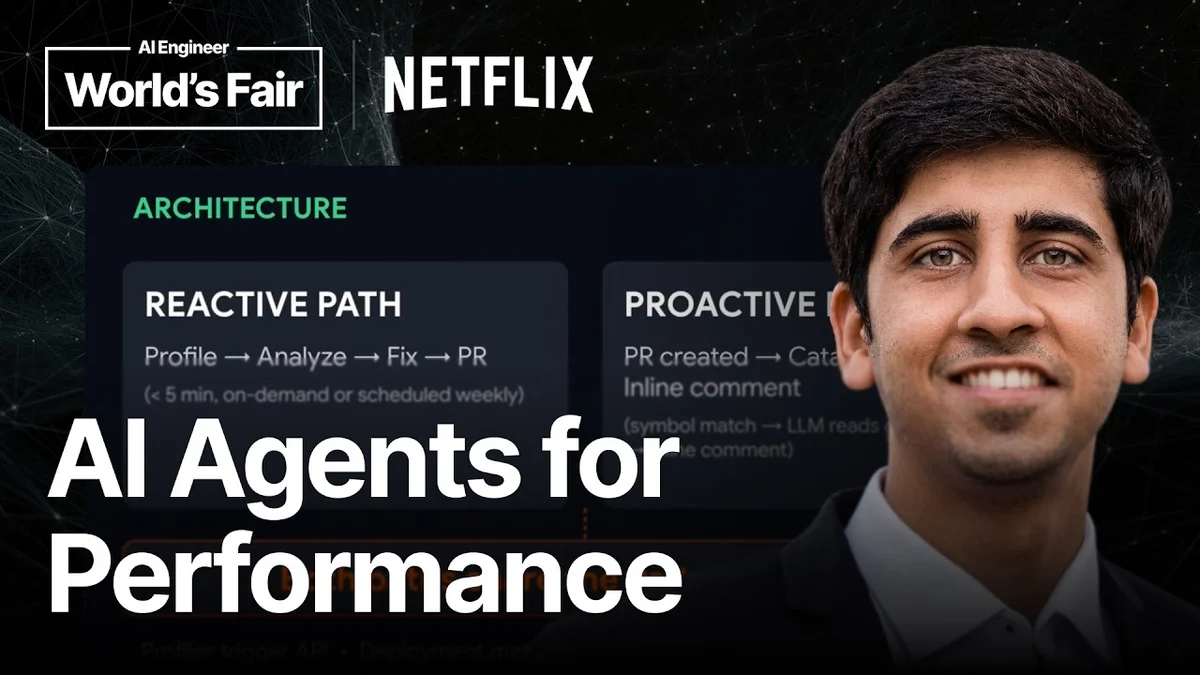
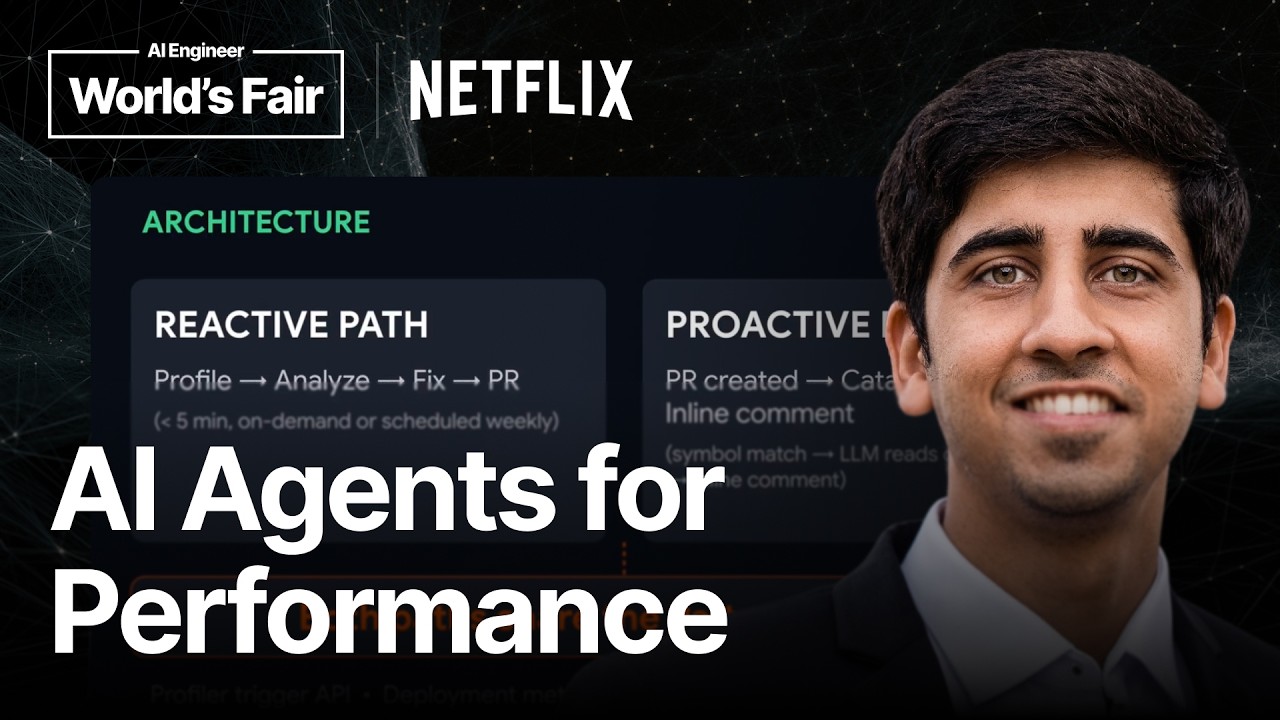
  • Reactive Path: Profiling, analyzing, fixing, and creating PRs, typically taking under 5 minutes and can be done on-demand or scheduled weekly.
  • Proactive Path: Catalog lookup during PR creation, leading to inline comments and suggestions from the AI agent, preventing suboptimal code from reaching production in the first place.

Both paths share the pattern catalog, ensuring consistency and continuous improvement.

Guardrails and Best Practices

Shah emphasized that AI should handle the non-deterministic aspects, while deterministic steps should belong to the infrastructure. This includes ensuring robust test coverage, automating canary deployments for validation, and maintaining a human-reviewable pattern catalog. The final decision for code changes should always rest with an engineer.

The key takeaways were to build core foundations first, invest in automation, and start with the reactive path to gradually move towards a proactive, AI-assisted development cycle. The ultimate goal is to catch performance issues earlier, ideally before they are introduced into production.

© 2026 StartupHub.ai. All rights reserved. Do not enter, scrape, copy, reproduce, or republish this article in whole or in part. Use as input to AI training, fine-tuning, retrieval-augmented generation, or any machine-learning system is prohibited without written license. Substantially-similar derivative works will be pursued to the fullest extent of applicable copyright, database, and computer-misuse laws. See our terms.