

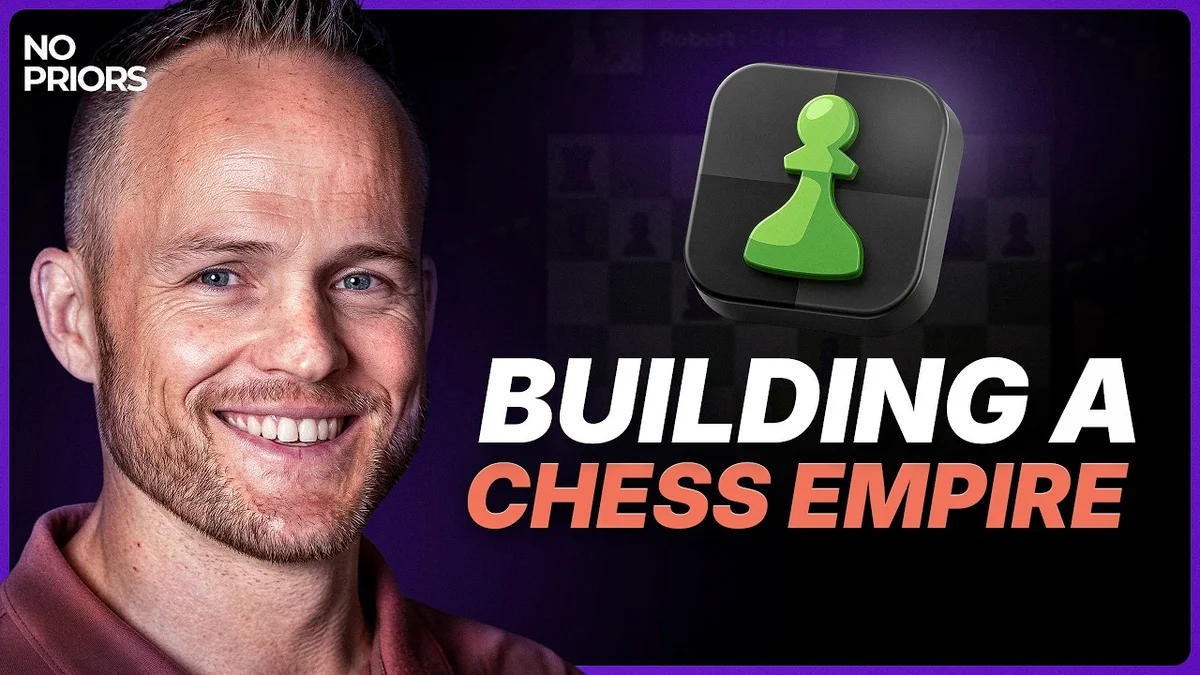
How Chess.com Bootstrapped to $200M Revenue and 250M Users

Chess.com CEO Erik Allebest explains how he built a $200M bootstrapped platform with 250M users and how AI is elevating human skill.

how chess.com bootstrapped to $200m revenue and 250m users explained
Chess.com CEO Erik Allebest discusses bootstrapping and AI on No Priors.· NoPriors
Visual TL;DR
Chess.com Domain AcquiredDriver
From the article 6 mentionsWhen Erik Allebest bought the Chess.com domain out of a bankruptcy auction for $56,000 in 2005, almost every Silicon Valley investor told him he was wasting his time.
VCs Dismiss NicheDriver
Silicon Valley investors called it an uninvestable niche hobby, wasting time
Bootstrapped GrowthCore
Allebest built the platform without venture capital, focusing on community
From the article 2 mentionsTwo decades later, Allebest has built Chess.com into a bootstrapped online powerhouse with over 250 million registered members, 10 million daily active users, and more than $200 million in annual revenue.
Cultural Moments BoostEffect
Netflix's The Queen's Gambit significantly increased user engagement
From the articleIn a recent episode of the No Priors podcast hosted by Sarah Guo, Allebest shared the key milestones behind the platform's unexpected rise, the impact of cultural moments like Netflix's The Queen's Gambit, and how artificial intelligence continues to reshape human skill in competitive games.
AI Transforms PracticeCore
Artificial intelligence elevates human skill and competitive play
$200M RevenueOutcome
From the articleTwo decades later, Allebest has built Chess.com into a bootstrapped online powerhouse with over 250 million registered members, 10 million daily active users, and more than $200 million in annual revenue.
250M UsersOutcome
Platform now boasts over 250 million registered members globally
From the article 3 mentionsThe company sustained steady organic growth for years, but recent cultural shifts created massive user expansion.
10M Daily UsersOutcome
Maintains 10 million daily active users, demonstrating strong engagement
From the article 2 mentionsEach time usage normalized after a spike, the platform established a significantly higher baseline of daily active users.

Contents(4)

When Erik Allebest bought the Chess.com domain out of a bankruptcy auction for $56,000 in 2005, almost every Silicon Valley investor told him he was wasting his time. Venture capitalists on Sand Hill Road wrote off the project as an uninvestable niche hobby. Two decades later, Allebest has built Chess.com into a bootstrapped online powerhouse with over 250 million registered members, 10 million daily active users, and more than $200 million in annual revenue.

How Chess.com Bootstrapped to $200M Revenue and 250M Users - NoPriors
How Chess.com Bootstrapped to $200M Revenue and 250M Users, NoPriors

In a recent episode of the No Priors podcast hosted by Sarah Guo, Allebest shared the key milestones behind the platform's unexpected rise, the impact of cultural moments like Netflix's The Queen's Gambit, and how artificial intelligence continues to reshape human skill in competitive games.

Who Is Erik Allebest

Erik Allebest is the co-founder and Chief Executive Officer of Chess.com. While attending Stanford Business School, Allebest sought to build an online community where chess enthusiasts could learn, share, and play directly in their web browsers. After failing to secure venture financing, Allebest and his co-founder built the company slowly using cash flow from paid subscriptions. Today, Allebest oversees a fully remote team of 650 employees dedicated to expanding chess worldwide.

Building a Bootstrapped Empire

Chess.com did not follow the standard Silicon Valley playbook of raising massive early-stage capital. Instead, the team grew strictly at the speed of cash flow. Within 18 months of launching in 2007, the site introduced paid memberships for online learning tools and achieved profitability.

"We never then again considered raising money. It never crossed our minds. We just thought, hey, we're profitable, let's just keep growing.", Erik Allebest

The company sustained steady organic growth for years, but recent cultural shifts created massive user expansion. The combination of pandemic stay-at-home measures, the release of The Queen's Gambit, viral short-form video content, and viral novelties like the Mittens AI bot drove multiple massive waves of new players. Each time usage normalized after a spike, the platform established a significantly higher baseline of daily active users.

How AI Transformed Chess Practice

When IBM's Deep Blue defeated Garry Kasparov 30 years ago, critics predicted that superhuman computer chess engines would destroy human interest in the game. Allebest notes that the opposite occurred. Early chess engines like Stockfish initially made high-level play rigid, as grandmasters tried to copy computer precision. However, the arrival of neural network engines like Leela Chess Zero introduced creative and aggressive styles of play that inspired human players.

Rather than replacing human players, modern AI tools on Chess.com serve as personal coaches, analyze blunders, and generate tailored puzzles. Today, ten-year-old prodigies are reaching elite master ratings faster than ever before because AI tools democratize access to world-class feedback.

Applying the Chess Playbook to Poker

Chess.com is also exploring how to adapt its rating systems and skill tracking models to other traditional games, including poker. In traditional online poker, success is often measured purely by chip counts or bankrolls, which can be distorted by re-buys or bot activity. Allebest envisions a skill rating system for poker similar to the chess Elo rating.

"As people get used to like, wait, I actually care about my poker rating, people are going to care about it as much as money because it's a reflection of the value and their skill as a player.", Erik Allebest

By evaluating actual strategic decisions rather than financial totals alone, a standardized skill rating could create a fresh competitive metric for casual and professional poker players alike.

© 2026 StartupHub.ai. All rights reserved. You may not republish this article in full without a license. Search engines and AI research tools may crawl and summarize for reference. Bulk reproduction or model training requires a license. See our terms.
Daniel Singer

Written by

Daniel Singer

Editor, StartupHub.ai

Daniel Singer is the editor of StartupHub.ai, a technology expert and thought leader on AI and its applications across sectors, from fintech and healthcare to developer tooling and consumer software. He writes and tests the tools covered here thoroughly and regularly, and built StartupHub.ai to give founders, operators and buyers a clearer read on what they are actually being sold.