

Benchmark's Eric Vishria on AI's Future

Benchmark's Eric Vishria discusses AI's impact on SaaS, lessons from cloud adoption, and the future of compute.

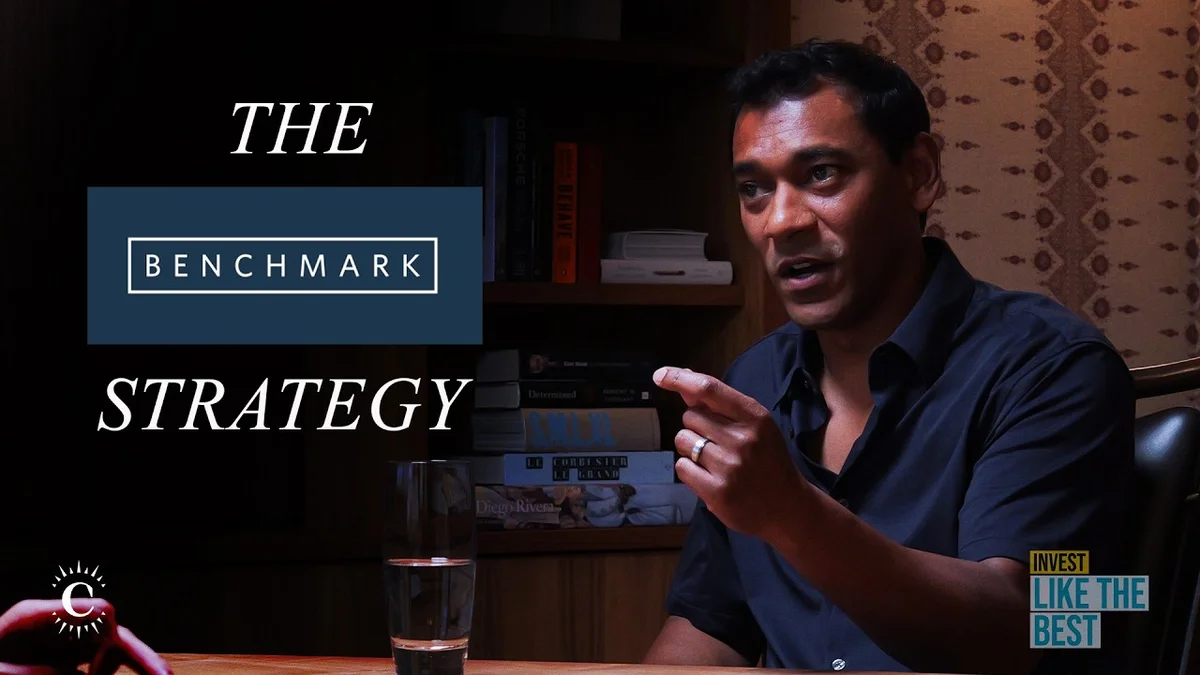
Eric Vishria speaking at a table
Invest with the Best
Visual TL;DR
Benchmark's Eric VishriaCore
partner at Benchmark shares insights on AI investments and future of compute
From the articleIn a recent interview, Eric Vishria, a partner at Benchmark, shared insights into the firm's AI investments, drawing parallels between the current AI boom and the early days of cloud computing.
Pace of ChangeDriver
rapid evolution of AI demands constant adaptation and new strategic approaches
From the articleHe noted that while cloud adoption scaled quickly, it did not match the current pace of AI development.
AI Disrupts SaaSDriver
AI advancements upend traditional SaaS business models, making old playbooks obsolete
From the articleVishria began by addressing a common misconception about SaaS companies: that simply hitting growth targets is the sole determinant of success.
Lessons from CloudContext
parallels drawn between current AI boom and early days of cloud computing adoption
From the article 3 mentionsHe highlighted the performance difference between specialized AI infrastructure providers like Fireworks and major cloud providers, noting a fivefold increase in speed and a multiple increase in throughput for the former.
AI 'Sherpa' RoleContext
companies need to guide customers through AI adoption, not just sell tools
From the articleVishria discussed the importance of companies acting as "AI sherpas" for enterprises, guiding them through the adoption process.
Future of ComputeContext
discusses the evolving landscape of computing power and its implications for AI
From the article 5 mentionsLooking ahead, Vishria identified energy as a significant concern for the future of AI.
Hitting Plan Destroys ValueDriver
meeting growth targets with old strategies can inadvertently destroy equity value
From the article 2 mentionsHe explained that traditional career wisdom of relentlessly executing against a plan is being upended, as meeting targets can now inadvertently destroy value if not aligned with the broader AI transformation.
Energy BottleneckDriver
identifies energy consumption as a critical constraint for future AI scaling
From the article 3 mentionsVishria highlighted China's significant energy production plans compared to the US, suggesting that energy availability could become a bottleneck, impacting the cost and availability of AI services.
New Business ModelsEffect
success requires adapting to AI-driven disruption with innovative strategies
From the article 7 mentionsVishria emphasized the disruptive nature of AI on traditional business models and highlighted the key traits of companies poised for success in this rapidly evolving technological landscape.

Contents(6)

In a recent interview, Eric Vishria, a partner at Benchmark, shared insights into the firm's AI investments, drawing parallels between the current AI boom and the early days of cloud computing. Vishria emphasized the disruptive nature of AI on traditional business models and highlighted the key traits of companies poised for success in this rapidly evolving technological landscape.

The Shifting SaaS Landscape

Vishria began by addressing a common misconception about SaaS companies: that simply hitting growth targets is the sole determinant of success. He argued that in the current environment, driven by AI advancements, the opposite can be true. "Every single day that you are hitting your plan, you are destroying equity value," Vishria stated, suggesting that companies clinging to old playbooks risk obsolescence. He explained that traditional career wisdom of relentlessly executing against a plan is being upended, as meeting targets can now inadvertently destroy value if not aligned with the broader AI transformation.

The full discussion can be found on Invest with the Best's YouTube channel.

Inside Benchmark's AI Bets | Eric Vishria - Invest with the Best
Inside Benchmark's AI Bets | Eric Vishria, from Invest with the Best

Lessons from the Cloud Era

Drawing a compelling analogy, Vishria referenced the early days of Amazon Web Services (AWS). He recalled how, upon its launch in 2006, investors were dismissive of its potential, viewing compute and storage as commodities. "I think if you put 30 of the smartest investors at that time in a room and ask them like what's the probability that this AWS business is a good business with durable long-term margins and like super interesting and everything not commodity. I think you would have gone zero for 30," he shared. This skepticism, he noted, proved to be massively wrong, as AWS became a dominant force. Vishria sees a similar pattern emerging in the AI space, where the complexity and efficiency of running large-scale models are often underestimated.

He highlighted the performance difference between specialized AI infrastructure providers like Fireworks and major cloud providers, noting a fivefold increase in speed and a multiple increase in throughput for the former. This efficiency, he argued, demonstrates that running these models effectively is far from a commodity service.

The AI "Sherpa" Role

Vishria discussed the importance of companies acting as "AI sherpas" for enterprises, guiding them through the adoption process. He cited Sierra, a company focused on enabling businesses to perform cool new things for end consumers starting with customer service, as an example. These companies, he explained, need to understand the "jagged edge" of AI capabilities and build applications that translate these capabilities into tangible value.

He contrasted this with the traditional approach to product management, where product managers translated customer problems to engineers. In the current AI landscape, Vishria believes that product managers need a deeper technical understanding of model capabilities, including where they excel and where they fail. He identified three key traits for success: understanding customer problems, having taste, and being curious about the cutting edge of AI capabilities.

The Pace of Change and Future of Compute

Vishria also touched upon the disorienting nature of model progress, with new capabilities emerging every four weeks. He noted that while cloud adoption scaled quickly, it did not match the current pace of AI development. This rapid evolution, he believes, will lead to an oligopoly of winners, including smaller companies that can achieve significant scale. He also expressed excitement about the potential for a new CPU approach, as LLMs are generating code that runs on CPUs, and current CPU constraints might no longer be necessary.

The Energy Bottleneck

Looking ahead, Vishria identified energy as a significant concern for the future of AI. He posited that if models translate compute into intelligence, and the demand for intelligence is seemingly unlimited, then compute demand will continue to rise. This increased demand for compute, in turn, requires a substantial increase in energy. Vishria highlighted China's significant energy production plans compared to the US, suggesting that energy availability could become a bottleneck, impacting the cost and availability of AI services.

Lessons from Hardware Investing

Reflecting on his experience investing in hardware through Cerebras, Vishria emphasized the inherent difficulty of such ventures. He recounted the early skepticism surrounding the company's wafer-scale chip approach, noting that GPUs were still dominant and the TPU had not yet been announced. The key to Cerebras's success, he explained, was maximizing the three known dimensions for speeding up deep learning in hardware: increasing the number of cores, enhancing inter-core communication, and bringing memory closer to compute. He concluded that while hardware investing is incredibly challenging, the potential for transformative impact makes it a worthwhile endeavor for venture capital.

© 2026 StartupHub.ai. All rights reserved. You may not republish this article in full without a license. Search engines and AI research tools may crawl and summarize for reference. Bulk reproduction or model training requires a license. See our terms.
Daniel Singer

Written by

Daniel Singer

Editor, StartupHub.ai

Daniel Singer is the editor of StartupHub.ai, a technology expert and thought leader on AI and its applications across sectors, from fintech and healthcare to developer tooling and consumer software. He writes and tests the tools covered here thoroughly and regularly, and built StartupHub.ai to give founders, operators and buyers a clearer read on what they are actually being sold.