


Victor Savkin on AI Agents and 'Amnesia'

Victor Savkin discusses the 'amnesia' problem in AI agents and introduces Polygraph, a tool creating a unified view of code across repositories.

5 min read
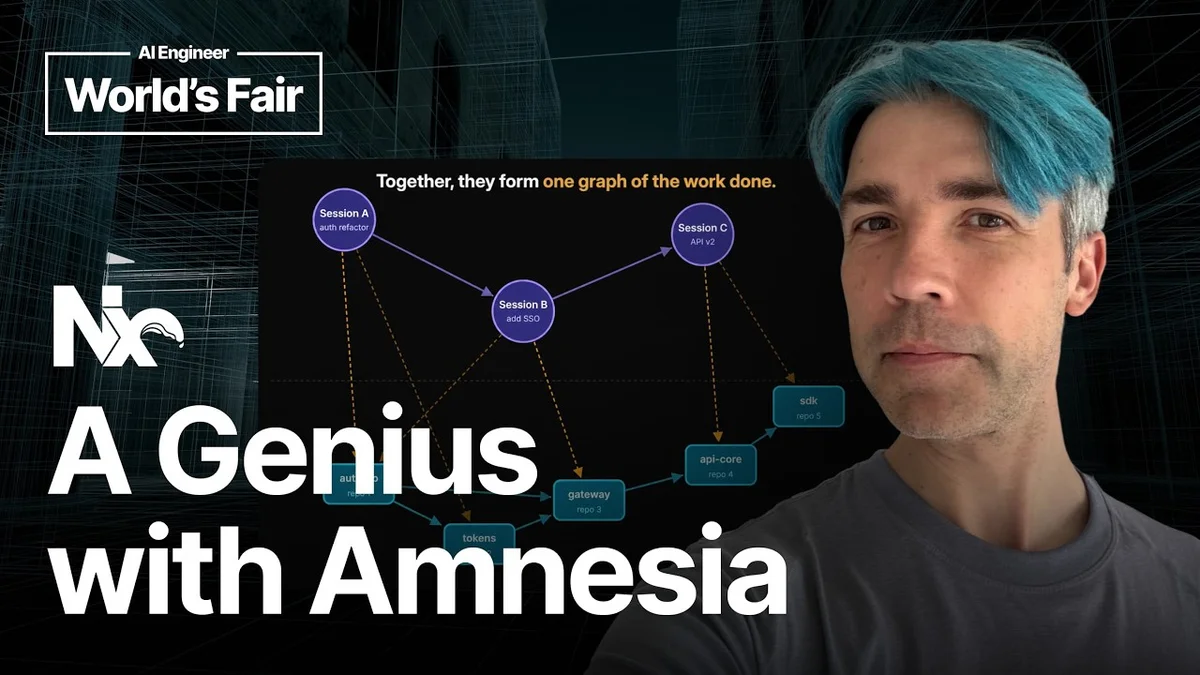
Victor Savkin presentation slide on AI agents
Victor Savkin presents on AI agents and the 'amnesia' problem.· AI Engineer
Visual TL;DR
AI Agent AmnesiaDriver
agents start each session with a blank slate, forgetting context
From the article 9+ mentionsVictor Savkin, a prominent figure in the tech space, recently delivered a presentation titled "A Genius With Amnesia," exploring the capabilities and challenges of AI agents, particularly in the context of software development.
Repo BoundariesDriver
agents only see and change one repository at a time
From the article 3 mentionsSavkin detailed two primary categories of problems that contribute to this amnesiac state in AI agents: "Repo Boundaries" and "Amnesia" itself.
Limited System ViewEffect
agents cannot align code with the entire system
Introduce PolygraphCore
a synthetic monorepo tool
From the article 4 mentionsPolygraph achieves this by extracting metadata from various repositories and feeding it into a unified dependency graph, enabling agents to "see" the entire codebase and understand how different parts relate.
Unified Code ViewEffect
creates a single, unified view of code across repositories
From the article 2 mentionsProviding a holistic view: The agent can see all code and remember every decision made, regardless of which repository it originated from.
Solves AmnesiaOutcome
agents can infer best practices and standards from broader codebase
From the article 4 mentionsThe core of Savkin's talk revolved around the concept of "amnesia" in AI agents, drawing parallels to human developers who might forget details or context between coding sessions.
Improved Agent MemoryOutcome
agents retain context and align with system-wide goals
From the article 4 mentionsHe illustrated how agents, by default, start each session with a "blank slate," making the human the sole repository of memory.
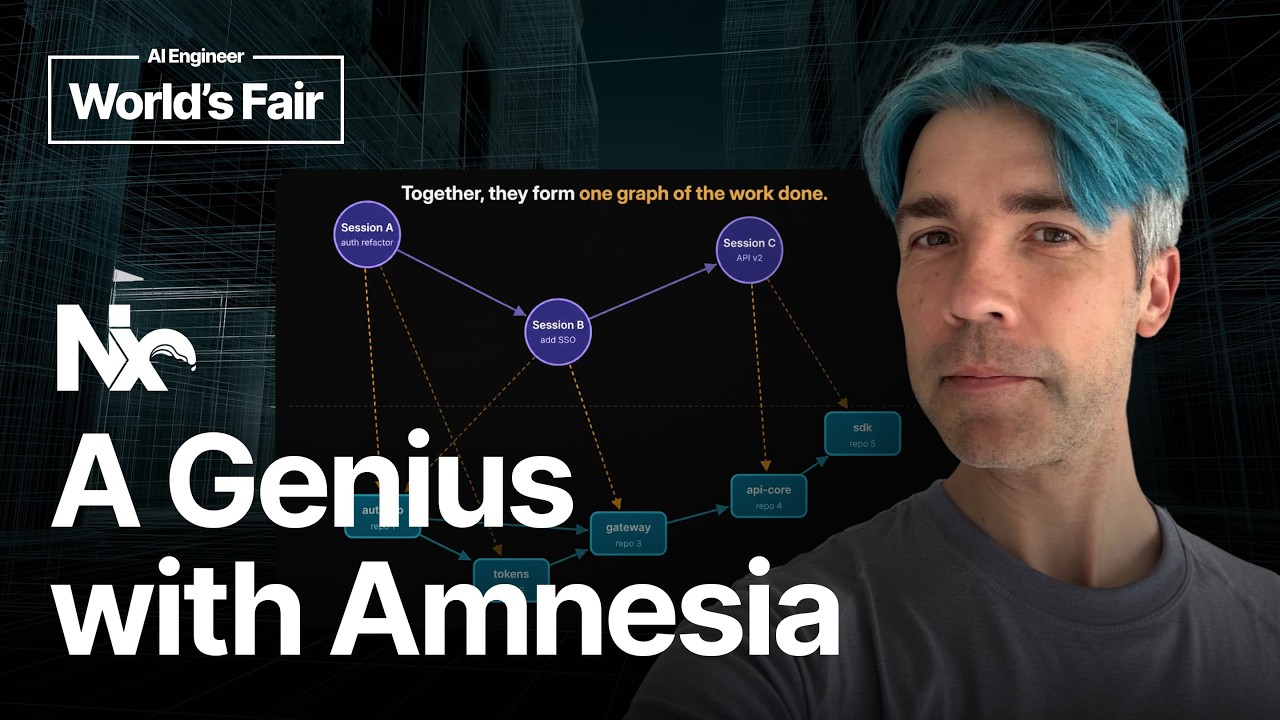
Victor Savkin, a prominent figure in the tech space, recently delivered a presentation titled "A Genius With Amnesia," exploring the capabilities and challenges of AI agents, particularly in the context of software development.

Victor Savkin on AI Agents and 'Amnesia' - AI Engineer
Victor Savkin on AI Agents and 'Amnesia' — from AI Engineer

The core of Savkin's talk revolved around the concept of "amnesia" in AI agents, drawing parallels to human developers who might forget details or context between coding sessions. He illustrated how agents, by default, start each session with a "blank slate," making the human the sole repository of memory.

The Problem of Agent Amnesia

Savkin detailed two primary categories of problems that contribute to this amnesiac state in AI agents: "Repo Boundaries" and "Amnesia" itself. Repo boundaries refer to the limitation where agents can only see and change one repository at a time, never the entire system. This means agents cannot align code with the rest of the system or infer best practices and standards from the broader codebase.

The "Amnesia" category highlights that agents forget the work done as a whole, with every session starting from scratch. This lack of persistent memory necessitates that the human developer acts as the agent's memory, explaining context and previous decisions repeatedly. Savkin demonstrated this with an example of a UI change that required explanations across multiple modules and the platform itself, leading to what he termed "unnecessary reexplaining." This inefficiency is compounded when multiple developers are involved, each needing to be brought up to speed.

Introducing Polygraph: A Synthetic Monorepo

To address these challenges, Savkin introduced Polygraph, an "Agent-Agnostic Meta-Harness." The core idea behind Polygraph is to create a "synthetic monorepo." This allows for connecting separate repositories into a single, unified dependency graph without altering any existing code. Polygraph achieves this by extracting metadata from various repositories and feeding it into a unified dependency graph, enabling agents to "see" the entire codebase and understand how different parts relate.

Savkin showcased how Polygraph visualizes this data, creating a comprehensive graph of the organization's work. The agent, by having access to this graph, can understand dependencies, track changes, and recall past decisions. This eidetic memory for the entire organization is crucial for agents to function effectively and efficiently.

How Polygraph Solves the Problems

Polygraph tackles the identified issues by:

  • Setting up cross-repo agentic sessions: It transforms multi-repo changes into a simple operation.
  • Providing a holistic view: The agent can see all code and remember every decision made, regardless of which repository it originated from.
  • Facilitating intelligent repo selection: Instead of manually selecting repositories, the agent can intelligently identify and utilize relevant repositories based on the task.
  • Enabling efficient information retrieval: The agent can quickly access and leverage past session data, eliminating the need for repetitive explanations.

Savkin demonstrated the practical application of Polygraph through several demos, including starting a new session, resuming an existing one, and fixing bugs across multiple repositories. The tool allows agents to clone relevant repositories, analyze code, and even identify potential issues or improvements by referencing past work and understanding the broader context.

The presentation underscored the critical need for memory and context in AI agents to move beyond simple task execution towards more complex, collaborative, and efficient software development workflows.

© 2026 StartupHub.ai. All rights reserved. Do not enter, scrape, copy, reproduce, or republish this article in whole or in part. Use as input to AI training, fine-tuning, retrieval-augmented generation, or any machine-learning system is prohibited without written license. Substantially-similar derivative works will be pursued to the fullest extent of applicable copyright, database, and computer-misuse laws. See our terms.