Artificial Intelligence

Stripe's AI Strategy: Build Everything, Faster

Stripe's CPO Will Gaybrick discusses how AI is transforming software development, the company's growth strategy, and the future of agentic commerce.

StartupHub.ai Staff

By StartupHub.ai Staff, reviewed by Daniel Singer, Editor

5 min read

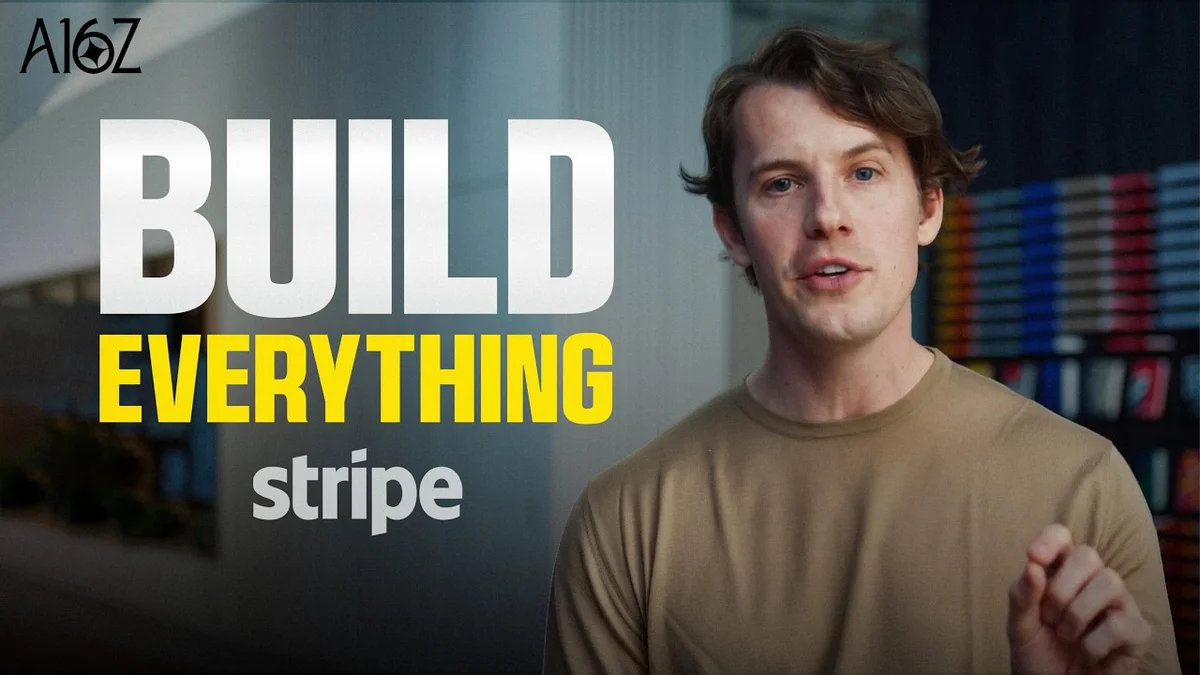
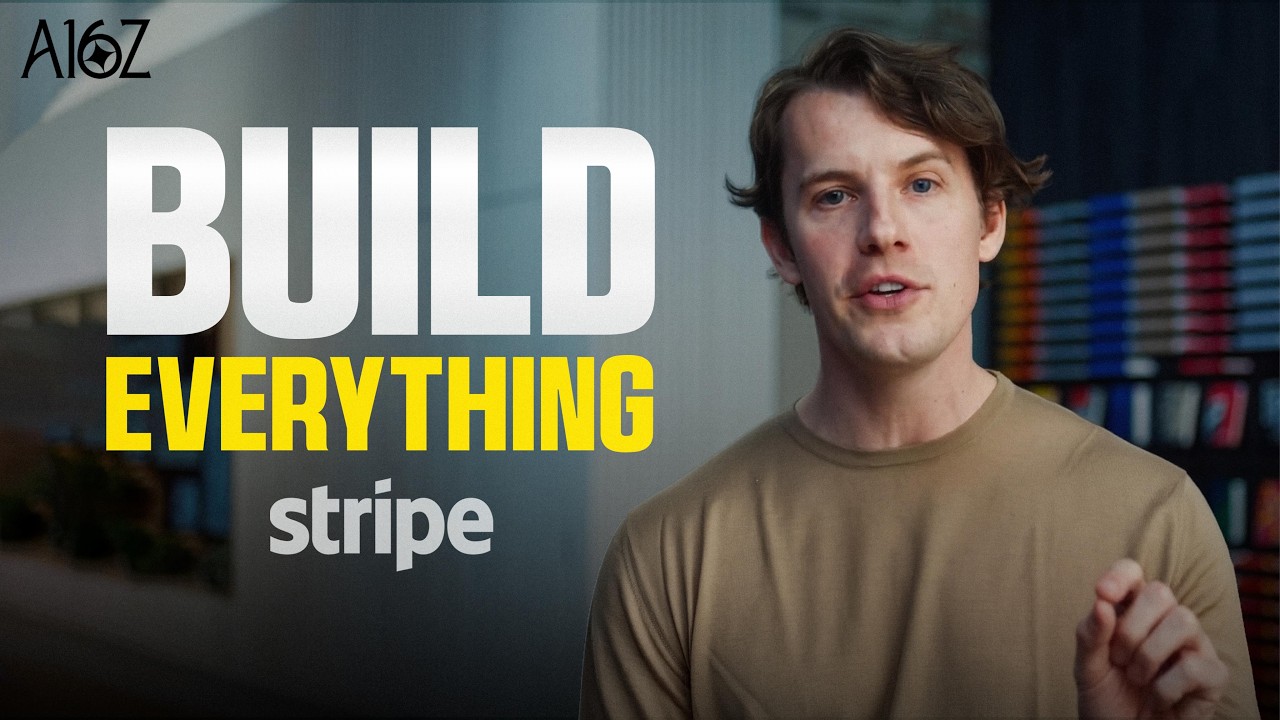
Will Gaybrick, Chief Product Officer of Stripe, speaking at a table.
Credit: a16z
Visual TL;DR
Stripe's AI StrategyCore
From the article 9+ mentionsIn a recent conversation, Will Gaybrick, Stripe’s Chief Product Officer, delved into the company’s AI strategy, emphasizing the transformative power of generative AI and its implications for accelerating product development and fostering internal entrepreneurship.
AI Transforms SoftwareDriver
generative AI and agentic capabilities empower single engineers to achieve multi-team output
From the article 4 mentionsHowever, with AI, software now has a distinct cost structure, making such abuse a considerable drain.
Evolved Value PropContext
shifted from payments company to multi-product financial infrastructure platform for growth
Broader Market OpsEffect
AI enables more ambitious software creation, expanding market opportunities for Stripe
Internal ProductivityEffect
AI improves internal processes, from OKRs to 'Stripe Minions' for faster development
From the article 3 mentionsThis internal tooling, combined with process optimization, is key to Stripe’s ability to ship more and build faster.
Tackle AI AbuseDriver
Stripe addresses AI-driven fraud and abuse while expanding globally with new tools
From the article 4 mentionsHe stated, “Our belief is that it’s just an opportunity to build everything.” The company sees increased productivity from engineers not as a reason to reduce headcount, but as an opportunity to tackle the vast backlog of user requests and build more adjacent products that compound existing offerings.
Win All StartupsContext
strategy focuses on acquiring and retaining startups, then winning them again with new products
From the articleGaybrick elaborated on Stripe’s product strategy, summarizing it as “win all the startups and then win them again.” This approach is rooted in the ambition and high standards of startups, which drive Stripe to continuously improve its offerings.
Focus GrowthOutcome
prioritizing growth over cost optimization, leveraging AI for new revenue streams
From the article 4 mentionsThis includes a focus on spend management for customers using Stripe Treasury, helping them optimize token usage both for operational expenses and product efficacy.
Contents(8)

In a recent conversation, Will Gaybrick, Stripe’s Chief Product Officer, delved into the company’s AI strategy, emphasizing the transformative power of generative AI and its implications for accelerating product development and fostering internal entrepreneurship. Gaybrick highlighted how advancements in AI, particularly agentic capabilities, are enabling a single engineer to accomplish the work of multiple teams, thereby broadening market opportunities and allowing for more ambitious software creation.

Stripe's AI Strategy: Build Everything, Faster - a16z
Stripe's AI Strategy: Build Everything, Faster, a16z

Stripe's Evolved Value Proposition

Gaybrick explained that Stripe has shifted its value proposition from being a payments company with add-ons to a multi-product platform focused on financial infrastructure. This platform aims to help businesses grow by reducing friction and increasing agency, enabling greater agility in business models, easier global operations, and faster revenue and cash management. The product suite has expanded significantly beyond payments to include billing, subscriptions, invoicing, Connect for platforms and marketplaces, Radar for fraud mitigation, tax services, and around 25-30 other core branded products, with thousands of features supporting them.

Tackling AI-Driven Abuse and Global Expansion

The discussion touched upon how the rise of AI has introduced new challenges, such as free trial abuse. Gaybrick cited the example of companies experiencing significant abuse, where pre-AI, the compute cost was negligible. However, with AI, software now has a distinct cost structure, making such abuse a considerable drain. Stripe responded by developing a weekend pipeline that uses foundation models and network-wide embeddings to identify potential free trial abusers. He noted that 11 Labs, for instance, is now blocking 2,000 free trial abusers daily using Stripe signals.

On the global expansion front, Gaybrick pointed out the persistent difficulty in going global due to tax regulations and geographical registration requirements. To address this, Stripe has introduced products like Stripe Managed Payments, where Stripe acts as the merchant of record in long-tail markets, handling tax calculations and remittances. This allows companies like AEFs to compliantly cover over 100 geographies.

The "Win All Startups, Then Win Them Again" Strategy

Gaybrick elaborated on Stripe’s product strategy, summarizing it as “win all the startups and then win them again.” This approach is rooted in the ambition and high standards of startups, which drive Stripe to continuously improve its offerings. By serving startups from their early stages, Stripe grows with them, forcing the company to become “asynchronously great” for enterprises as well. This strategy has led to significant growth, with new SaaS cohorts generating substantially more revenue than comparable earlier cohorts.

The Impact of AI on Software Creation and Productivity

Gaybrick attributed much of Stripe’s recent growth to AI, which is fostering new business creation by enabling capabilities previously impossible. He noted that the cost of software development has decreased significantly due to agentic coding, requiring fewer engineers to build complex products. This has led to an explosion in new software creation, with Stripe Billing usage, in particular, seeing a disproportionately high increase, driven by new software companies.

Internal Progress: From OKRs to 'Stripe Minions'

To manage this rapid product development, Stripe has adopted mechanisms inspired by leading companies like Google (OKRs), Microsoft (sales organization), Apple (DRi culture, product reviews), and Ford/Boeing Aviation (operational mechanisms). Gaybrick emphasized that in the current AI-driven landscape, where individual engineers are more powerful than ever, Stripe aims to become a platform for founders internally. He highlighted the development of “Stripe Minions,” one-shot, end-to-end coding agents that can build features from a prompt through CI/CD and testing, reducing iteration time.

Minions have seen a dramatic increase in usage, with PRs generated by them jumping from 1,200 per week to 7,000 per week recently, accounting for about 30% of all PRs. This internal tooling, combined with process optimization, is key to Stripe’s ability to ship more and build faster.

Focusing on Growth Over Cost Optimization

While acknowledging the market narrative around efficiency and cost reduction enabled by AI, Stripe’s philosophy, as articulated by Gaybrick, is to reinvest in growth. He stated, “Our belief is that it’s just an opportunity to build everything.” The company sees increased productivity from engineers not as a reason to reduce headcount, but as an opportunity to tackle the vast backlog of user requests and build more adjacent products that compound existing offerings. This approach is validated by the observation that new SaaS platform cohorts are significantly larger and growing faster than previous ones.

The Future of Agentic Commerce and Microtransactions

Gaybrick also discussed the nascent field of agentic commerce, noting the lack of established primitives and canonical use cases. He believes that for agentic commerce to flourish, primitives like the Tempo machine payments protocol are necessary. The future of checkout for agents remains an open question, but browser automation is improving. He anticipates a shift towards B2B agentic services, such as provisioning services like Vercel or BrowserBase agentically. Furthermore, Gaybrick highlighted the need for “micro-consumption APIs” to unlock agentic commerce by enabling seamless, low-friction transactions for specific tasks, moving away from monthly subscription models.

The Role of Stablecoins and the Token Economy

Touching upon stablecoins, Gaybrick emphasized their potential as a superior platform for money movement, offering faster, cheaper, and more global transactions. He sees crypto rails as a solution to political challenges in financial systems, providing a universal platform. Stripe is making stablecoins native to its Treasury service, allowing users to hold balances in stables alongside fiat currencies. This aims to bring more people into the global online economy, facilitating transactions with AI companies and enabling powerful AI development regardless of geographic location.

Stripe views the token economy as a significant future opportunity, recognizing the blurring lines between tokens and dollars. The company feels a mandate to protect users in the token space just as it does with fiat, ensuring seamless and safe movement between the two. This includes a focus on spend management for customers using Stripe Treasury, helping them optimize token usage both for operational expenses and product efficacy.

Mentioned in this story

Markets

Sources

TopicsWill GaybrickStripeArtificial IntelligenceNASDAQ:PYPLNASDAQ:SQNASDAQ:ADBENASDAQ:MSFTNASDAQ:GOOGL

StartupHub.ai StaffDaniel SingerWritten by StartupHub.ai Staff, Editorial teamReviewed by Daniel Singer, EditorAbout

StartupHub.ai Staff, Editorial team

The staff writers of StartupHub.ai, ranging from investment analysts to avid AI tool users, early adopters and critical enthusiasts. Backgrounds span engineering, business and the arts. We hold every piece to rigorous standards of research and review.

Daniel Singer, Editor

Daniel Singer is an AI expert who has been writing about, covering and building AI technology since 2018.

More from Daniel Singer

Get the free daily brief every morning

Every morning the day's AI news, new AI startups and new funding rounds. Free and takes a few minutes to read, unsubscribe at any time.

Join 64,000 other subscribers.

Test your Agent Readiness now

Paste your website. How well ChatGPT, Claude and the other agents can read and use a site, in about a minute.

The videos behind the news, one flip at a time

The feed mixes the videos from our articles with startup demos and you flip through them like TV channels for free with no signup.