

OpenAI's Lee Spacagna on Operationalizing AI Workflows

Lee Spacagna from OpenAI demonstrates how AI agents can be built and operationalized to automate tasks and multiply workforce impact in financial services.

8 min read
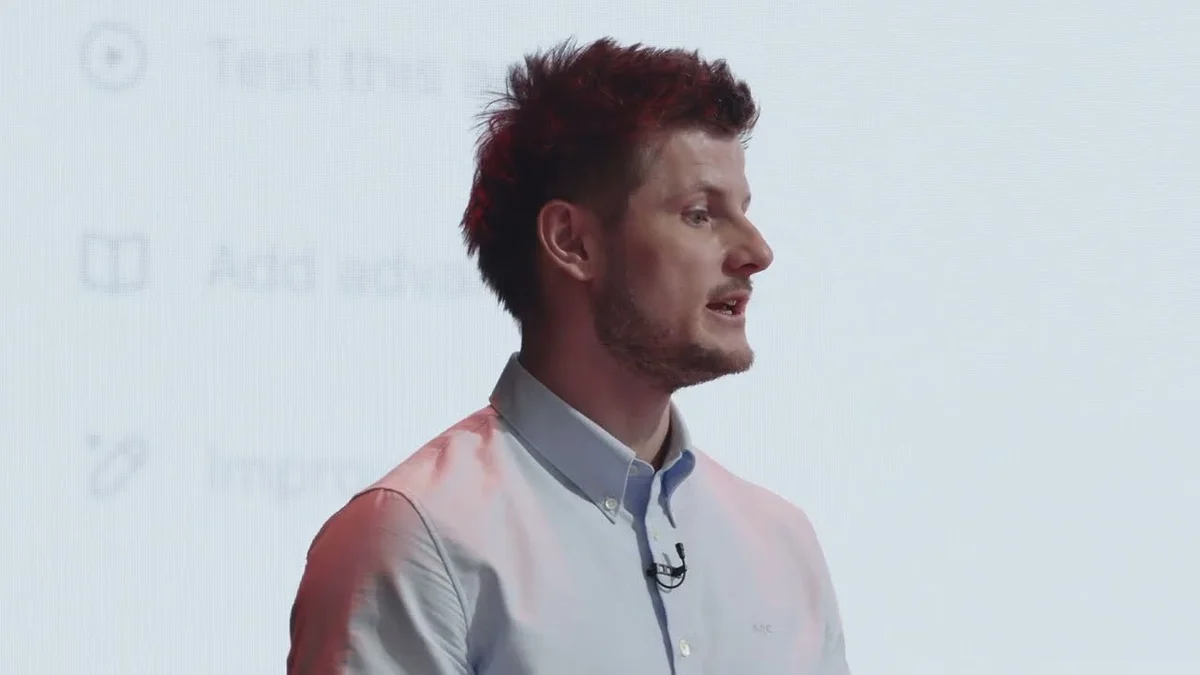
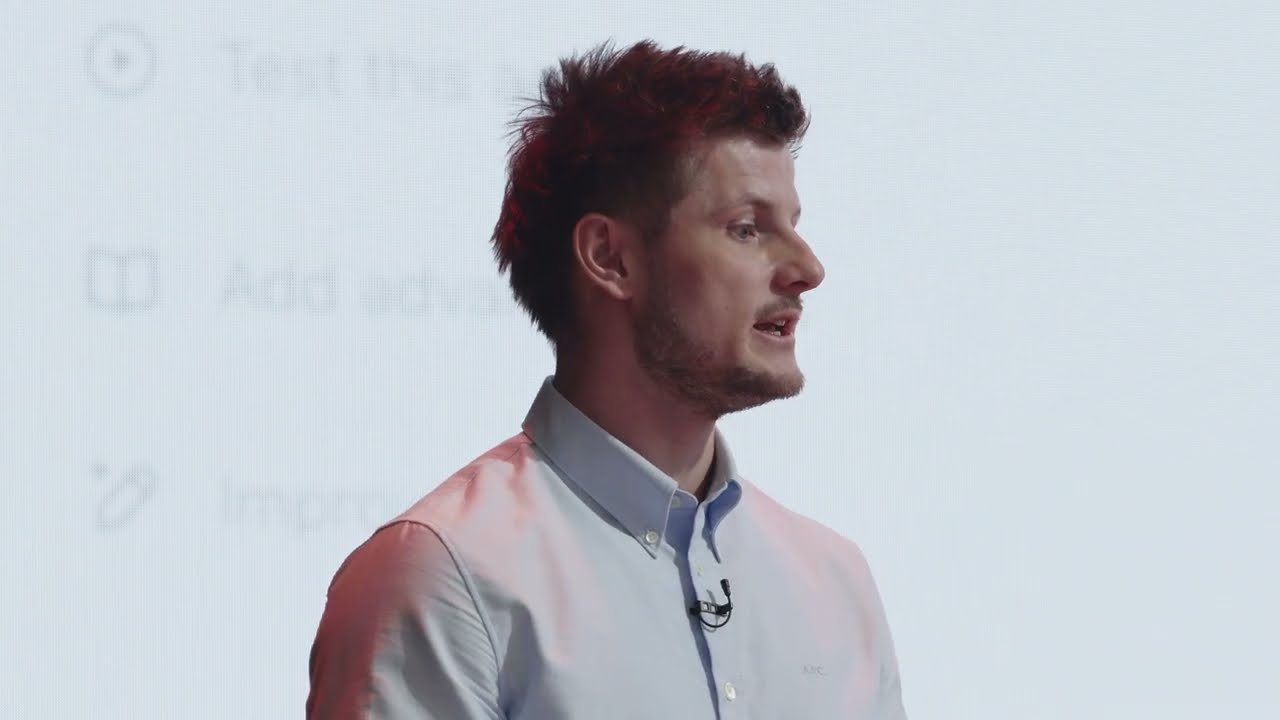
Lee Spacagna, Solutions Engineer at OpenAI, presenting on operationalizing AI in workflows.
OpenAI Youtube

Lee Spacagna, a Solutions Engineer at OpenAI, recently discussed the practical application of artificial intelligence in business workflows at the OpenAI Financial Services Summit. His presentation, titled "Operationalizing AI in workflows," highlighted how AI agents can significantly boost productivity and streamline operations within organizations. Spacagna emphasized that the goal is to move beyond simple AI interactions to creating agents that can perform meaningful tasks, thereby transforming how work gets done.
Visual TL;DR. AI Adoption Evolution leads to Building AI Agents. Building AI Agents and Customizing AI Agents. Customizing AI Agents enables Learning & Improvement. Building AI Agents enables Automate Tasks. Automate Tasks results in Multiply Workforce Impact. Multiply Workforce Impact leading to Transform Work.

  1. AI Adoption Evolution: moving beyond simple GPTs to automating complex multi-step processes
  2. Building AI Agents: training agents to understand business context and execute tasks
  3. Customizing AI Agents: leveraging AI agents for specific business applications and workflows
  4. Learning & Improvement: continuous refinement of AI agent performance and capabilities
  5. Automate Tasks: AI agents performing meaningful tasks across various applications
  6. Multiply Workforce Impact: significantly boosting productivity and streamlining operations in financial services
  7. Transform Work: changing how work gets done through operationalized AI agents
Visual TL;DR
Visual TL;DR — startuphub.ai AI Adoption Evolution leads to Building AI Agents. Building AI Agents and Customizing AI Agents. Building AI Agents enables Automate Tasks. Automate Tasks results in Multiply Workforce Impact leads to and enables results in AI Adoption Evolution Building AI Agents Customizing AI Agents Automate Tasks Multiply Workforce Impact From startuphub.ai · The publishers behind this format
Visual TL;DR — startuphub.ai AI Adoption Evolution leads to Building AI Agents. Building AI Agents and Customizing AI Agents. Building AI Agents enables Automate Tasks. Automate Tasks results in Multiply Workforce Impact leads to and enables results in AI AdoptionEvolution Building AIAgents Customizing AIAgents Automate Tasks MultiplyWorkforce Impact From startuphub.ai · The publishers behind this format
Visual TL;DR — startuphub.ai AI Adoption Evolution leads to Building AI Agents. Building AI Agents and Customizing AI Agents. Building AI Agents enables Automate Tasks. Automate Tasks results in Multiply Workforce Impact leads to and enables results in AI Adoption Evolution moving beyond simple GPTs to automatingcomplex multi-step processes Building AI Agents training agents to understand businesscontext and execute tasks Customizing AI Agents leveraging AI agents for specific businessapplications and workflows Automate Tasks AI agents performing meaningful tasksacross various applications Multiply Workforce Impact significantly boosting productivity andstreamlining operations in financialservices From startuphub.ai · The publishers behind this format
Visual TL;DR — startuphub.ai AI Adoption Evolution leads to Building AI Agents. Building AI Agents and Customizing AI Agents. Building AI Agents enables Automate Tasks. Automate Tasks results in Multiply Workforce Impact leads to and enables results in AI AdoptionEvolution moving beyondsimple GPTs toautomating complex… Building AIAgents training agents tounderstand businesscontext and execute… Customizing AIAgents leveraging AIagents for specificbusiness… Automate Tasks AI agentsperformingmeaningful tasks… MultiplyWorkforce Impact significantlyboostingproductivity and… From startuphub.ai · The publishers behind this format
Visual TL;DR — startuphub.ai AI Adoption Evolution leads to Building AI Agents. Building AI Agents and Customizing AI Agents. Customizing AI Agents enables Learning & Improvement. Building AI Agents enables Automate Tasks. Automate Tasks results in Multiply Workforce Impact. Multiply Workforce Impact leading to Transform Work leads to and enables enables results in leading to AI Adoption Evolution moving beyond simple GPTs to automatingcomplex multi-step processes Building AI Agents training agents to understand businesscontext and execute tasks Customizing AI Agents leveraging AI agents for specific businessapplications and workflows Learning & Improvement continuous refinement of AI agentperformance and capabilities Automate Tasks AI agents performing meaningful tasksacross various applications Multiply Workforce Impact significantly boosting productivity andstreamlining operations in financialservices Transform Work changing how work gets done throughoperationalized AI agents From startuphub.ai · The publishers behind this format
Visual TL;DR — startuphub.ai AI Adoption Evolution leads to Building AI Agents. Building AI Agents and Customizing AI Agents. Customizing AI Agents enables Learning & Improvement. Building AI Agents enables Automate Tasks. Automate Tasks results in Multiply Workforce Impact. Multiply Workforce Impact leading to Transform Work leads to and enables enables results in leading to AI AdoptionEvolution moving beyondsimple GPTs toautomating complex… Building AIAgents training agents tounderstand businesscontext and execute… Customizing AIAgents leveraging AIagents for specificbusiness… Learning &Improvement continuousrefinement of AIagent performance… Automate Tasks AI agentsperformingmeaningful tasks… MultiplyWorkforce Impact significantlyboostingproductivity and… Transform Work changing how workgets done throughoperationalized AI… From startuphub.ai · The publishers behind this format

The Evolution of AI Adoption

Spacagna outlined two primary paths for AI adoption: integrating existing AI models via APIs, and building entirely new AI systems. He noted that while many teams have already experimented with custom GPTs, the next frontier involves leveraging AI agents to automate more complex, multi-step processes. These agents, he explained, can be trained to understand specific business contexts and execute tasks across various applications, effectively acting as digital assistants for employees.

Related startups

The full discussion can be found on OpenAI Youtube's YouTube channel.

Operationalizing AI in workflows: Lee Spacagna, Solutions Engineer, OpenAI - OpenAI Youtube
Operationalizing AI in workflows: Lee Spacagna, Solutions Engineer, OpenAI — from OpenAI Youtube

Introducing OpenAI Frontier and Agents

A key focus of Spacagna's talk was the concept of "OpenAI Frontier," a framework designed for enterprise security and governance for sensitive and regulated work. Within this framework, AI agents serve as the core operational units. Spacagna demonstrated the creation of a "Chief of Staff Agent" designed to assist with daily operational tasks. This agent was configured to integrate with essential business tools such as Microsoft Outlook Calendar, Microsoft Teams, and Salesforce CRM.

Building and Customizing AI Agents

The process of building these agents, as shown by Spacagna, is designed to be accessible. Users can select from pre-built templates or create custom agents by defining the required tasks and desired outcomes. Spacagna highlighted that agents can be equipped with various "skills," which are essentially instructions that guide the AI in performing specific actions. By connecting agents to the tools teams already use, such as SharePoint for document management or Salesforce for customer data, businesses can leverage existing workflows and knowledge bases.

Spacagna showcased how an agent could be instructed to prepare daily briefs, review emails, and summarize key information from various sources. He detailed how an agent could be configured to analyze meetings, extract relevant action items, and even send summarized updates via email or Teams. The ability to add custom skills and refine agent behavior based on specific business needs is crucial for maximizing their utility.

The Learning and Improvement Cycle

A significant aspect of these AI agents is their capacity for continuous learning and improvement. As agents interact with data and perform tasks, they refine their understanding and performance. This iterative process allows them to become more efficient and effective over time, much like human professionals who learn and adapt through experience. Spacagna emphasized that this self-improvement loop is key to unlocking the full potential of AI in the workplace.

Transforming Workforce Impact

The ultimate goal of operationalizing AI workflows through these agents is to drive value and multiply workforce impact. By automating repetitive and time-consuming tasks, AI agents free up human employees to focus on more strategic and creative endeavors. Spacagna concluded by illustrating how a wide range of roles, from CFO Chief of Staff to AML Investigation Analysts, can benefit from these AI-powered solutions, ultimately leading to increased productivity and a competitive edge.

© 2026 StartupHub.ai. All rights reserved. Do not enter, scrape, copy, reproduce, or republish this article in whole or in part. Use as input to AI training, fine-tuning, retrieval-augmented generation, or any machine-learning system is prohibited without written license. Substantially-similar derivative works will be pursued to the fullest extent of applicable copyright, database, and computer-misuse laws. See our terms.