
Musk's OpenAI Overhaul Bid Rejected by Jury

A jury has rejected Elon Musk's lawsuit against OpenAI, ruling he sued too late to force an overhaul of the AI company.

7 min read
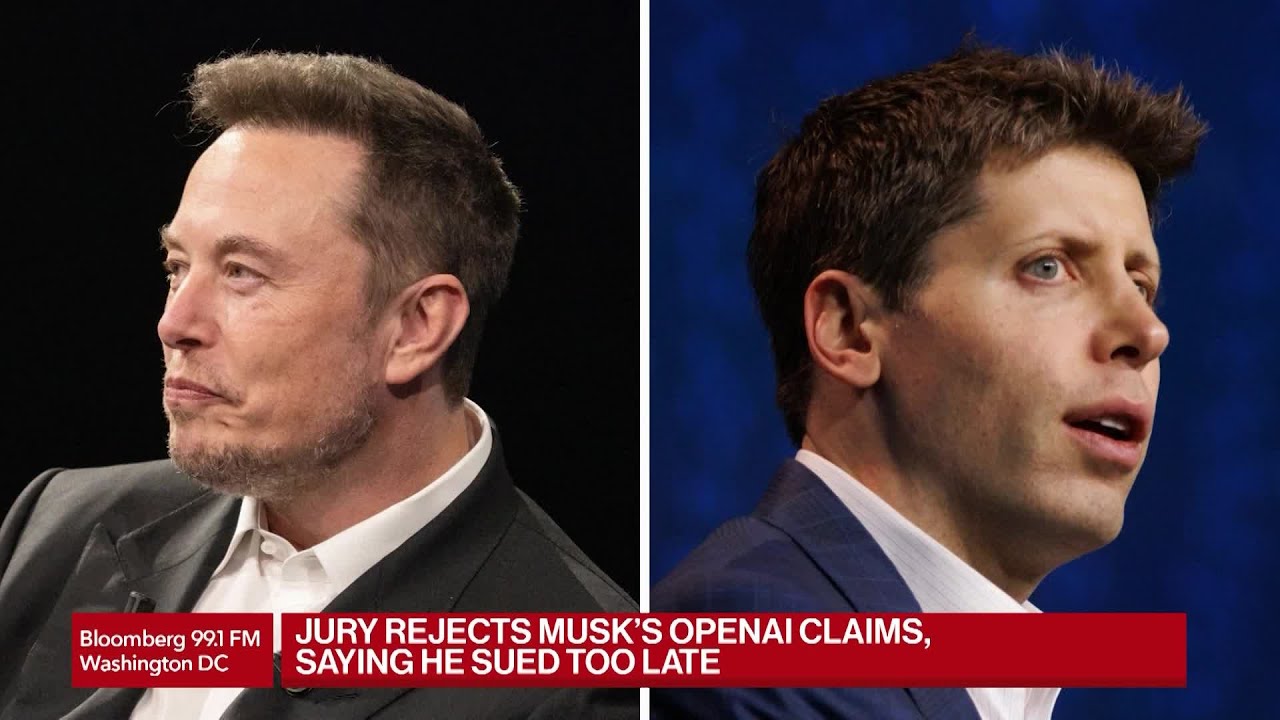
Split image showing Elon Musk on the left and Sam Altman on the right.
Image credit: Getty Images / Bloomberg· Bloomberg Podcast

A significant legal battle has concluded with a jury siding against Elon Musk in his lawsuit seeking to force a fundamental overhaul of OpenAI. The jury's verdict, delivered on Friday, found that Musk waited too long to bring his claims, effectively dismissing his case and allowing OpenAI to continue its current trajectory without the constraints he sought to impose. This ruling is a major win for OpenAI and its leadership, providing much-needed stability and freedom to pursue its mission of developing advanced artificial intelligence.

Visual TL;DR. Musk sues OpenAI vs OpenAI's defense. OpenAI's defense leads to Jury's verdict. Jury's verdict means Lawsuit rejected. Lawsuit rejected enables OpenAI's future. Lawsuit rejected leaves Musk's next steps.

  1. Musk sues OpenAI: Elon Musk alleged OpenAI breached founding agreement
  2. OpenAI's defense: Company argued Musk's claims were filed too late
  3. Jury's verdict: Jury ruled Musk sued too late to force overhaul
  4. Lawsuit rejected: Musk's case dismissed, allowing OpenAI's current trajectory
  5. OpenAI's future: Company gains stability to pursue advanced AI development
  6. Musk's next steps: Legal battle concluded, Musk to consider future actions
Visual TL;DR
Visual TL;DR — startuphub.ai Musk sues OpenAI vs OpenAI's defense. OpenAI's defense leads to Jury's verdict. Jury's verdict means Lawsuit rejected vs leads to means Musk sues OpenAI OpenAI's defense Jury's verdict Lawsuit rejected From startuphub.ai · The publishers behind this format
Visual TL;DR — startuphub.ai Musk sues OpenAI vs OpenAI's defense. OpenAI's defense leads to Jury's verdict. Jury's verdict means Lawsuit rejected vs leads to means Musk sues OpenAI Elon Musk alleged OpenAI breached foundingagreement OpenAI's defense Company argued Musk's claims were filedtoo late Jury's verdict Jury ruled Musk sued too late to forceoverhaul Lawsuit rejected Musk's case dismissed, allowing OpenAI'scurrent trajectory From startuphub.ai · The publishers behind this format
Visual TL;DR — startuphub.ai Musk sues OpenAI vs OpenAI's defense. OpenAI's defense leads to Jury's verdict. Jury's verdict means Lawsuit rejected vs leads to means Musk sues OpenAI Elon Musk allegedOpenAI breachedfounding agreement OpenAI's defense Company arguedMusk's claims werefiled too late Jury's verdict Jury ruled Musksued too late toforce overhaul Lawsuit rejected Musk's casedismissed, allowingOpenAI's current… From startuphub.ai · The publishers behind this format
Visual TL;DR — startuphub.ai Musk sues OpenAI vs OpenAI's defense. OpenAI's defense leads to Jury's verdict. Jury's verdict means Lawsuit rejected. Lawsuit rejected enables OpenAI's future. Lawsuit rejected leaves Musk's next steps vs leads to means enables leaves Musk sues OpenAI Elon Musk alleged OpenAI breached foundingagreement OpenAI's defense Company argued Musk's claims were filedtoo late Jury's verdict Jury ruled Musk sued too late to forceoverhaul Lawsuit rejected Musk's case dismissed, allowing OpenAI'scurrent trajectory OpenAI's future Company gains stability to pursue advancedAI development Musk's next steps Legal battle concluded, Musk to considerfuture actions From startuphub.ai · The publishers behind this format
Visual TL;DR — startuphub.ai Musk sues OpenAI vs OpenAI's defense. OpenAI's defense leads to Jury's verdict. Jury's verdict means Lawsuit rejected. Lawsuit rejected enables OpenAI's future. Lawsuit rejected leaves Musk's next steps vs leads to means enables leaves Musk sues OpenAI Elon Musk allegedOpenAI breachedfounding agreement OpenAI's defense Company arguedMusk's claims werefiled too late Jury's verdict Jury ruled Musksued too late toforce overhaul Lawsuit rejected Musk's casedismissed, allowingOpenAI's current… OpenAI's future Company gainsstability to pursueadvanced AI… Musk's next steps Legal battleconcluded, Musk toconsider future… From startuphub.ai · The publishers behind this format

Musk's Claims and OpenAI's Defense

Elon Musk, a co-founder of OpenAI, had alleged that the company had breached its founding agreement by deviating from its original non-profit, open-source mission to pursue a for-profit model. He sought to compel OpenAI to return to its original charter, which he argued was essential for ensuring that artificial general intelligence (AGI) benefits all of humanity. However, the jury's decision focused on the legal statute of limitations, determining that Musk's claims were not brought within the legally permissible timeframe. This legal technicality proved decisive, negating the need for the jury to rule on the merits of Musk's broader arguments about OpenAI's direction.

Related startups

The Significance of the 'Too Late' Verdict

Matthew Schettenhelm, a Media Litigation Analyst at Bloomberg Intelligence, explained the implications of the jury's verdict. "It was always a difficult factual case from Musk because, look, a lot of these negotiations about starting up OpenAI happened in 2016, 2017, 2018," Schettenhelm stated. "We're looking at a lawsuit that didn't bring into much after that... One of the reasons we have a statute of limitations is that we want parties to act when they have claims, you know, you can't just sit on these things and then go after someone many years down the road."

The full discussion can be found on Bloomberg Podcast's YouTube channel.

Musk Loses Case Against Altman to Force OpenAI Overhaul - Bloomberg Podcast
Musk Loses Case Against Altman to Force OpenAI Overhaul — from Bloomberg Podcast

Schettenhelm further elaborated on the legal principle at play: "What this jury is saying is that, even if Musk had a real claim that OpenAI had misused its charter, he should have brought that claim much earlier. He knew about it effectively for years and didn't do anything about it. And then you could argue that the judge has to consider these things... appeals courts have a very hard time overturning a jury decision on the statute of limitations."

Implications for OpenAI's Future

The ruling provides substantial clarity for OpenAI, which has rapidly evolved from a research lab into a major commercial force in the AI space. The lawsuit had cast a shadow over the company's operations and its relationship with key partners like Microsoft (NASDAQ:MSFT). With this legal hurdle cleared, OpenAI can continue its pursuit of developing increasingly sophisticated AI models, such as GPT-4 and its successors, and expanding their commercial applications without the immediate threat of a forced restructuring.

The decision also reinforces the legal framework governing non-profit conversions and the importance of timely legal action. For startups and established companies alike, it serves as a reminder that alleged breaches of foundational agreements must be addressed promptly to maintain legal standing. This outcome is likely to be seen as a victory for venture-backed companies that have undergone significant transformations since their inception.

Musk's Next Steps

While the jury's decision is a significant setback for Elon Musk, he may still have the option to appeal. However, as Schettenhelm noted, overturning a jury's finding on a statute of limitations defense is typically a challenging legal endeavor. The outcome of this case could influence how future disputes involving the evolution of tech companies from non-profit to for-profit entities are handled.

© 2026 StartupHub.ai. All rights reserved. Do not enter, scrape, copy, reproduce, or republish this article in whole or in part. Use as input to AI training, fine-tuning, retrieval-augmented generation, or any machine-learning system is prohibited without written license. Substantially-similar derivative works will be pursued to the fullest extent of applicable copyright, database, and computer-misuse laws. See our terms.