

Visual TL;DR
Single AI LimitationsDriver
single agent lacks self-awareness to flag uncertainty
From the article 9+ mentionsIn the rapidly evolving world of artificial intelligence, the question of whether a single AI agent can handle complex tasks is increasingly being answered with a resounding 'no'.
High-Stakes DecisionsDriver
erroneous decisions can have severe consequences in healthcare, finance
From the article 8 mentionsIBM AI Engineer Bri Kopecki explains that while single AI agents are designed to provide plausible outputs, they often struggle with the nuances and uncertainties inherent in high-stakes environments.
Multi-Agent AICore
multiple AI agents collaborate for better decision-making
From the article 4 mentionsThe solution, as presented in the video, lies in multi-agent systems.
Human Collaboration ParallelContext
draws parallels to human teamwork and problem-solving
From the articleThese systems mimic human collaboration, where multiple individuals with different perspectives and expertise work together to achieve a common goal.
Trustworthy AIEffect
building reliable AI systems for critical applications
From the article 2 mentionsKopecki emphasizes that the principle of multiple agents verifying each other's work is fundamental to building trustworthy AI systems, especially in high-stakes domains.
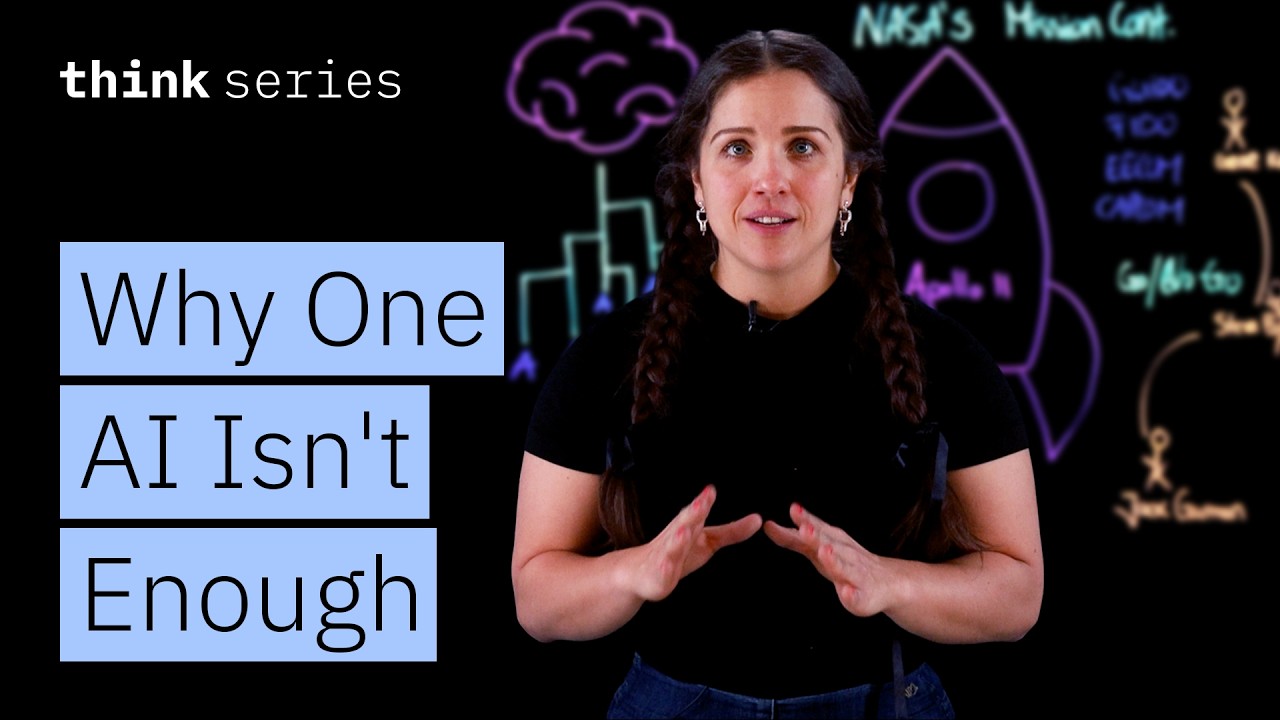
Apollo 11 MissionContext
lessons from mission's complex, collaborative problem-solving
From the article 3 mentionsTo illustrate the effectiveness of multi-agent systems, Kopecki references the historic Apollo 11 mission.