

Isadora Martin-Dye: Layering AI Tone Instructions

Isadora Martin-Dye explains why simple tone instructions for AI are insufficient, advocating for a four-layered approach to prompt engineering.

5 min read
Slide titled 'Stop Writing Tone Instructions. Layer Them.' with presenter Isadora Martin-Dye.
AI Engineer

In a presentation titled "Stop Writing Tone Instructions. Layer Them.," Isadora Martin-Dye of Isadora & Co. outlines a sophisticated approach to managing AI behavior, moving beyond simple tone commands to a more robust, layered system. Martin-Dye, who also runs a wedding venue and a personal AI companion app, emphasizes that effective AI interaction requires a deeper understanding of context and a more nuanced prompting strategy.
Isadora Martin-Dye: Layering AI Tone Instructions - AI Engineer
Isadora Martin-Dye: Layering AI Tone Instructions — from AI Engineer

Managing AI Like a Brilliant Intern

Martin-Dye frames the challenge of AI prompting by comparing it to managing a brilliant but socially unaware intern. This intern possesses high IQ and a perfect memory for instructions but lacks the crucial social intelligence to "read the room." Such an AI can produce technically perfect output that is also socially catastrophic, delivered with unwavering confidence. This highlights the core problem: a single, direct instruction often fails to account for the complexities of real-world interaction and nuanced communication.

Related startups

The "Happy Path" Fallacy

The common approach of providing examples that cover every anticipated question, what Martin-Dye calls the "happy path," is insufficient. She illustrates this with "Turn 21" being the first question the AI fails to answer correctly. The standard advice to "write in our brand voice" with examples works for a while, but it breaks down when the AI encounters unexpected scenarios. This is where the limitations of simple prompting become apparent, leading to responses that are technically correct but contextually inappropriate.

A Four-Layered Architecture for AI

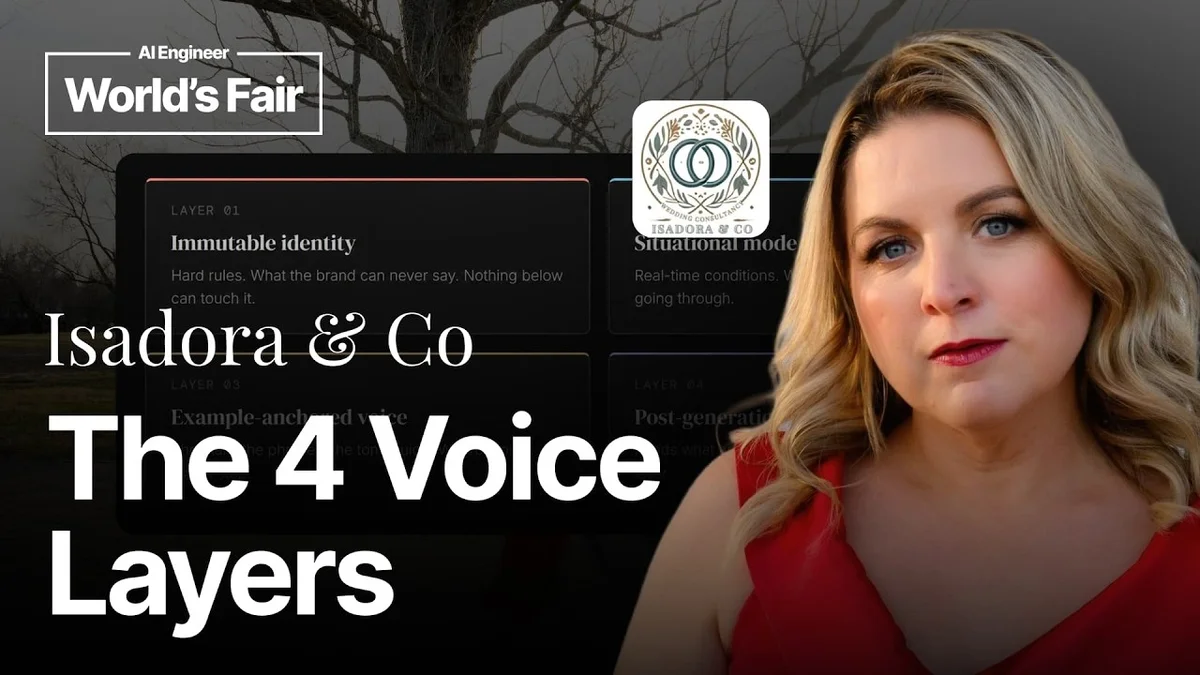
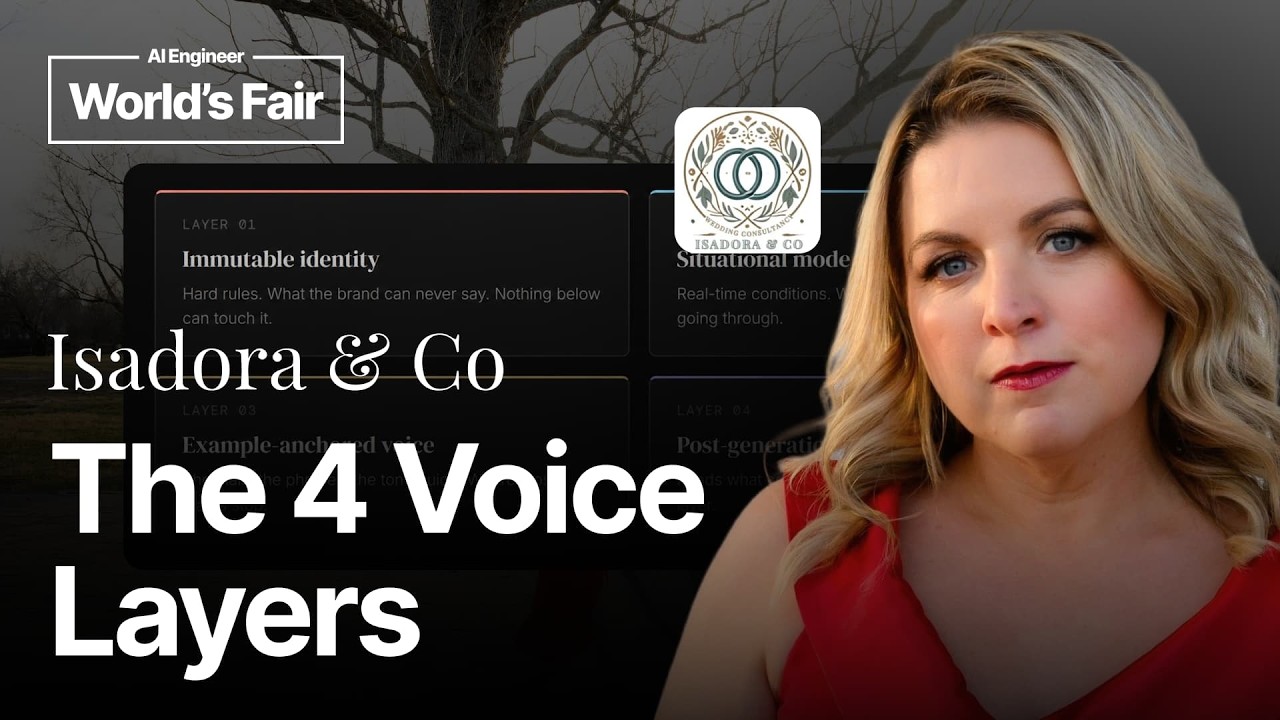
To address these shortcomings, Martin-Dye proposes a four-layered architecture for AI interaction:

  • Layer 1: Immutable Identity: This layer defines hard rules that the brand can never say or do. It acts as a foundational constraint, ensuring the AI's core identity remains intact regardless of the context.
  • Layer 2: Situational Mode: This layer adapts the AI's behavior based on real-time conditions and who the user is. It considers factors like traffic, low fuel, or the user's emotional state, allowing for dynamic adjustments.
  • Layer 3: Example-Anchored Voice: This layer uses specific dials, phrases, and tone guides to shape the AI's output, incorporating examples that demonstrate desired behavior. This is where most teams typically stop.
  • Layer 4: Post-Generation Veto: This is the only layer that reads what the AI has actually produced and can veto it. It acts as a final check, ensuring that the output aligns with all previous layers and constraints.

Martin-Dye notes that a single prompt assembly cannot effectively handle all four jobs simultaneously, hence the need for distinct layers.

The Problem with "Happy Path" Examples

The "happy path" approach, where examples are provided for every anticipated question, is problematic because AI models can still fail when faced with novel situations. Providing a specific example for every possible scenario is impractical. The AI's tendency to generate confident but incorrect responses, especially when the prompt is incomplete or the situation is outside its training data, necessitates a more robust system.

The "Lie" That Doesn't Stay Neutral

Martin-Dye highlights that AI responses can be perceived as "lies" if they are confidently presented but factually incorrect. She contrasts forbidden phrases like "I'd love to show you around" with allowed phrases like "The team would love to host you for a tour." The former implies a physical capability the AI doesn't possess, while the latter is a more accurate representation. Users are not naive; building AI as if they are will inevitably backfire.

Layer 1: Immutable Identity and Trust

Layer 1, the immutable identity, is crucial for establishing trust. The rule that every AI in Bloom discloses its nature in the first reply, and before it asks anything, is a product decision, not a legal one. Transparency is the trust signal. This layer ensures that the AI's fundamental identity cannot be overridden by venue configuration, voice profiles, or user requests. The AI must always confirm it is an AI.

Layer 2: Real-Time Conditions and Context

Layer 2, "Real-time conditions: Who's in the car," emphasizes the importance of context. The AI needs to understand the user's current situation and adapt its response accordingly. For example, a "heat drop" mentioned in the context of a parent's child undergoing chemotherapy should be narrated differently than a heat drop with no soft context. This layer ensures the AI's response is not just accurate but also empathetic and appropriate to the user's circumstances.

Layer 3: Example-Anchored Voice and Its Limits

Layer 3, "Example-anchored voice," involves providing specific examples and tone guides to shape the AI's output. However, Martin-Dye stresses that "Examples are not guarantees." This layer has structural limitations: it cannot enforce rules that the brand can never break (that's Layer 1), nor can it respond to the specific person or their situation (that's Layer 2). Crucially, it cannot catch the model producing something it shouldn't, which is the domain of Layer 4.

Layer 4: The Veto Power

Layer 4, the "Post-generation veto," is the only layer that actively checks the AI's output against reality. It's designed to catch instances where the AI might invent facts or provide information that contradicts its own programming or the established context. This layer is deterministic, ensuring that the AI's responses are factually sound and align with the intended brand voice and user experience.

The Importance of Layering

Martin-Dye's core message is that effective AI requires a layered approach. Each layer serves a distinct purpose, building upon the one below it. Layer 1 provides the foundational identity, Layer 2 adapts to context, Layer 3 shapes the voice with examples, and Layer 4 acts as a critical final check. This layered system prevents the AI from making critical errors, such as offering unavailable dates or responding inappropriately to sensitive situations, as highlighted by the "Threadline" example for families of missing people.

She concludes by emphasizing that users are not testing AI; they are trusting it. The prompt will eventually fail or produce an undesirable output. The key is to identify these failures during testing rather than in front of a customer.

© 2026 StartupHub.ai. All rights reserved. Do not enter, scrape, copy, reproduce, or republish this article in whole or in part. Use as input to AI training, fine-tuning, retrieval-augmented generation, or any machine-learning system is prohibited without written license. Substantially-similar derivative works will be pursued to the fullest extent of applicable copyright, database, and computer-misuse laws. See our terms.