Artificial Intelligence

Developers Seek AI Leaps from Apple

Developers are eager for Apple to enhance its AI capabilities, especially for Siri, hoping for more sophisticated on-device and cloud-based integrations across its device ecosystem.

StartupHub.ai Staff

By StartupHub.ai Staff, reviewed by Daniel Singer, Editor

4 min read

Visual TL;DR
Developers want AIDriver
developers eager for Apple to enhance its AI capabilities
From the article 9 mentionsFor instance, instead of just controlling smart home devices, developers want their apps to be able to process more complex data and respond to more sophisticated prompts, ultimately making the user experience more fluid and intuitive.
Siri needs improvementDriver
Siri to evolve from simple voice commands to intelligent assistant
From the articleThe current limitation, as described, is Siri's inability to handle multi-step requests or to effectively interpret nuanced user intentions, often resulting in requests for clarification or the need for users to phrase commands in very specific ways.
More app data accessContext
From the articleHudson explained that developers hope to expose more of their app data directly to Siri, enabling more complex interactions that go beyond basic commands.
Complex interactionsEffect
From the article 3 mentionsHudson explained that developers hope to expose more of their app data directly to Siri, enabling more complex interactions that go beyond basic commands.
Apple's AI leapsOutcome
Apple to leapfrog current AI limitations with sophisticated tools
From the article 9+ mentionsThis would represent a significant leap forward, enabling a more cohesive and powerful user experience that leverages the full potential of Apple's hardware and software integration.
On-device vs. CloudContext
bridging the gap between on-device and cloud AI
From the article 5 mentionsWhile this has benefits, developers are hoping for a future where Apple also leverages its cloud infrastructure to power more advanced AI models.
Integrated ecosystemOutcome
From the articleDevelopers are eager for Apple to provide the tools and infrastructure to ensure that AI features can be seamlessly integrated and utilized across the entire Apple ecosystem, from iOS and macOS to watchOS and tvOS.
Contents(3)

Developers are keenly anticipating significant advancements in Apple's artificial intelligence offerings, especially concerning the capabilities of its virtual assistant, Siri. The sentiment is that Apple has the potential to leapfrog current AI limitations by providing more sophisticated tools and seamless integration across its product lines.

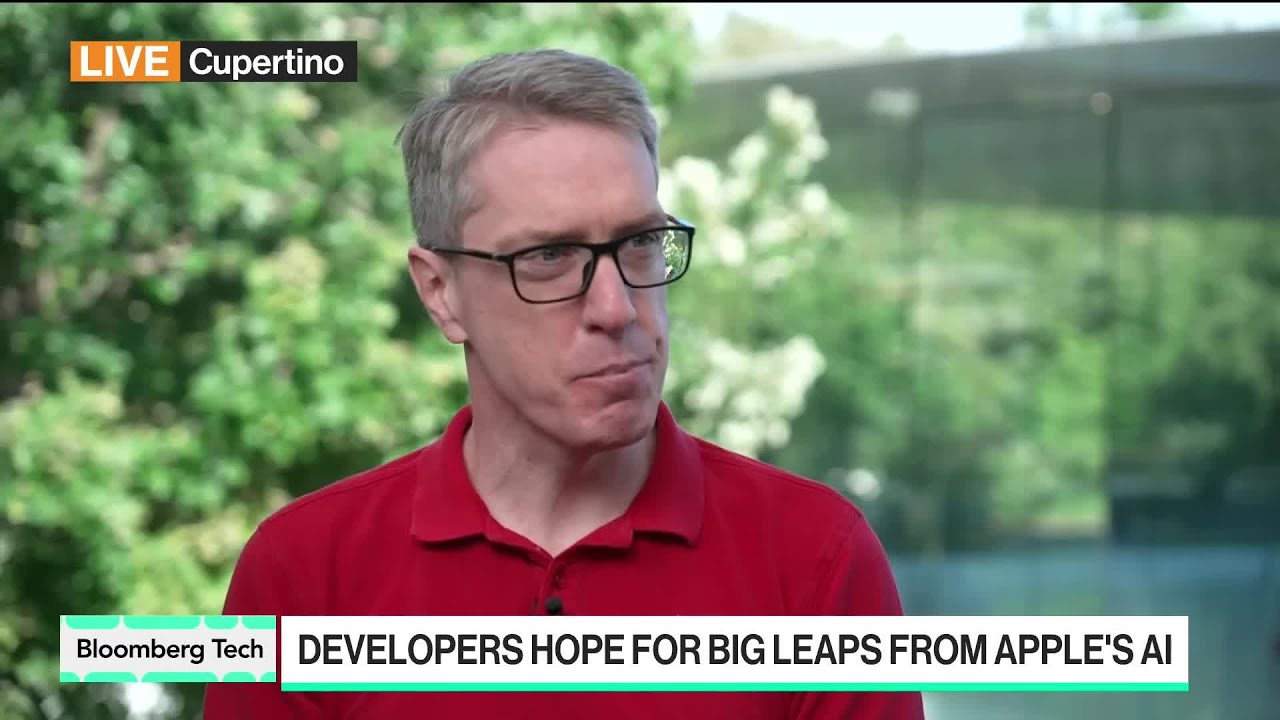
Paul Hudson, creator of Hacking with Swift, expressed this sentiment, highlighting the desire for Siri to evolve from a simple voice command interface into a truly intelligent assistant. Hudson explained that developers hope to expose more of their app data directly to Siri, enabling more complex interactions that go beyond basic commands. The current limitation, as described, is Siri's inability to handle multi-step requests or to effectively interpret nuanced user intentions, often resulting in requests for clarification or the need for users to phrase commands in very specific ways.

The full discussion can be found on Bloomberg Technology's YouTube channel.

Developers Hope for Big Leaps From Apple's AI - Bloomberg Technology
Developers Hope for Big Leaps From Apple's AI, from Bloomberg Technology

The Developer's AI Wishlist for Apple

Hudson's core expectation is that Apple will provide developers with APIs that allow for deeper integration of AI capabilities. The vision is to enable applications to communicate more intelligently with Siri, facilitating tasks that require multiple steps or contextual understanding. For instance, instead of just controlling smart home devices, developers want their apps to be able to process more complex data and respond to more sophisticated prompts, ultimately making the user experience more fluid and intuitive. This would mean a shift from Siri being a single-voice prompt system to a more versatile AI agent capable of understanding and acting on multi-layered requests.

Bridging the Gap: On-Device vs. Cloud AI

A significant point of discussion revolves around Apple's approach to AI, which has historically prioritized on-device processing for privacy and responsiveness. While this has benefits, developers are hoping for a future where Apple also leverages its cloud infrastructure to power more advanced AI models. Hudson noted that while Apple's on-device AI was a strong point last year, the current desire is for a more hybrid approach. He suggested that AI models hosted on Apple's cloud infrastructure could offer greater processing power and a wider range of capabilities, while still maintaining user privacy through robust data handling measures.

The comparison drawn is with competitors like Google, whose AI models are perceived to be more advanced in handling complex queries. Developers are looking for Apple to offer similar capabilities, allowing their applications to benefit from sophisticated AI without being restricted by on-device processing limitations. The hope is that Apple will offer APIs that can tap into these more powerful cloud-based AI models, creating a more seamless and intelligent experience across all Apple devices, from iPhones and Macs to Apple Watches and Apple TVs.

The Road Ahead: Integrated AI Across Apple's Ecosystem

Hudson emphasized that the ultimate goal for developers is to see a more unified AI experience across Apple's entire product suite. This means that an AI-powered feature developed for the iPhone should ideally be accessible and functional on a Mac or iPad with minimal friction. The current fragmentation, where AI capabilities might be limited to specific devices or operating systems, is seen as a bottleneck. Developers are eager for Apple to provide the tools and infrastructure to ensure that AI features can be seamlessly integrated and utilized across the entire Apple ecosystem, from iOS and macOS to watchOS and tvOS.

The expectation is that Apple will announce new APIs and developer tools that will allow for this deeper integration. Hudson specifically mentioned the potential for features like "Universal Control" but powered by AI, where actions on one device could be intelligently mirrored or augmented on another. This would represent a significant leap forward, enabling a more cohesive and powerful user experience that leverages the full potential of Apple's hardware and software integration.

Mentioned in this story

Markets

Get the free daily brief every morning

Every morning the day's AI news, new AI startups and new funding rounds. Free and takes a few minutes to read, unsubscribe at any time.

Join 64,000 other subscribers.

TopicsAppleAISiriPaul HudsonHacking with SwiftArtificial Intelligence

StartupHub.ai Staff

Written by

StartupHub.ai Staff

Editorial team

The staff writers of StartupHub.ai, ranging from investment analysts to avid AI tool users, early adopters and critical enthusiasts. Backgrounds span engineering, business and the arts. We hold every piece to rigorous standards of research and review.

Daniel Singer

Written by

Daniel Singer

Editor, reviewed this article

Daniel Singer is an AI expert who has been writing about, covering and building AI technology since 2018.

Test your Agent Readiness now

Paste your website. How well ChatGPT, Claude and the other agents can read and use a site, in about a minute.

Watch

The videos behind the news, one flip at a time

The feed mixes the videos from our articles with startup demos and you flip through them like TV channels for free with no signup.