
Companies Rethink AI Spending Amidst Soaring Costs

Major companies are reconsidering AI costs as infrastructure demands soar. Gautam Mukunda discusses the parallels with past tech booms and the importance of physical infrastructure.

8 min read
Three people in a studio discussing AI costs, with a large screen showing server racks in the background.
Panelists discuss the increasing costs and infrastructure demands of AI adoption.· Bloomberg Podcast

The initial euphoria surrounding artificial intelligence is giving way to a more pragmatic assessment of costs, as major companies begin to reconsider their substantial investments in AI technologies. Recent reports indicate that firms are scrutinizing the expenditure associated with AI development and deployment, leading to a potential recalibration of strategies.

Visual TL;DR. Soaring AI Costs leads to Companies Rethink Spending. Infrastructure Scarcity contributes to Companies Rethink Spending. Companies Rethink Spending example Microsoft Cancels Licenses. Companies Rethink Spending example Uber COO Concerns. Companies Rethink Spending highlights Physical Infrastructure. Historical Parallels informs Companies Rethink Spending. Government Policy influences Companies Rethink Spending.

  1. Soaring AI Costs: massive investments in computing power and data centers
  2. Infrastructure Scarcity: compute power and data centers are in short supply
  3. Companies Rethink Spending: firms scrutinizing expenditure, leading to strategy recalibration
  4. Microsoft Cancels Licenses: partly due to cost concerns with Claude Code
  5. Uber COO Concerns: AI costs becoming increasingly difficult to justify
  6. Physical Infrastructure: importance of physical infrastructure in AI development
  7. Historical Parallels: parallels with past tech booms and emerging skepticism
  8. Government Policy: role of government and policy in AI landscape
Visual TL;DR
Visual TL;DR — startuphub.ai Soaring AI Costs leads to Companies Rethink Spending. Infrastructure Scarcity contributes to Companies Rethink Spending. Companies Rethink Spending highlights Physical Infrastructure leads to contributes to highlights Soaring AI Costs Infrastructure Scarcity Companies Rethink Spending Physical Infrastructure From startuphub.ai · The publishers behind this format
Visual TL;DR — startuphub.ai Soaring AI Costs leads to Companies Rethink Spending. Infrastructure Scarcity contributes to Companies Rethink Spending. Companies Rethink Spending highlights Physical Infrastructure leads to contributes to highlights Soaring AI Costs InfrastructureScarcity Companies RethinkSpending PhysicalInfrastructure From startuphub.ai · The publishers behind this format
Visual TL;DR — startuphub.ai Soaring AI Costs leads to Companies Rethink Spending. Infrastructure Scarcity contributes to Companies Rethink Spending. Companies Rethink Spending highlights Physical Infrastructure leads to contributes to highlights Soaring AI Costs massive investments in computing power anddata centers Infrastructure Scarcity compute power and data centers are inshort supply Companies Rethink Spending firms scrutinizing expenditure, leading tostrategy recalibration Physical Infrastructure importance of physical infrastructure inAI development From startuphub.ai · The publishers behind this format
Visual TL;DR — startuphub.ai Soaring AI Costs leads to Companies Rethink Spending. Infrastructure Scarcity contributes to Companies Rethink Spending. Companies Rethink Spending highlights Physical Infrastructure leads to contributes to highlights Soaring AI Costs massive investmentsin computing powerand data centers InfrastructureScarcity compute power anddata centers are inshort supply Companies RethinkSpending firms scrutinizingexpenditure,leading to strategy… PhysicalInfrastructure importance ofphysicalinfrastructure in… From startuphub.ai · The publishers behind this format
Visual TL;DR — startuphub.ai Soaring AI Costs leads to Companies Rethink Spending. Infrastructure Scarcity contributes to Companies Rethink Spending. Companies Rethink Spending example Microsoft Cancels Licenses. Companies Rethink Spending example Uber COO Concerns. Companies Rethink Spending highlights Physical Infrastructure. Historical Parallels informs Companies Rethink Spending. Government Policy influences Companies Rethink Spending leads to contributes to example example highlights informs influences Soaring AI Costs massive investments in computing power anddata centers Infrastructure Scarcity compute power and data centers are inshort supply Companies Rethink Spending firms scrutinizing expenditure, leading tostrategy recalibration Microsoft Cancels Licenses partly due to cost concerns with ClaudeCode Uber COO Concerns AI costs becoming increasingly difficultto justify Physical Infrastructure importance of physical infrastructure inAI development Historical Parallels parallels with past tech booms andemerging skepticism Government Policy role of government and policy in AIlandscape From startuphub.ai · The publishers behind this format
Visual TL;DR — startuphub.ai Soaring AI Costs leads to Companies Rethink Spending. Infrastructure Scarcity contributes to Companies Rethink Spending. Companies Rethink Spending example Microsoft Cancels Licenses. Companies Rethink Spending example Uber COO Concerns. Companies Rethink Spending highlights Physical Infrastructure. Historical Parallels informs Companies Rethink Spending. Government Policy influences Companies Rethink Spending leads to contributes to example example highlights informs influences Soaring AI Costs massive investmentsin computing powerand data centers InfrastructureScarcity compute power anddata centers are inshort supply Companies RethinkSpending firms scrutinizingexpenditure,leading to strategy… Microsoft CancelsLicenses partly due to costconcerns withClaude Code Uber COO Concerns AI costs becomingincreasinglydifficult to… PhysicalInfrastructure importance ofphysicalinfrastructure in… HistoricalParallels parallels with pasttech booms andemerging skepticism Government Policy role of governmentand policy in AIlandscape From startuphub.ai · The publishers behind this format

The Escalating Cost of AI

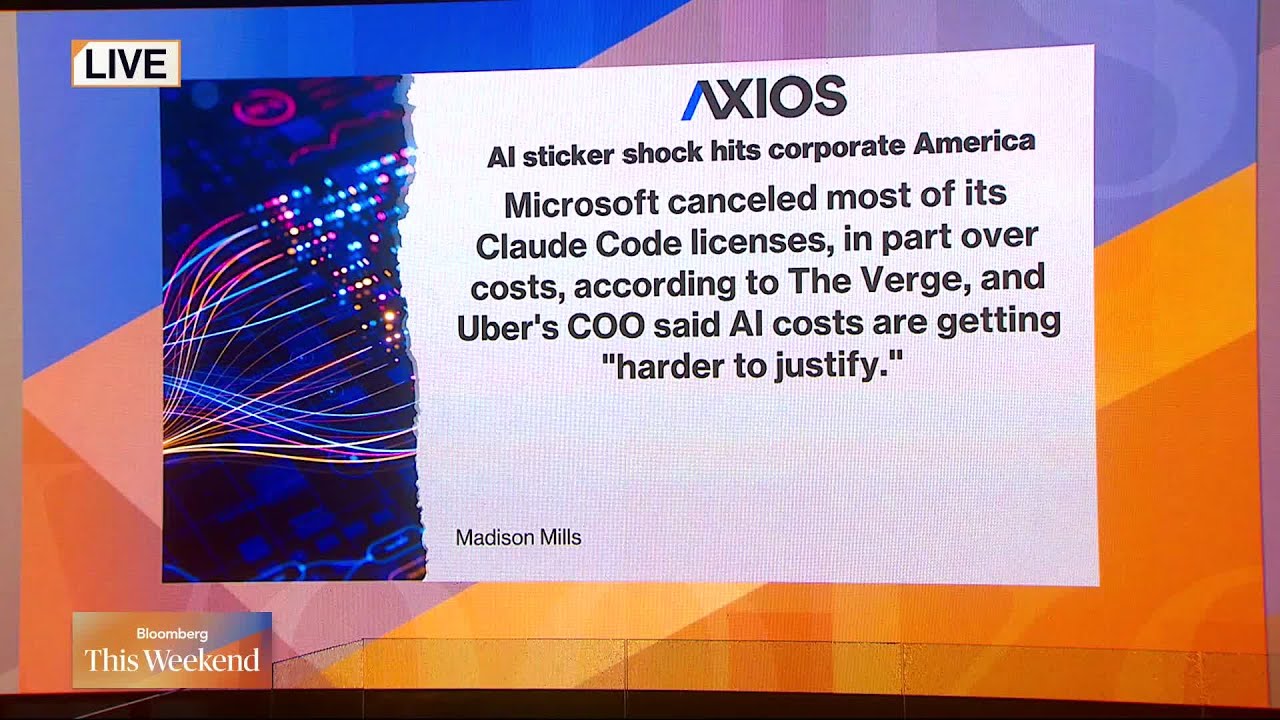
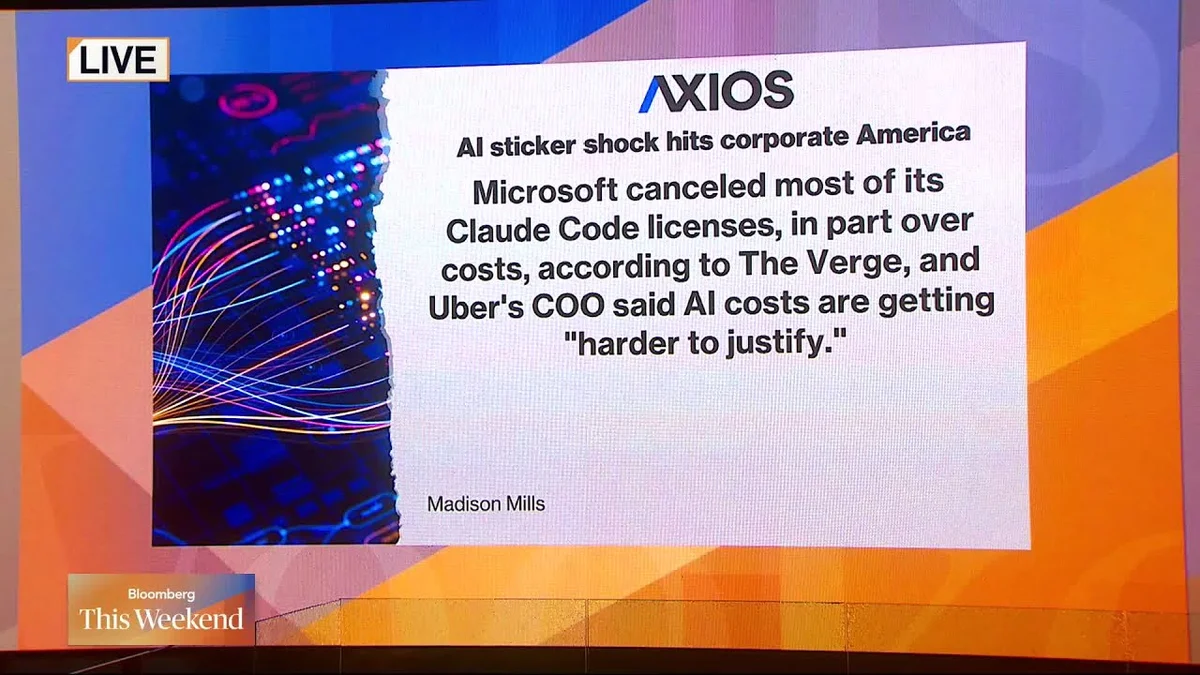
The rapid advancement and adoption of AI have been fueled by massive investments in computing power, particularly GPUs, and the construction of data centers. However, the sheer scale of these costs is now prompting a re-evaluation. For instance, there are reports of Microsoft canceling some of its Claude Code licenses, partly due to cost concerns. Similarly, Uber's COO has voiced that AI costs are becoming increasingly difficult to justify, signaling a broader trend of cost-consciousness across the industry.

Related startups

Infrastructure Challenges

The scarcity of compute power and data centers is a significant bottleneck, creating opportunities for investment in physical infrastructure but also posing substantial challenges for AI companies. The demand outstrips supply, driving up prices and extending lead times for essential hardware and facilities. This physical constraint means that scaling AI operations is not just a matter of software innovation but also requires significant capital expenditure and planning for physical resources.

The full discussion can be found on Bloomberg Podcast's YouTube channel.

Major Companies Reconsidering AI Costs - Bloomberg Podcast
Major Companies Reconsidering AI Costs — from Bloomberg Podcast

Historical Parallels and Emerging Skepticism

The current AI boom is drawing comparisons to past technological revolutions, such as the dot-com era and earlier cycles of AI hype. Gautam Mukunda, a columnist and executive fellow at Yale School of Management, draws a parallel to the 1970s biotechnology industry and the late 1990s dot-com bubble. He argues that while AI is a genuinely transformative technology, the current valuation and investment frenzy may be leading to an unsustainable level of spending. Mukunda points out that many AI projects, while technically impressive, are not yet demonstrating a clear path to profitability or significant economic returns, leading to a growing skepticism among some investors and companies.

The Importance of the "Physical" in AI

Mukunda emphasizes that the focus on AI often overlooks the critical role of the physical infrastructure required to support it. Just as the success of the internet depended on physical networks, data centers, and hardware, AI's potential is similarly tied to tangible resources. He contrasts this with purely software-based innovations where scaling costs are often marginal. The development of AI requires substantial investments in hardware, energy, and physical space, which are subject to different economic realities and constraints. This physical dimension, he argues, is often underestimated in the rush to embrace AI.

The comparison to Thomas Edison's work on the light bulb is used to illustrate the difference between a groundbreaking invention and a sustainable business. Edison not only invented the light bulb but also built the entire infrastructure needed to power it, including power plants and distribution networks. Similarly, for AI to achieve widespread adoption and economic viability, the underlying physical infrastructure and the business models supporting it must be robust and cost-effective.

The Role of Government and Policy

The discussion also touches upon the role of government in fostering or hindering technological progress. Mukunda suggests that policies that create artificial scarcity or impose burdensome regulations can stifle innovation and economic growth. He alludes to the political pushback against data centers in some areas due to environmental concerns or community opposition, which can further exacerbate the infrastructure challenges.

Furthermore, the conversation highlights the potential for AI to create a more equitable economic future, but only if the benefits are broadly shared. The risk, however, is that if AI development and deployment are concentrated in the hands of a few, it could lead to increased economic inequality and social disruption. The analogy to the biotech revolution is used to suggest that while the initial breakthroughs were transformative, the subsequent development and commercialization were crucial for realizing their full societal impact.

© 2026 StartupHub.ai. All rights reserved. Do not enter, scrape, copy, reproduce, or republish this article in whole or in part. Use as input to AI training, fine-tuning, retrieval-augmented generation, or any machine-learning system is prohibited without written license. Substantially-similar derivative works will be pursued to the fullest extent of applicable copyright, database, and computer-misuse laws. See our terms.