



Visual TL;DR
Traditional Agent DevDriver
one slow loop, manual experimentation, human evaluation
Human-Gated & SlowDriver
From the article 3 mentionsHe identifies several key issues with this traditional model: it is human-gated, meaning every change is judged by an engineer, making it subjective and difficult to reproduce; it is slow, even with Sigma, as the loop runs at the speed of human review, which is a bottleneck; and crucially, it can't scale.
Agentic AI EngineerCore
automates AI agent development lifecycle, continuous loop
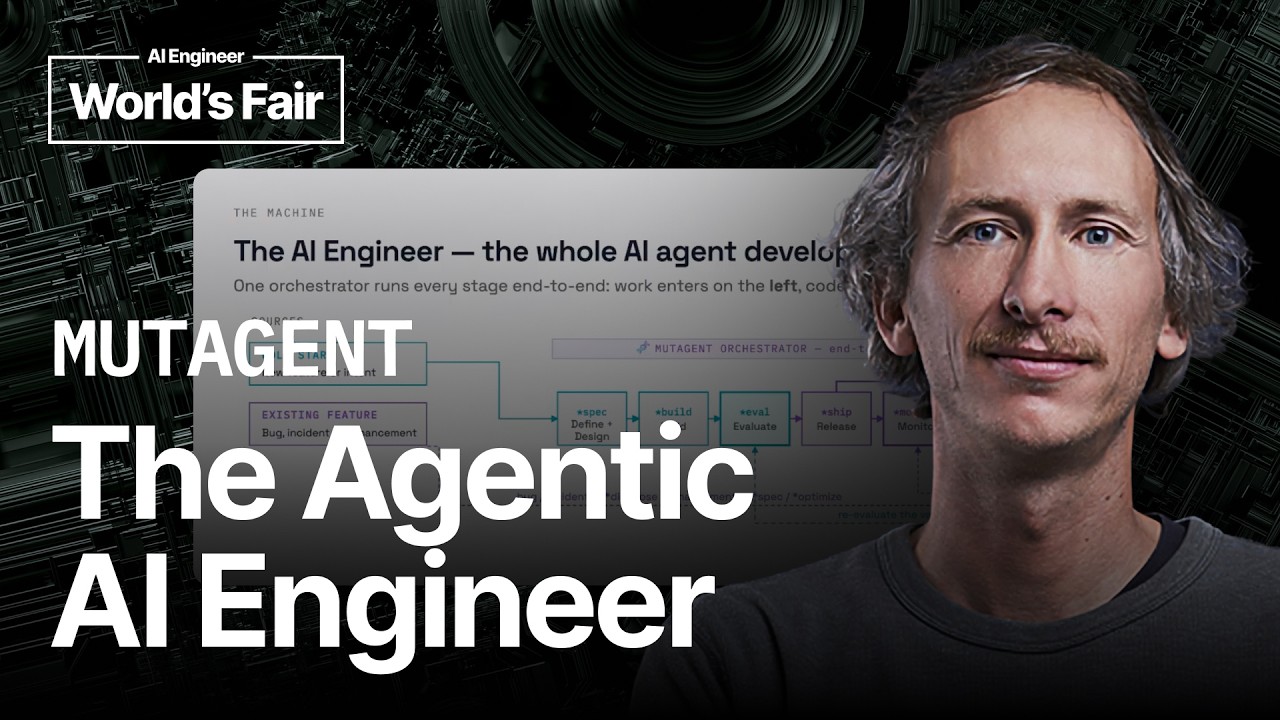
From the article 5 mentionsBenedikt Sanftl of Mutagent discusses the concept of the "Agentic AI Engineer," a framework designed to streamline and automate the entire lifecycle of building and deploying AI agents.
Key StagesContext
critical steps in the automated development process
From the article 4 mentionsSanftl details the lifecycle, which involves several stages: Define + Design, Build, Create the eval system, Offline optimization loop, Deploy, Monitor, and Diagnose + Grow the system.
Orchestration & EnvironmentContext
managing agent interactions and their operational context
From the articleMutagent's agents are designed to run within the user's existing environment, whether cloud or local, ensuring that traces and code never leave the user's machine.
Faster, Reliable ResultsEffect
streamlined development leads to more effective AI agents
Compounding ImprovementsOutcome
speed of iteration directly impacts agent effectiveness
From the article 4 mentionsThis approach is inherently inefficient as each change requires significant time for generation, output, and human assessment, preventing the compounding of improvements.