


AI Stock Rally Falters Amid SK Hynix Selloff, Apple-OpenAI Lawsuit

SK Hynix shares tumble, Apple sues OpenAI, and FCC Chair Carr discusses space tech and AI on Bloomberg Tech.

6 min read
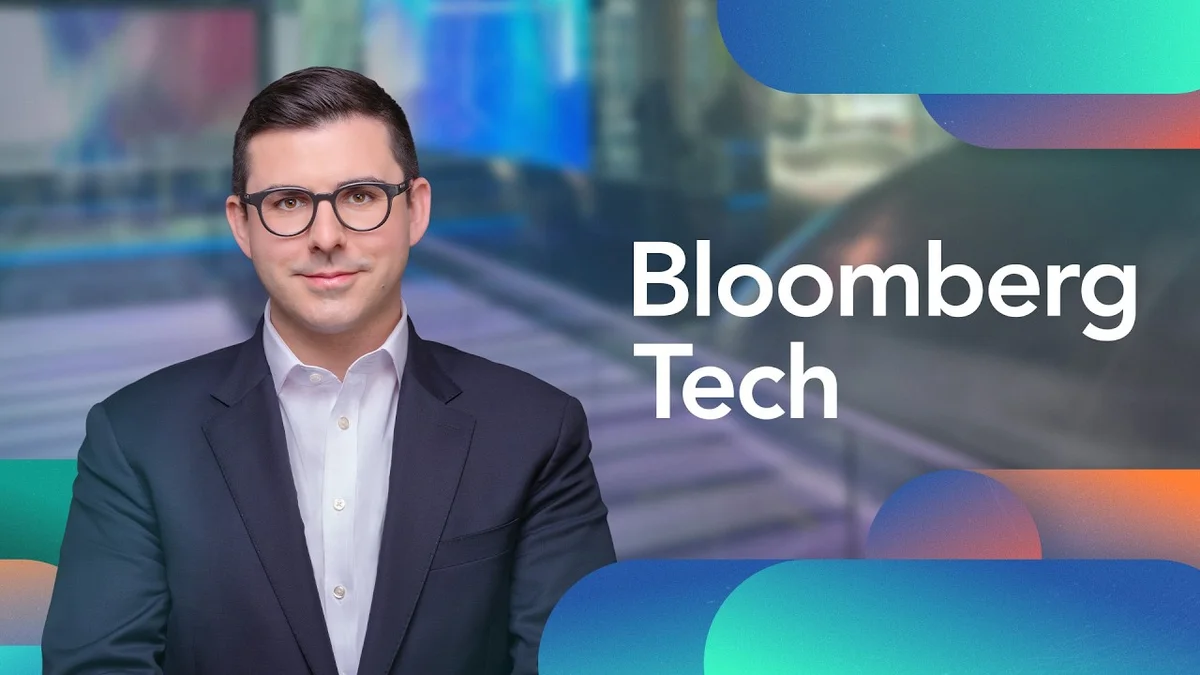
Bloomberg Tech screen showing stock charts and guest photos
Bloomberg Technology
Visual TL;DR
AI Stock Rally FaltersDriver
From the articleThe AI-driven market rally faced turbulence this week as chip stocks experienced a significant selloff, originating from trading sessions in South Korea.
Apple Sues OpenAIDriver
Apple files lawsuit against OpenAI, adding to market turbulence and uncertainty
From the article 3 mentionsMeanwhile, the high-stakes rivalry between Apple and OpenAI escalated into the courtroom this week.
Space Economy RegulationContext
FCC Chair Carr discusses space tech and AI on Bloomberg Tech, future implications
From the article 2 mentionsIn parallel, discussions around regulating the burgeoning space economy took center stage.
US AI DominanceContext
US maintains AI dominance, facing challenges from China's growing technological advancements
SK Hynix SelloffDriver
suffered its largest one-day drop on record, ADRs tumbling 6% Monday
From the article 5 mentionsHowever, Monday's selloff suggests that some investors are skeptical, perhaps wondering if the current demand is sustainable or if the sector has simply run too hot.
Memory Business ReassessmentOutcome
From the article 2 mentionsInvestors are now reassessing the memory business, questioning if AI has fundamentally reshaped its cyclical nature.
AI Boom Sustainability?Outcome
skepticism arises if current demand is sustainable or if sector ran too hot
From the articleSK Hynix, in particular, suffered its largest one-day drop on record, with its ADRs tumbling 6% on Monday, raising questions about whether the AI boom has simply pushed the sector too far, too fast.

Contents(6)

The AI-driven market rally faced turbulence this week as chip stocks experienced a significant selloff, originating from trading sessions in South Korea. SK Hynix, in particular, suffered its largest one-day drop on record, with its ADRs tumbling 6% on Monday, raising questions about whether the AI boom has simply pushed the sector too far, too fast.

AI Chip Stock Volatility

The weakness in chipmakers like SK Hynix and Samsung, which also saw sharp declines, spilled over into U.S. trading. Investors are now reassessing the memory business, questioning if AI has fundamentally reshaped its cyclical nature. As Bloomberg's Dina Bass reported, memory companies are attempting to leverage AI interest to make their markets less cyclical, citing multi-year deals driven by chip shortages. However, Monday's selloff suggests that some investors are skeptical, perhaps wondering if the current demand is sustainable or if the sector has simply run too hot.

The full discussion can be found on Bloomberg Technology's YouTube channel.

AI Selloff, Apple vs. OpenAI & the Future of Defense Tech | Bloomberg Tech 7/13/2026 - Bloomberg Technology
AI Selloff, Apple vs. OpenAI & the Future of Defense Tech | Bloomberg Tech 7/13/2026, from Bloomberg Technology

SK Hynix pioneered the use of High Bandwidth Memory (HBM) for critical AI chips sold by Nvidia, making the company central to the AI market. Despite this, the company's ADRs are down 6%, and the broader semiconductor index also felt the pressure. The market is grappling with the question of whether the AI revolution has truly altered the memory business's inherent cyclicality.

Apple vs. OpenAI in Court

Meanwhile, the high-stakes rivalry between Apple and OpenAI escalated into the courtroom this week. Apple filed a sweeping trade secret lawsuit against the ChatGPT maker, alleging that OpenAI encouraged former Apple employees to bring confidential information and unreleased hardware prototypes to the company. Apple specifically named a former Apple employee, now OpenAI's hardware chief, as the alleged ringleader in this scheme. This legal battle could have significant implications for OpenAI's hardware ambitions, potentially impacting its device roadmap and talent acquisition strategies.

Regulating the Final Frontier: The Space Economy

In parallel, discussions around regulating the burgeoning space economy took center stage. FCC Chairman Brendan Carr joined Bloomberg Tech to discuss the future of space communication spectrum and wireless policy. Carr highlighted the FCC's role in facilitating the growing space economy, from orbital data centers to direct-to-device connectivity. He emphasized the commission's efforts to streamline approvals for satellite applications and implement new spectrum for 5G and 6G technologies, aiming to boost America's leadership in this critical sector.

US AI Dominance and China's Challenge

The conversation also touched upon the broader AI race, particularly the U.S. position relative to China. Joe Lonsdale, co-founder of Palantir and managing partner at 8VC, expressed confidence in America's continued lead in AI, citing advancements in cybersecurity and critical infrastructure. However, he acknowledged China's proficiency in intellectual property theft and the ongoing challenge of protecting U.S. technological advantages. Lonsdale also raised concerns about the patent office's effectiveness and the need for faster FDA approval processes to maintain competitiveness in critical sectors like biotech.

Defense Tech and the Future of Warfare

Lonsdale, a veteran investor in defense technology, noted a significant cultural shift within the Pentagon, moving towards greater competition and embracing innovation from startups. He highlighted how companies like Palantir, Anduril, and SpaceX have demonstrated superior solutions, forcing established primes to adapt. The conversation also delved into the critical role of AI and drones in modern defense, emphasizing the need for continuous innovation to counter evolving global threats.

8VC's New Fund and Investment Strategy

Lonsdale also discussed 8VC's recent closing of a $1.5 billion fund, its largest to date, underscoring the firm's strong conviction in the current industrial revolution driven by AI. He detailed the firm's investment strategy, focusing on both building companies from the ground up and investing in early-stage ventures across various sectors, including defense, AI, and healthcare. Lonsdale expressed optimism about the potential for significant wealth creation through increased productivity driven by AI across industries.

The program also featured discussions on the U.S. government's efforts to prevent Chinese firms from training AI on U.S. models through a process called distillation, and the broader implications of AI for various industries. The insights from industry leaders and regulators painted a complex picture of rapid technological advancement, evolving market dynamics, and the critical role of policy in shaping the future of AI and the broader tech landscape.

© 2026 StartupHub.ai. All rights reserved. Do not enter, scrape, copy, reproduce, or republish this article in whole or in part. Use as input to AI training, fine-tuning, retrieval-augmented generation, or any machine-learning system is prohibited without written license. Substantially-similar derivative works will be pursued to the fullest extent of applicable copyright, database, and computer-misuse laws. See our terms.