

AI Not Hindering Hiring: Yale Budget Lab

Yale Budget Lab's Martha Gimbel states AI is not yet holding back companies from hiring, despite significant investment in the technology.

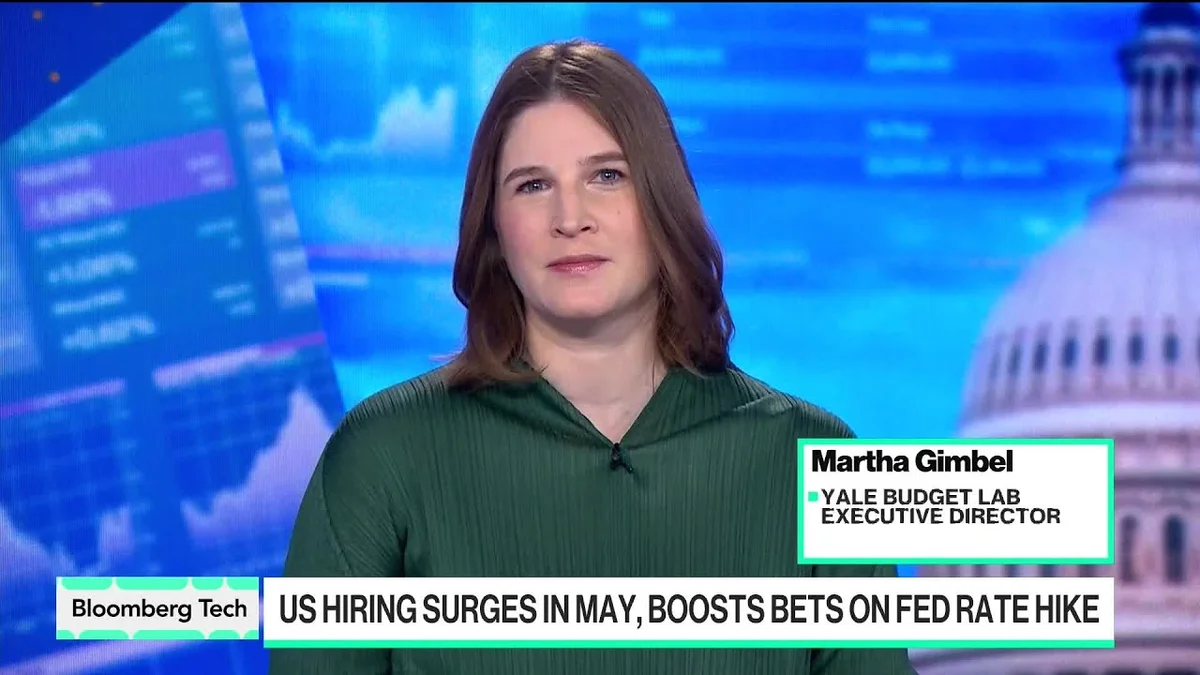
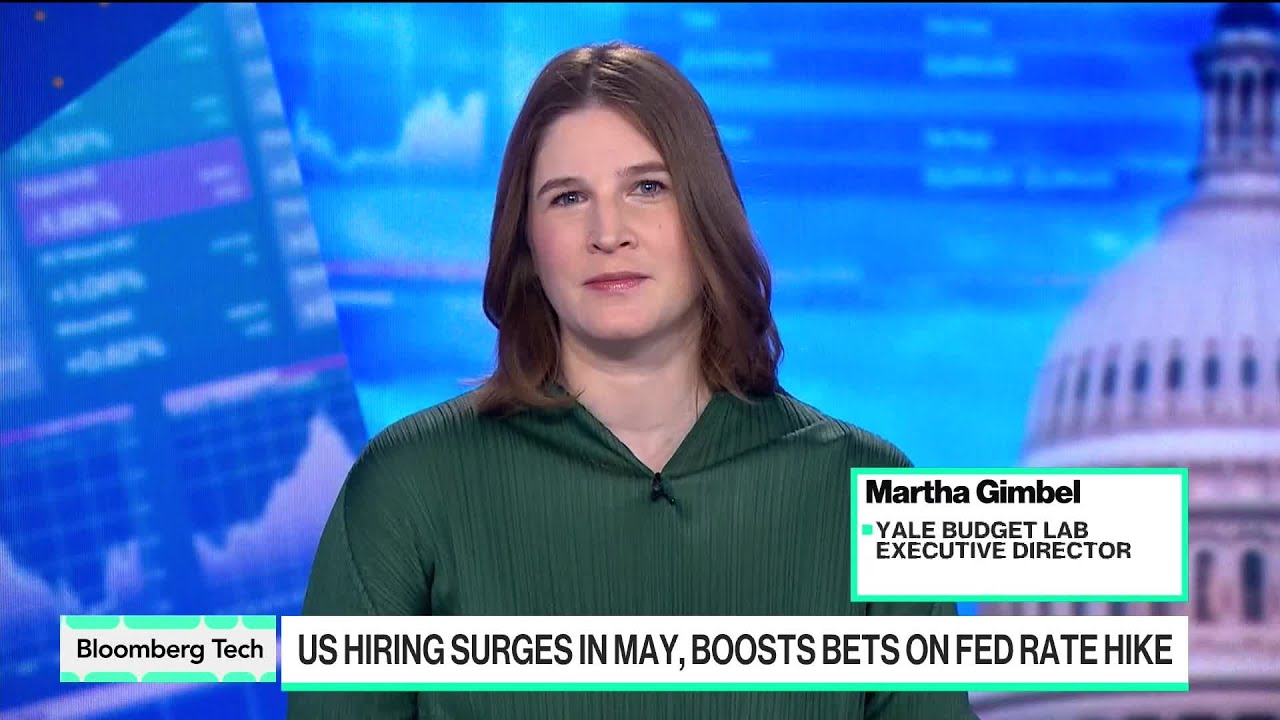
Martha Gimbel speaking on a Bloomberg Tech segment.
Martha Gimbel, Executive Director at the Yale Budget Lab, discusses the impact of AI on hiring.· Bloomberg Technology
Visual TL;DR
AI Investment HighDriver
significant investment flowing into AI development and infrastructure
From the article 3 mentionsThis high cost means that AI adoption, while growing, is not a simple, low-barrier-to-entry technology for most companies.
Economic UncertaintyContext
future implications and economic uncertainty
From the article 7 mentionsThe uncertainty surrounding AI's long-term effects on productivity and the labor market means that economic policy must remain adaptable.
AI TechnologyCore
artificial intelligence adoption and employment trends
From the article 3 mentionsThe full discussion can be found on Bloomberg Technology's YouTube channel.
Hiring Not HinderedOutcome
current economic data does not show widespread slowdown in hiring
From the article 3 mentionsContrary to some fears, artificial intelligence is not currently a significant deterrent to companies hiring.
Labor Market RobustEffect
companies are still actively recruiting and hiring
From the article 2 mentionsShe noted that while some individual roles might be affected, the overall labor market remains robust.
AI Complements LaborContext
From the article 3 mentionsCompanies are still actively recruiting, suggesting that AI is being integrated in ways that complement rather than replace human labor at scale.
No Policy ShiftsOutcome
From the article 3 mentionsWhile AI is a rapidly growing sector attracting significant investment, its direct impact on broader economic indicators like hiring and inflation is not yet substantial enough to warrant drastic policy shifts.
Contents(3)

Contrary to some fears, artificial intelligence is not currently a significant deterrent to companies hiring. Martha Gimbel, Executive Director at the Yale Budget Lab, discussed the current economic data and the nuanced relationship between AI adoption and employment trends. While AI is a rapidly growing sector attracting significant investment, its direct impact on broader economic indicators like hiring and inflation is not yet substantial enough to warrant drastic policy shifts.

AI's Limited Impact on Current Hiring Data

Gimbel explained that despite the massive investments flowing into AI development and infrastructure, the current economic data does not show a widespread slowdown in hiring directly attributable to AI implementation. Companies are still actively recruiting, suggesting that AI is being integrated in ways that complement rather than replace human labor at scale. She noted that while some individual roles might be affected, the overall labor market remains robust.

The full discussion can be found on Bloomberg Technology's YouTube channel.

AI Not Holding Back Companies From Hiring: Yale Budget Lab - Bloomberg Technology
AI Not Holding Back Companies From Hiring: Yale Budget Lab, from Bloomberg Technology

The Cost of AI Investment

The conversation highlighted the significant capital expenditure required for AI initiatives. Gimbel pointed out that the cost of building and maintaining data centers and the computational power needed for advanced AI models is substantial. This high cost means that AI adoption, while growing, is not a simple, low-barrier-to-entry technology for most companies. This financial aspect could be a factor in why widespread job displacement due to AI has not yet materialized in the aggregate economic data.

Future Implications and Economic Uncertainty

Gimbel also touched upon the Federal Reserve's perspective, referencing comments from Mary Daly, President of the San Francisco Fed. Daly suggested that monetary policy is currently in a good place to respond to economic developments, including those related to AI. However, Gimbel cautioned against making definitive predictions about AI's future impact, stating that it is still early days for the technology. The uncertainty surrounding AI's long-term effects on productivity and the labor market means that economic policy must remain adaptable.

The discussion also touched upon the idea that while AI is a growth sector, its current economic influence is not yet a primary driver of inflation or deflationary pressures in the same way that other factors might be. Gimbel suggested that the focus for investors and policymakers should be on understanding the long-term implications of AI adoption rather than reacting to current, limited impacts on the broader economy.

© 2026 StartupHub.ai. All rights reserved. You may not republish this article in full without a license. Search engines and AI research tools may crawl and summarize for reference. Bulk reproduction or model training requires a license. See our terms.
Daniel Singer

Written by

Daniel Singer

Editor, StartupHub.ai

Daniel Singer is the editor of StartupHub.ai, a technology expert and thought leader on AI and its applications across sectors, from fintech and healthcare to developer tooling and consumer software. He writes and tests the tools covered here thoroughly and regularly, and built StartupHub.ai to give founders, operators and buyers a clearer read on what they are actually being sold.

More from Daniel Singer