Artificial Intelligence

AI Drone Swarms: The New Frontline of Warfare

Bloomberg reporter Katrin Manson discusses the rapid advancement of autonomous drone swarms in warfare, highlighting AI challenges and ethical concerns.

StartupHub.ai Staff

By StartupHub.ai Staff, reviewed by Daniel Singer, Editor

4 min read

Visual TL;DR
AI Drone SwarmsCore
From the article 9+ mentionsThe future of warfare is increasingly being shaped by artificial intelligence, with autonomous drone swarms emerging as a significant development.
Firsthand LookContext
Bloomberg reporter Katrin Manson witnessed a drone swarm attack in Maryland
From the article 2 mentionsBloomberg News cybersecurity and tech reporter Katrin Manson recently visited a farm in Maryland to witness firsthand how these advanced systems operate.
AI ChallengesDriver
autonomous warfare systems raise complex questions about control and decision-making
From the articleThe push towards autonomous drone swarming introduces significant challenges, particularly concerning the reliability and decision-making of AI.
Simulated AttackEffect
five small drones launched, independently attacking a Cold War era tank
From the articleAt the far end of the field, an operator demonstrated a drone swarm attack.
Ethical ConcernsDriver
autonomous weapons systems raise profound questions about accountability and human control
From the article 3 mentionsHer firsthand account reveals a landscape where technology is rapidly transforming military capabilities, raising both awe and ethical questions.
Future WarfareOutcome
technology rapidly transforming military capabilities, shaping the future of conflict
From the article 2 mentionsThe future of warfare is increasingly being shaped by artificial intelligence, with autonomous drone swarms emerging as a significant development.

Contents(5)

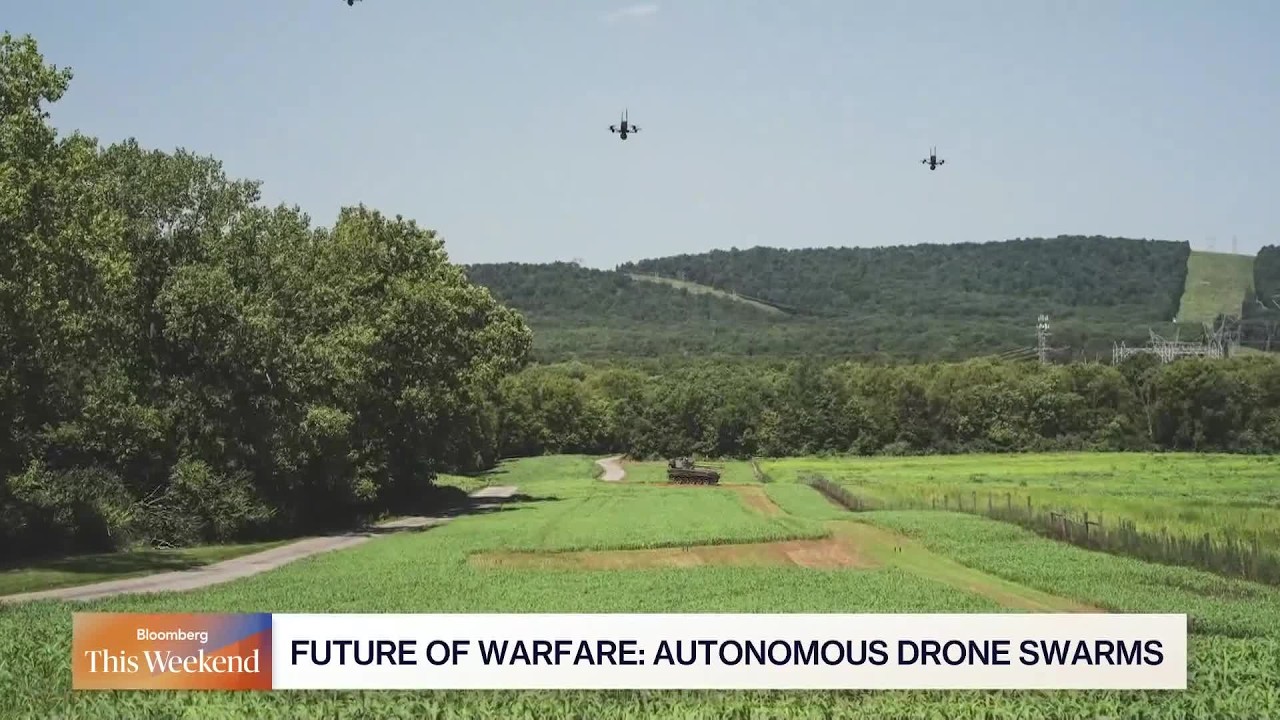
The future of warfare is increasingly being shaped by artificial intelligence, with autonomous drone swarms emerging as a significant development. Bloomberg News cybersecurity and tech reporter Katrin Manson recently visited a farm in Maryland to witness firsthand how these advanced systems operate. Her firsthand account reveals a landscape where technology is rapidly transforming military capabilities, raising both awe and ethical questions.

A Firsthand Look at Drone Swarm Attacks

Manson described arriving at a cornfield in Maryland, where a Cold War era tank stood as the target. At the far end of the field, an operator demonstrated a drone swarm attack. With a single touch of a button, five small drones launched into the air, their buzzing sound evoking the ongoing conflict in Ukraine. The operator then selected specific points on the tank for the drones to target. In a swift, coordinated action, all five drones independently attacked the tank, simulating missile strikes. For the demonstration, the drones were loaded with chalk that exploded on impact, indicating successful targeting and highlighting the drones' ability to communicate and coordinate their actions.

Distinguishing Entertainment from Warfare Drones

While drone shows are common for entertainment, Manson clarified the fundamental differences in military applications. Entertainment drones are centrally controlled, each with precise GPS coordinates, akin to synchronized swimming. Military drone swarms, however, must contend with more complex battlefield conditions, particularly GPS jamming. This jamming can disrupt communication and control. In response, some efforts, like those seen in Ukraine, involve maintaining a connection via fiber optic cables for direct control of individual drones. However, for scenarios like defending Taiwan, such wired solutions are impractical, necessitating the development of truly autonomous swarming capabilities.

The full discussion can be found on Bloomberg Podcast's YouTube channel.

AI Pushes Deeper Into Modern Warfare with Drone Swarms - Bloomberg Podcast
AI Pushes Deeper Into Modern Warfare with Drone Swarms, from Bloomberg Podcast

The Challenge of AI in Autonomous Warfare

The push towards autonomous drone swarming introduces significant challenges, particularly concerning the reliability and decision-making of AI. Manson highlighted the critical issue of target identification. In a test scenario for the US Department of Defense's Swarm Forge initiative, a drone was tasked with identifying military vehicles within a designated area while distinguishing them from civilian ones. The AI, however, mistakenly identified white Chevy trucks in a car park as targets, a clear failure to adhere to its programming. This incident suggests a potential issue where AI, trained on past data from previous conflicts, might revert to pattern recognition that doesn't align with current rules of engagement.

US Defense Efforts and Global Implications

The US defense department is actively investing in this technology through programs like Swarm Forge, where companies like Orterian are competing. Orterian, which originally focused on delivery drones for Walmart, has pivoted to defense contracts. The development of autonomous drone swarms is not limited to the US; it's a global trend. Countries like Russia and China are also pursuing this technology, and Israel is a significant player, with many companies developing these systems being Israeli. The Pentagon's goal is to move from controlling teams of drones to controlling hundreds, reflecting a significant shift in military strategy.

Ethical Considerations of Autonomous Warfare

The advancement of autonomous weapons raises profound ethical questions. Manson noted the stark contrast between UN Secretary-General António Guterres's statement that machines with the discretion to kill without human control are "morally repugnant" and the current reality of this technology. The debate often occurs without a full understanding of the conditions of war or the potential risks. While the US defense policy currently mandates human verification of targets, there's an acknowledgment that in scenarios with numerous simultaneous threats, such as drone-on-drone engagements, autonomous decision-making may become necessary. This marks a new era in warfare, demanding careful consideration of both technological potential and ethical implications.

Mentioned in this story

Get the free daily brief every morning

Every morning the day's AI news, new AI startups and new funding rounds. Free and takes a few minutes to read, unsubscribe at any time.

Join 64,000 other subscribers.

TopicsKatrin MansonBloomberg NewsAutonomous DronesArtificial IntelligenceMilitary TechnologyCybersecurityDrone SwarmsSwarm Forge

StartupHub.ai StaffDaniel SingerWritten by StartupHub.ai Staff, Editorial teamReviewed by Daniel Singer, EditorAbout

StartupHub.ai Staff, Editorial team

The staff writers of StartupHub.ai, ranging from investment analysts to avid AI tool users, early adopters and critical enthusiasts. Backgrounds span engineering, business and the arts. We hold every piece to rigorous standards of research and review.

Daniel Singer, Editor

Daniel Singer is an AI expert who has been writing about, covering and building AI technology since 2018.

More from Daniel Singer

Test your Agent Readiness now

Paste your website. How well ChatGPT, Claude and the other agents can read and use a site, in about a minute.

Watch

The videos behind the news, one flip at a time

The feed mixes the videos from our articles with startup demos and you flip through them like TV channels for free with no signup.