

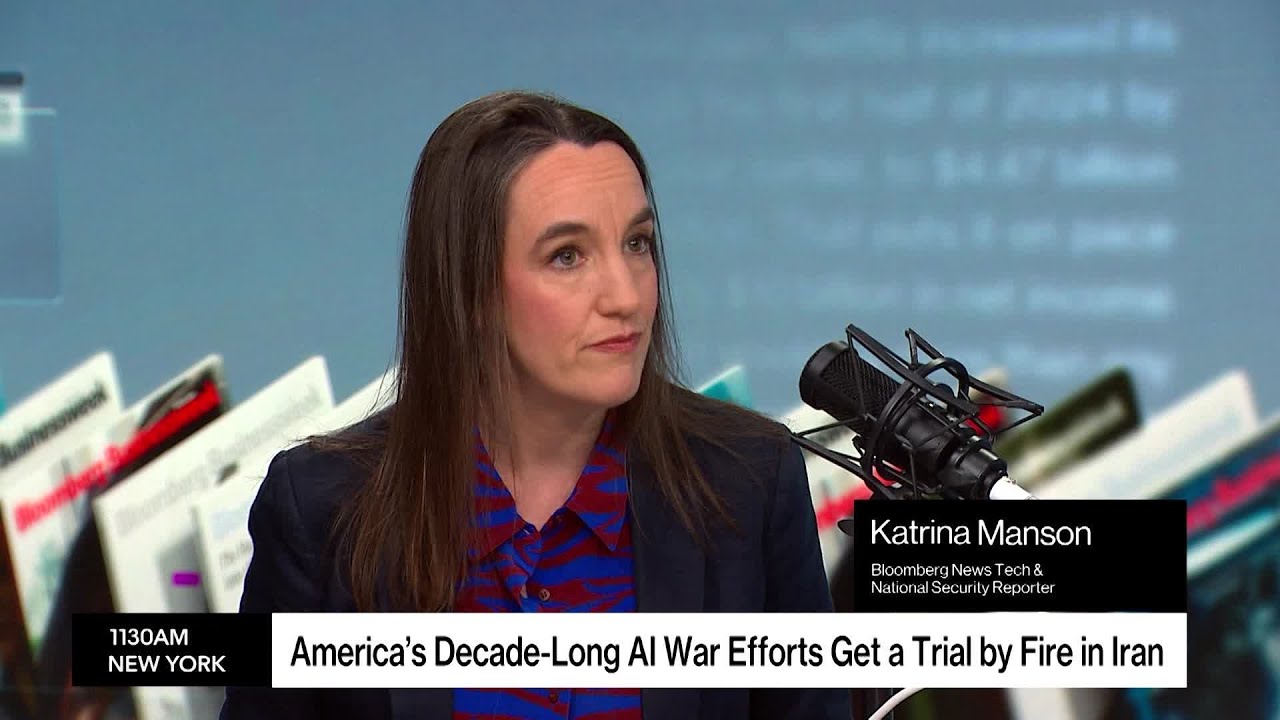
In a recent discussion on Bloomberg, Katrina Manson, a Bloomberg News Tech and National Security Reporter, detailed the significant advancements the U.S. military is making in leveraging Artificial Intelligence (AI) for warfare. Manson, a seasoned journalist with expertise in technology and national security, highlighted how AI is transforming military operations, with a particular focus on drone technology and the strategic implications for geopolitical competition.
Katrina Manson's Expertise
Katrina Manson is a respected reporter for Bloomberg News, specializing in the intersection of technology and national security. Her work often delves into the complex ways cutting-edge technologies are being developed and deployed by governments and militaries worldwide. Her insights are crucial for understanding the evolving landscape of modern warfare and the role of AI in shaping future conflicts.
Project Maven: AI in Drone Warfare
Manson discussed the U.S. Department of Defense's Project Maven, an initiative that began in 2017 and has since become a cornerstone of the military's AI strategy. The project's primary goal was to utilize AI, specifically computer vision, to analyze the vast amounts of video data collected by drones. Previously, this analysis was a labor-intensive process, often taking months for human analysts to review hours of footage. Project Maven aimed to automate this process, allowing AI algorithms to identify objects of interest, such as enemy combatants or equipment, in near real-time.
The full discussion can be found on Bloomberg Podcast's YouTube channel.
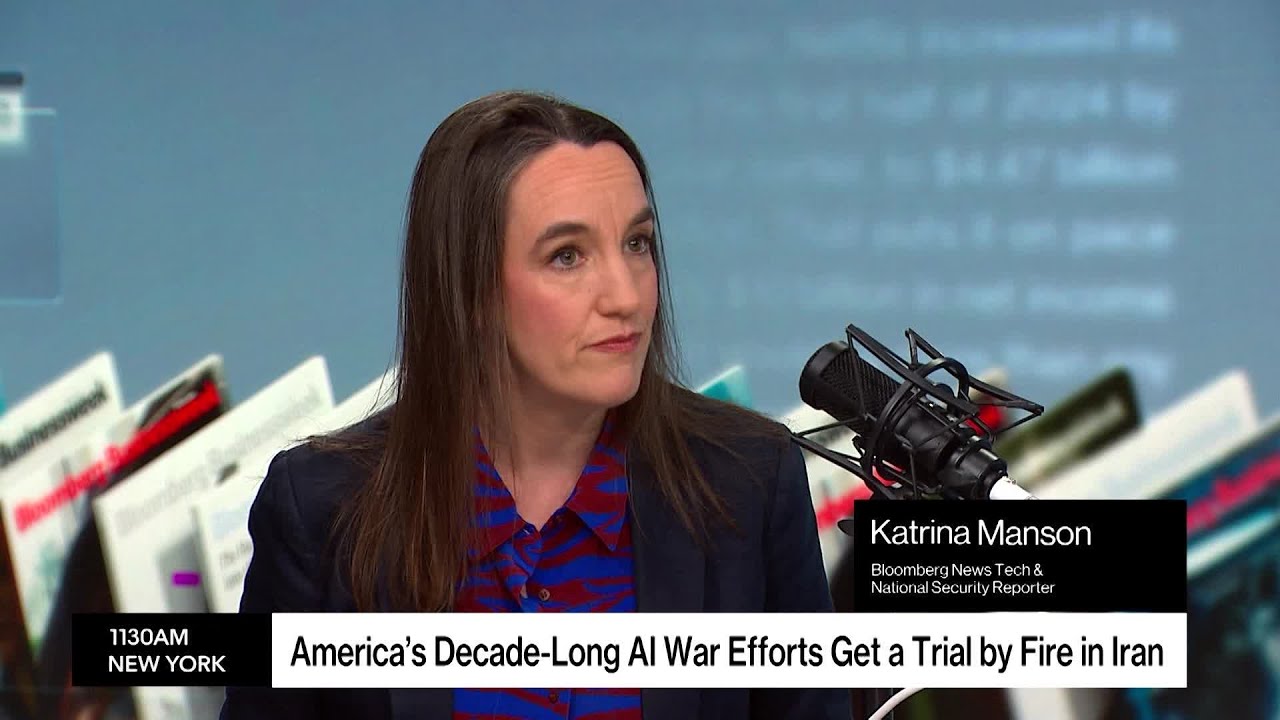
Manson highlighted the dramatic increase in efficiency, stating, "The U.S. has confirmed that they are using a variety of AI tools in Iran operations... it is something that using computer vision AI and more than 150 different data feeds that the U.S. can draw on tries to whittle down information and generates points of interest." This capability to rapidly process and filter data is a significant leap forward, enabling faster decision-making on the battlefield.
The Strategic Imperative: Countering China
The conversation emphasized that the development and deployment of these AI-driven capabilities are not solely for operational efficiency but are also deeply intertwined with geopolitical strategy. Manson pointed out that the U.S. military is increasingly focused on countering the military advancements of China, particularly its growing investment in AI and its potential implications for regional conflicts, such as the situation surrounding Taiwan.
"The U.S. is using a platform made by Palantir, and this platform is available to other allies in the region, and they have found that China is also developing AI to bear on its own military and has been increasing its military budget significantly," Manson explained, suggesting a global arms race in AI-enabled military technology. She noted that while the U.S. has been developing these capabilities for some time, China's rapid progress has created a sense of urgency.
The Shift Towards Autonomous Systems
A key theme that emerged from the discussion was the U.S. military's push towards developing more autonomous weapons systems. Manson elaborated on this shift, stating, "The U.S. has said publicly that they believe China wants the capability to take Taiwan militarily by 2027. And so they are looking past the Middle East to a potentially bigger conflict..." This strategic outlook drives the investment in AI, aiming to create systems that can operate with less direct human intervention.
Manson cited an example from her own reporting, where she discovered that a company like Palantir, which develops AI platforms, was instrumental in convincing a military leader to shift focus from identifying wedding cakes in drone footage to developing weapons identification capabilities. This pivot reflects a broader trend of prioritizing AI for critical military applications.
Ethical Considerations and Future Implications
The increasing autonomy of AI in warfare raises significant ethical questions. While the U.S. military claims to maintain human oversight, the development of systems capable of independent decision-making on the battlefield is a cause for concern among many. Manson touched upon this by noting the difficulty in defining and implementing meaningful human control over highly autonomous systems.
The conversation also touched upon the broader implications of this AI arms race. As nations invest heavily in AI for military purposes, the potential for escalation and unintended consequences grows. The ability of AI to process information and identify targets at unprecedented speeds could lead to faster and more destructive conflicts, necessitating careful consideration of ethical guidelines, international treaties, and the ultimate control of lethal force.


