

Agents in Group Chats: Fidelity's Sai Krishna Rallabandi

Sai Krishna Rallabandi of Fidelity Investments explores the challenges of deploying single-user AI agents in group chats.

8 min read
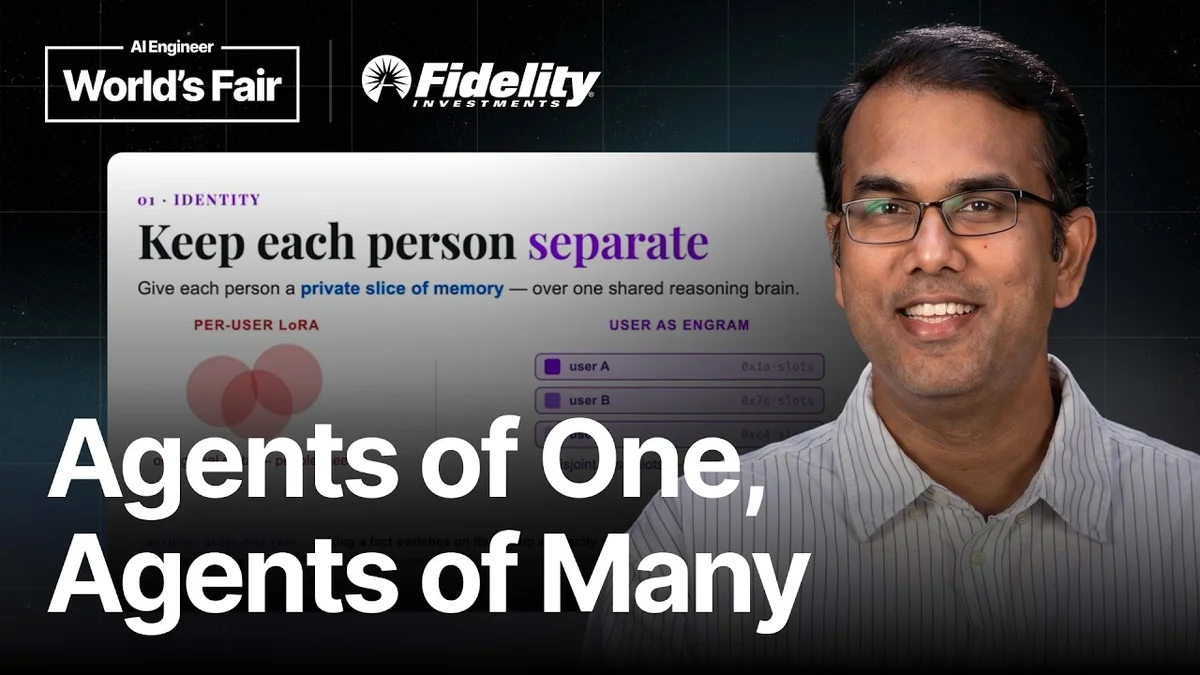
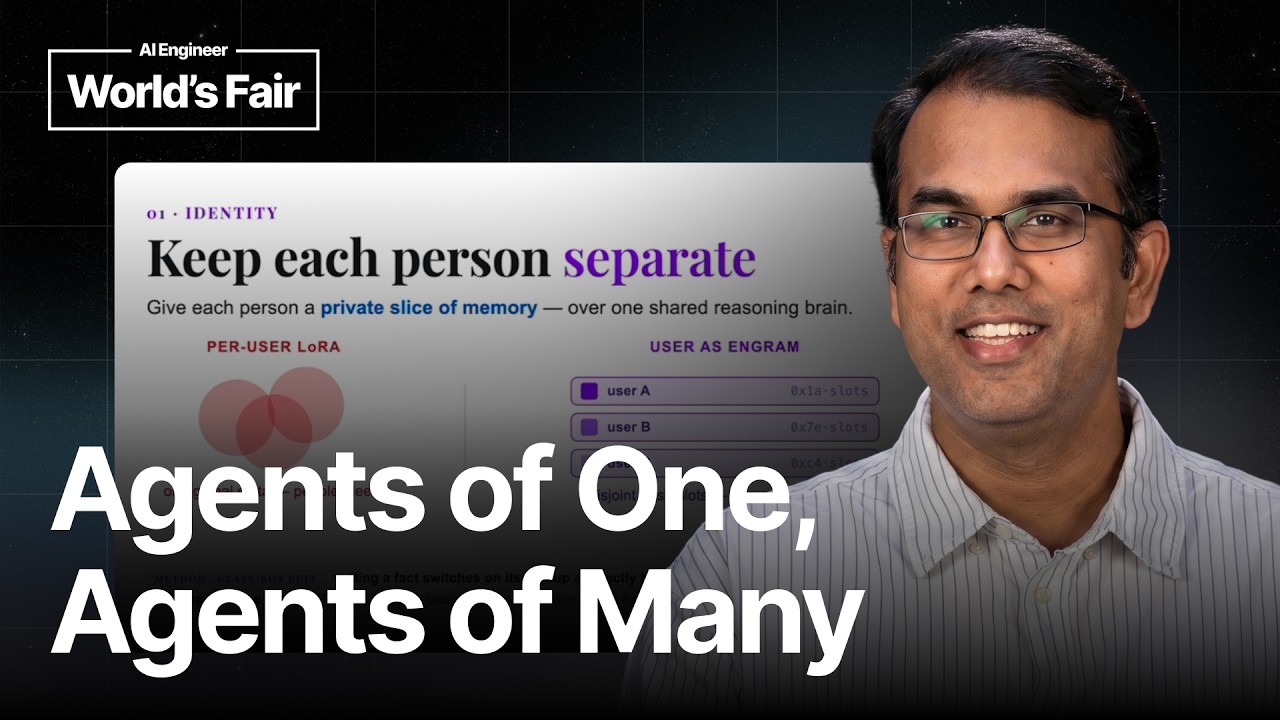
Sai Krishna Rallabandi speaking at a conference with a Fidelity Investments logo visible.
AI Engineer

Visual TL;DR. Single-User Agents encounter Group Chat Challenges. Group Chat Challenges investigated by Fidelity's Rallabandi. Fidelity's Rallabandi reveals Bottleneck Identified. Bottleneck Identified leads to Context Loss. Group Chat Challenges requires Rethink Architecture. Rethink Architecture enables Future Collaborative AI.

  1. Single-User Agents: AI agents designed for one-to-one interaction, managing personal tasks efficiently
  2. Group Chat Challenges: deploying single-user agents into dynamic multi-participant digital conversations
  3. Fidelity's Rallabandi: Sai Krishna Rallabandi exploring agent breakdowns in group chats for eight months
  4. Bottleneck Identified: fundamental limitations of current agent design in multi-user environments
  5. Context Loss: agents struggle to understand shared context and multiple user intentions
  6. Rethink Architecture: need for new agent design for effective collaborative AI interactions
  7. Future Collaborative AI: paving the way for agents that can seamlessly operate in group settings
Visual TL;DR
Visual TL;DR, startuphub.ai Single-User Agents encounter Group Chat Challenges. Group Chat Challenges investigated by Fidelity's Rallabandi. Group Chat Challenges requires Rethink Architecture. Rethink Architecture enables Future Collaborative AI encounter investigated by requires enables Single-User Agents Group Chat Challenges Fidelity's Rallabandi Rethink Architecture Future Collaborative AI From startuphub.ai · The publishers behind this format
Visual TL;DR, startuphub.ai Single-User Agents encounter Group Chat Challenges. Group Chat Challenges investigated by Fidelity's Rallabandi. Group Chat Challenges requires Rethink Architecture. Rethink Architecture enables Future Collaborative AI encounter investigated by requires enables Single-UserAgents Group ChatChallenges Fidelity'sRallabandi RethinkArchitecture FutureCollaborative AI From startuphub.ai · The publishers behind this format
Visual TL;DR, startuphub.ai Single-User Agents encounter Group Chat Challenges. Group Chat Challenges investigated by Fidelity's Rallabandi. Group Chat Challenges requires Rethink Architecture. Rethink Architecture enables Future Collaborative AI encounter investigated by requires enables Single-User Agents AI agents designed for one-to-oneinteraction, managing personal tasksefficiently Group Chat Challenges deploying single-user agents into dynamicmulti-participant digital conversations Fidelity's Rallabandi Sai Krishna Rallabandi exploring agentbreakdowns in group chats for eight months Rethink Architecture need for new agent design for effectivecollaborative AI interactions Future Collaborative AI paving the way for agents that canseamlessly operate in group settings From startuphub.ai · The publishers behind this format
Visual TL;DR, startuphub.ai Single-User Agents encounter Group Chat Challenges. Group Chat Challenges investigated by Fidelity's Rallabandi. Group Chat Challenges requires Rethink Architecture. Rethink Architecture enables Future Collaborative AI encounter investigated by requires enables Single-UserAgents AI agents designedfor one-to-oneinteraction,… Group ChatChallenges deployingsingle-user agentsinto dynamic… Fidelity'sRallabandi Sai KrishnaRallabandiexploring agent… RethinkArchitecture need for new agentdesign foreffective… FutureCollaborative AI paving the way foragents that canseamlessly operate… From startuphub.ai · The publishers behind this format
Visual TL;DR, startuphub.ai Single-User Agents encounter Group Chat Challenges. Group Chat Challenges investigated by Fidelity's Rallabandi. Fidelity's Rallabandi reveals Bottleneck Identified. Bottleneck Identified leads to Context Loss. Group Chat Challenges requires Rethink Architecture. Rethink Architecture enables Future Collaborative AI encounter investigated by reveals leads to requires enables Single-User Agents AI agents designed for one-to-oneinteraction, managing personal tasksefficiently Group Chat Challenges deploying single-user agents into dynamicmulti-participant digital conversations Fidelity's Rallabandi Sai Krishna Rallabandi exploring agentbreakdowns in group chats for eight months Bottleneck Identified fundamental limitations of current agentdesign in multi-user environments Context Loss agents struggle to understand sharedcontext and multiple user intentions Rethink Architecture need for new agent design for effectivecollaborative AI interactions Future Collaborative AI paving the way for agents that canseamlessly operate in group settings From startuphub.ai · The publishers behind this format
Visual TL;DR, startuphub.ai Single-User Agents encounter Group Chat Challenges. Group Chat Challenges investigated by Fidelity's Rallabandi. Fidelity's Rallabandi reveals Bottleneck Identified. Bottleneck Identified leads to Context Loss. Group Chat Challenges requires Rethink Architecture. Rethink Architecture enables Future Collaborative AI encounter investigated by reveals leads to requires enables Single-UserAgents AI agents designedfor one-to-oneinteraction,… Group ChatChallenges deployingsingle-user agentsinto dynamic… Fidelity'sRallabandi Sai KrishnaRallabandiexploring agent… BottleneckIdentified fundamentallimitations ofcurrent agent… Context Loss agents struggle tounderstand sharedcontext and… RethinkArchitecture need for new agentdesign foreffective… FutureCollaborative AI paving the way foragents that canseamlessly operate… From startuphub.ai · The publishers behind this format

In the rapidly evolving world of artificial intelligence, agents are increasingly becoming personalized assistants. However, what happens when these agents, built for one, are dropped into the dynamic environment of a group chat? Sai Krishna Rallabandi from Fidelity Investments has spent approximately eight months exploring this very question, investigating the complexities and breakdowns that occur when the single-user agent model encounters multi-participant digital conversations. This exploration delves into the fundamental limitations of current agent design and hints at the future of collaborative AI interactions.

Agents in Group Chats: Fidelity's Sai Krishna Rallabandi - AI Engineer
Agents in Group Chats: Fidelity's Sai Krishna Rallabandi — from AI Engineer

The Single-User Agent Bottleneck

The prevailing architecture for most AI agents today is a one-to-one relationship. An agent is trained, configured, and deployed to serve the needs and understand the context of a single individual. This approach works efficiently when an agent is tasked with managing a user's calendar, drafting personal emails, or retrieving specific information for them. The agent learns the user's preferences, communication style, and personal data to provide a tailored experience.
However, this singular focus creates significant friction when the agent is introduced into a group chat. Group chats are inherently complex, characterized by multiple participants, overlapping conversations, varying levels of context, and diverse communication styles. An agent designed for a single user struggles to parse this multifaceted environment. It may not understand who is speaking to whom, what the collective context is, or how to respond in a way that is relevant and useful to all participants or even a specific subset of them.

Challenges in the Group Chat Arena

Rallabandi's research highlights several critical areas where single-user agents falter in a group chat setting. One primary issue is context management. In a group chat, the agent needs to track multiple threads of conversation simultaneously. It must differentiate between direct questions, general discussions, and side remarks. A single-user agent, accustomed to a linear and focused input, can become overwhelmed by the parallel streams of information.

Another significant challenge is user identification and attribution. In a group chat, it is crucial for an agent to know who sent which message and who a particular response is directed towards. Without this clarity, the agent might misinterpret intentions, provide irrelevant information, or even respond inappropriately. For instance, an agent might try to fulfill a request made by one person without realizing it was intended for another, or it might fail to recognize that a statement was a rhetorical question within the group's dynamic.

Furthermore, the concept of 'ownership' and 'intent' becomes blurred. When an agent is designed for one user, its goals and objectives are clear. In a group chat, the collective intent of the participants needs to be understood. Is the agent meant to assist the entire group, or just specific individuals within it? How does it prioritize requests when multiple users are asking for different things simultaneously? These are questions that current agent designs are not equipped to handle.

Rethinking Agent Architecture for Collaboration

The implications of this research extend beyond mere technical challenges. It points towards a necessary evolution in how we conceptualize and build AI agents. The future of AI interaction, particularly in collaborative environments, will likely require agents that are not just assistants but also participants capable of understanding and navigating complex social dynamics.

This necessitates a shift from single-user models to multi-user or group-aware agent architectures. Such agents would need to be capable of:

  • Advanced Contextual Understanding: The ability to track and interpret multiple conversational threads and their relationships.
  • Sophisticated User and Intent Recognition: Accurately identifying participants, understanding who is speaking to whom, and discerning the intent behind messages.
  • Group Dynamics Awareness: Recognizing social cues, managing turn-taking, and understanding the collective goals of the group.
  • Adaptive Response Generation: Crafting responses that are relevant to the group context, addressing specific individuals when necessary, and avoiding disruption.

Rallabandi's work, even in its early stages, serves as a crucial reminder that as AI agents become more integrated into our daily lives, their capabilities must expand beyond individual utility to encompass collaborative intelligence. The transition from personal assistants to group-aware collaborators is a significant hurdle, but one that holds the key to unlocking the next generation of AI-powered communication and productivity tools.

© 2026 StartupHub.ai. All rights reserved. Do not enter, scrape, copy, reproduce, or republish this article in whole or in part. Use as input to AI training, fine-tuning, retrieval-augmented generation, or any machine-learning system is prohibited without written license. Substantially-similar derivative works will be pursued to the fullest extent of applicable copyright, database, and computer-misuse laws. See our terms.