


Daron Acemoglu told Novara Media that AI on its current path will deliver disappointing productivity and horrendous social outcomes, and that the way it is being built now threatens liberal democracy itself.
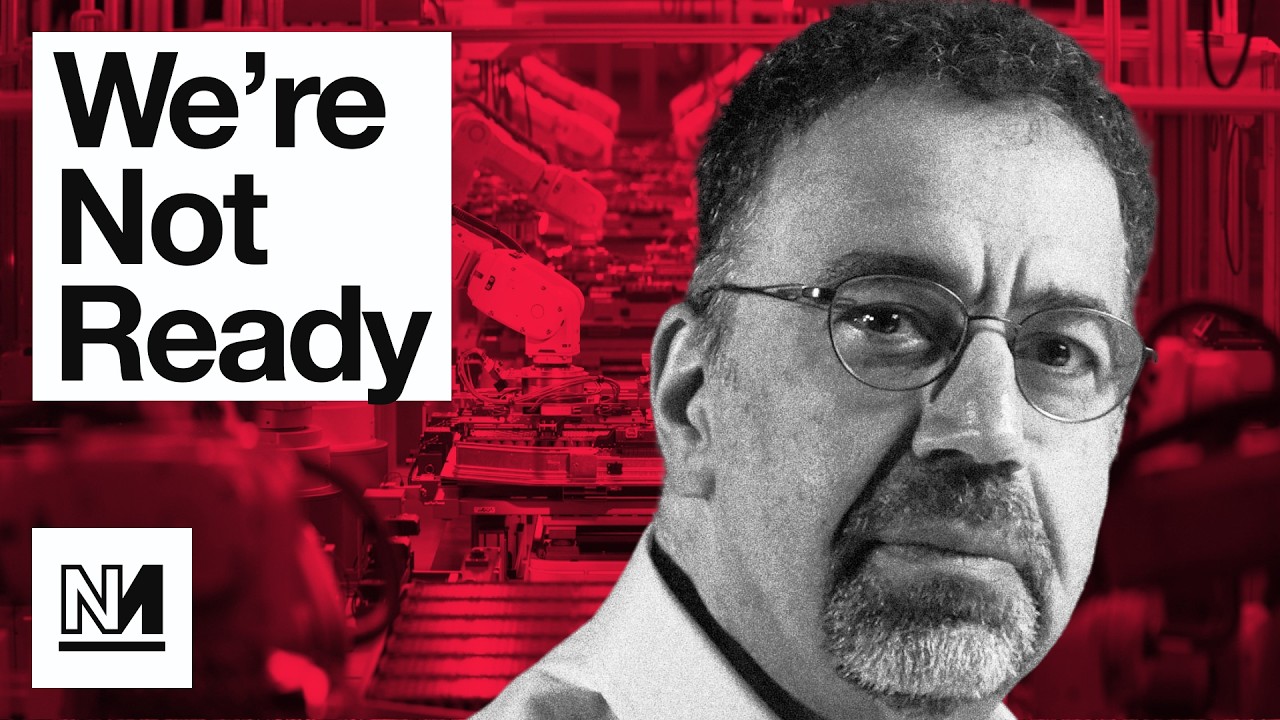
The Nobel economist, speaking to Aaron Bastani about his new book What Happened to Liberal Democracy: Remaking a Politics of Shared Prosperity, framed the danger as direction, not capability. He said the AGI agenda has convinced the industry that the best and inevitable use of AI is to make it more human until it becomes better than humans, a push he traced to science fiction tropes from the 1950s and to an automation-led business model that made Microsoft, Google and Oracle giants selling tools of automation.
That is a big claim with thin receipts in the conversation. Acemoglu argues AI is being massively misdirected toward automation and centralization, when digital technologies once promised decentralization from the IBM mainframe era to the personal computer, and he predicts the payoff will be wage compression and regional inequality even if Terminator-style existential risk never arrives. What is missing is any threshold or timeline, any firm-level data on displacement, or any empirical update on productivity returns that would let a reader test whether the misdirection is actually accelerating.
He ties that technology critique to a broader diagnosis of why democracy is losing legitimacy. The first dimension, he said, is material: inequality is up and in the United States the bottom half has not benefited from growth at all, in real terms losing ground while fortunes at the top multiplied, which contradicts what liberal democracy promised through social democracy and New Deal liberalism. The second is civic: a sense that establishment politics does not work, which he blames less on social media or right-wing provocateurs and more on an internal weakness of post-industrial institutions. It is a sweeping read, and he explicitly rejects simpler stories that put all the blame on neoliberal economics or on social liberalism.
Community does the load-bearing work in his fix. Acemoglu defines it not as a demographic label but as trust and solidarity built in places where people self-govern, from trade unions at their peak to neighborhoods and even academic life, and he said the center left has lost that solidarity at the national level in both the UK and the US. He is skeptical of digital substitutes, calling social media a superficial alternative to real community, and he extends the point to immigration, where he said an open-borders stance cannot coexist with the nation as a self-governing unit. Again, the argument is normative more than programmatic. There is no design for how local self-government scales to 100 million or 200 million person states, or what policy would rebuild union or neighborhood capacity without the top-down interventions he criticizes for sidelining religion and other self-organizing structures.