The operational efficiency of large language models is rapidly pivoting from simply achieving high accuracy to mastering deployment at scale. For organizations running mission-critical AI workloads, the challenge isn't the model itself, but the chaotic nature of inference traffic. Imagine an airport where small domestic planes and massive international jets queue for the same single runway; that congestion is the reality of many poorly optimized LLM deployments today. This bottleneck leads directly to frustrating delays and prohibitive costs, undermining the business case for widespread AI adoption.
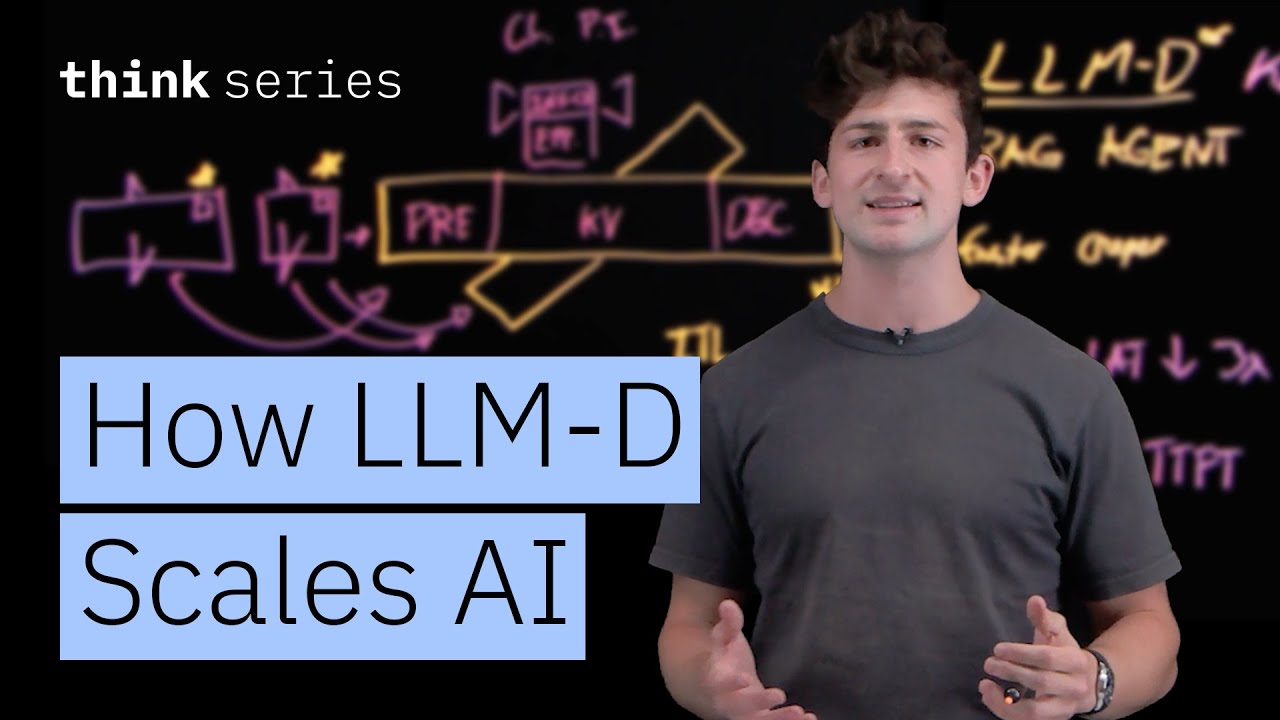
Cedric Clyburn, Sr. Developer Advocate at Red Hat, recently detailed an open-source solution to this core infrastructure problem: LLM-D (Large Language Model - Distributed). Clyburn’s presentation focused on how this technology leverages intelligent routing, Retrieval-Augmented Generation (RAG), and Kubernetes to build smarter, faster, and cheaper datasets for next-generation AI systems. The foundational insight driving LLM-D is that not all LLM requests are created equal, and treating them uniformly, the standard approach of many inference servers, is inherently inefficient.
In a typical setup, requests, whether a short RAG query or a complex agentic coding task, are often processed sequentially or through a simplistic round-robin load balancing. This method creates significant performance disparities. Clyburn noted that "if we were to try to do typical round-robin balancing... that's going to lead to congestion." This congestion manifests as high "Inter-Token Latency" (ITL), the lag between receiving the first and subsequent tokens, which severely degrades the user experience, particularly for interactive or real-time applications.
LLM-D operates as an Inference Gateway, functioning precisely like an air traffic controller. It evaluates incoming requests based on several critical metrics, including current load, predicted latency, and the likelihood of data being cached, before routing them. This intelligent routing mechanism, facilitated by an "Endpoint Picker" (EPP), ensures that requests are matched to the optimal workload replica based on their specific resource demands. This avoids the scenario where a small, quick query gets stuck behind a massive, long-running agent task.
The architectural innovation underpinning LLM-D is the disaggregation of the LLM inference process into two distinct, independently scalable phases: pre-fill and decode. The pre-fill phase, which processes the input prompt, is memory-intensive and often benefits from high-memory GPUs. Conversely, the decode phase, which generates the output tokens, is highly sequential but can be scaled across numerous, smaller compute resources.