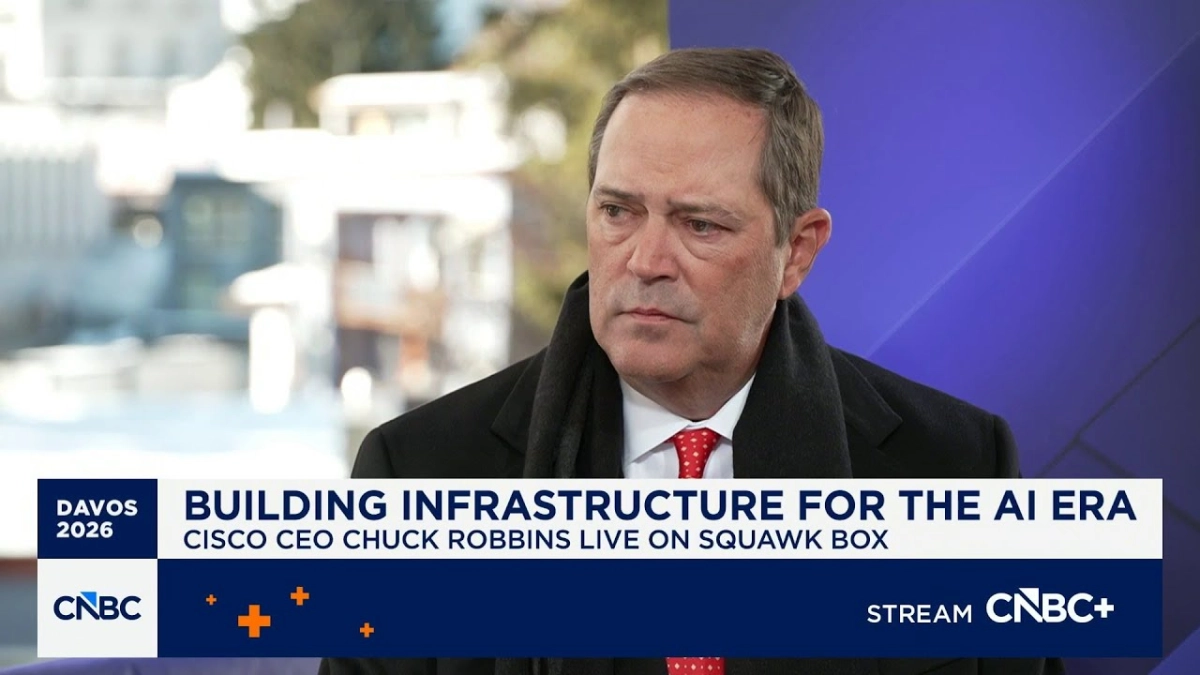
The generative AI revolution runs on more than just GPUs; it requires hyper-efficient, specialized network plumbing capable of handling massive, low-latency data flows. This foundational reality is where legacy infrastructure giants like Cisco are finding renewed relevance and explosive growth. Cisco CEO Chuck Robbins joined CNBC's Squawk Box live from Davos to discuss how the networking behemoth is positioning itself as a foundational builder of the AI infrastructure stack, serving both hyperscalers and the global enterprise. The conversation centered on Cisco’s strategic pivot toward customized silicon, the nascent but accelerating enterprise adoption curve, and the geopolitical anxieties currently shaping global tech deployment.
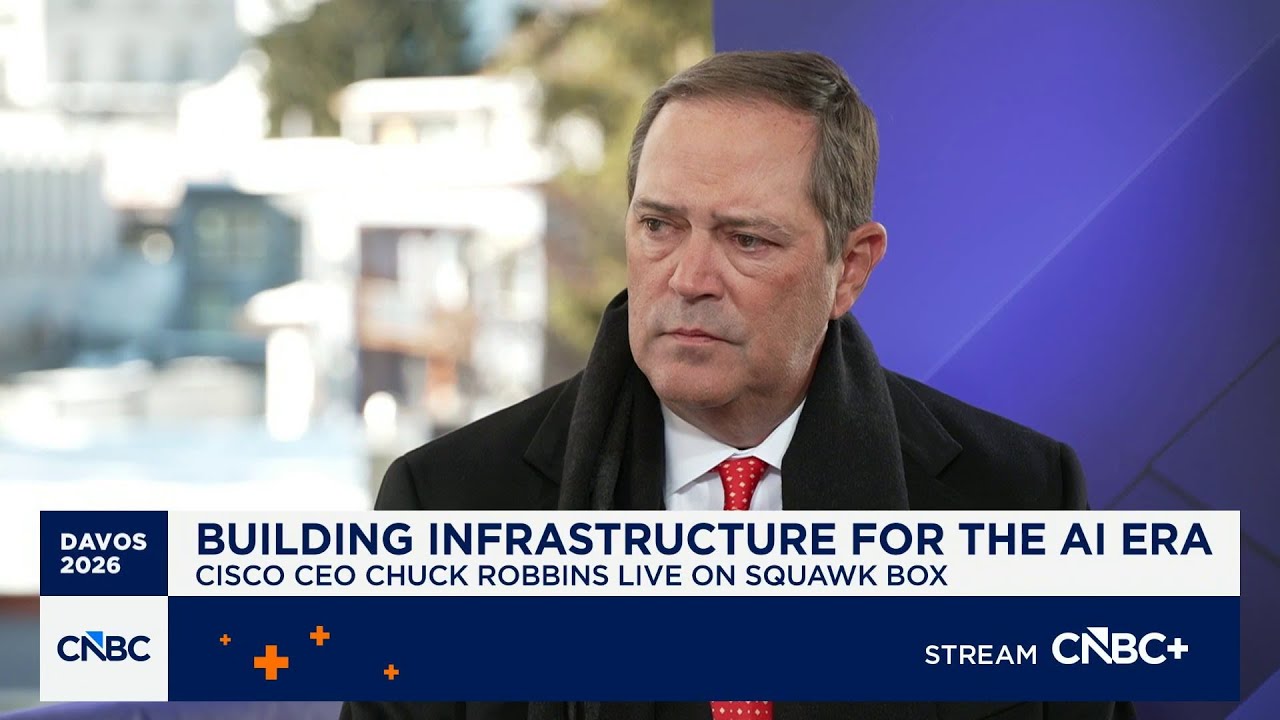
Robbins explained that Cisco’s ability to capitalize on the current AI boom stems from a long-term strategic decision centered on vertical integration. He highlighted a crucial move made years ago that now pays dividends: "We were fortunate... back in 2016 when we acquired a silicon company called Leaba. And we actually are a basically a fabless semiconductor company. We design our own silicon, we design our own optics." This control over the core components, from the chips powering the switches to the optics transmitting data, allows Cisco to create the high-density, high-bandwidth interconnects necessary to link thousands of power-hungry GPUs together in hyperscale data centers. This specialized connectivity layer, which he referred to as the "connectivity layer within that AI infrastructure," is non-negotiable for large-scale AI training and inference.
Beyond the hyperscalers, who are already heavily invested in building out massive AI clusters, Robbins sees a parallel, equally important trend in the broader enterprise market. While many large companies are still in the preliminary stages of deploying generative AI applications, they recognize that their legacy networking infrastructure is inadequate. This recognition is driving a widespread modernization effort. Robbins observed that enterprises "believe they have to have the most modern technology infrastructure stack for when they deploy AI applications." This translates into significant upgrade cycles for networking and security hardware, providing a robust, near-term revenue stream for Cisco even before the enterprise AI application layer fully matures.
The current adoption pattern in the enterprise is characterized by pilot programs focused on specific, high-value business processes. Robbins cited several examples, noting early adoption in areas like customer service, manufacturing, and retail. In retail, for instance, companies are "deploying agents to handheld devices for their staff in the stores." These early applications require real-time processing and robust security integrated directly into the network fabric. Cisco is actively fusing security into the network because, as Robbins pointed out, when you start seeing "agentic agents running at the edge," security must be handled in real-time. This holistic approach, combining high-performance connectivity with integrated security, is central to Cisco's strategy for enabling enterprise AI adoption at scale.
The conversation also touched upon the broader geopolitical and economic climate influencing global technology deployment, particularly within Europe. Robbins, who also serves as the chair of the Business Roundtable, acknowledged the pervasive sense of unease felt among global leaders at Davos. Discussing the atmosphere, Robbins acknowledged a palpable feeling of anxiety: "It sort of feels like there's a little sort of underlying layer of tension here right now." This tension is fueling a demand for digital autonomy, particularly among European nations eager to maintain control over their data and critical infrastructure.
This desire for self-determination manifests in the demand for sovereign solutions. Robbins clarified what this means in practical terms for Cisco: "It means taking our technology that otherwise might have been tethered to the internet and building an on-premise version that they could run independent if it wasn't tethered to the internet." This shift underscores a fundamental change in how large nations and regions are approaching data sovereignty and digital trust, moving away from reliance solely on global cloud providers toward localized, controlled infrastructure deployments. For Cisco, this translates into a unique opportunity to provide localized, secured versions of their core networking and security offerings, meeting stringent national requirements for data residency and control. The company's ability to offer these sovereign solutions demonstrates agility in navigating a fragmenting global market defined by rising protectionism and technological nationalism.
Ultimately, Cisco is positioned as the essential plumbing contractor for the next era of computing. While the full acceleration of AI deployment in the enterprise is still pending the resolution of data sourcing, security concerns, and the necessary "humans in the loop" for governance, the foundational infrastructure spending is already underway. Cisco’s long-term bet on designing its own silicon and optics, combined with its established global go-to-market channels, ensures that it remains a critical, if sometimes overlooked, beneficiary of the massive capital flows dedicated to building the future of AI.




