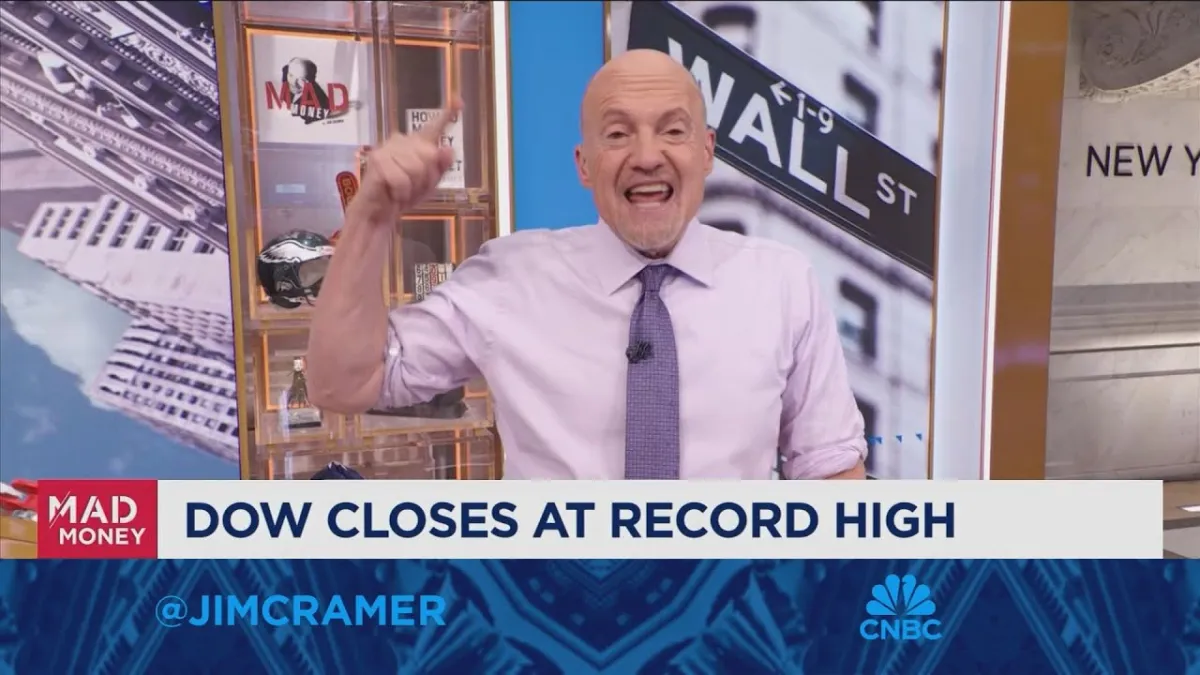
“This was a good day for the real economy, not-so-hot day for the artificial intelligence revolution,” declared Jim Cramer, host of CNBC’s Mad Money, from Salesforce’s Dreamforce conference. His commentary captured the essence of a turbulent Tuesday market session, highlighting a significant divergence in investor sentiment between established, tangible economic sectors and the high-flying, often speculative, realm of artificial intelligence and broader tech. Cramer’s analysis painted a vivid picture of a market grappling with macroeconomic realities, where the promise of future innovation temporarily took a backseat to the immediate concerns of interest rates, inflation, and geopolitical tensions.
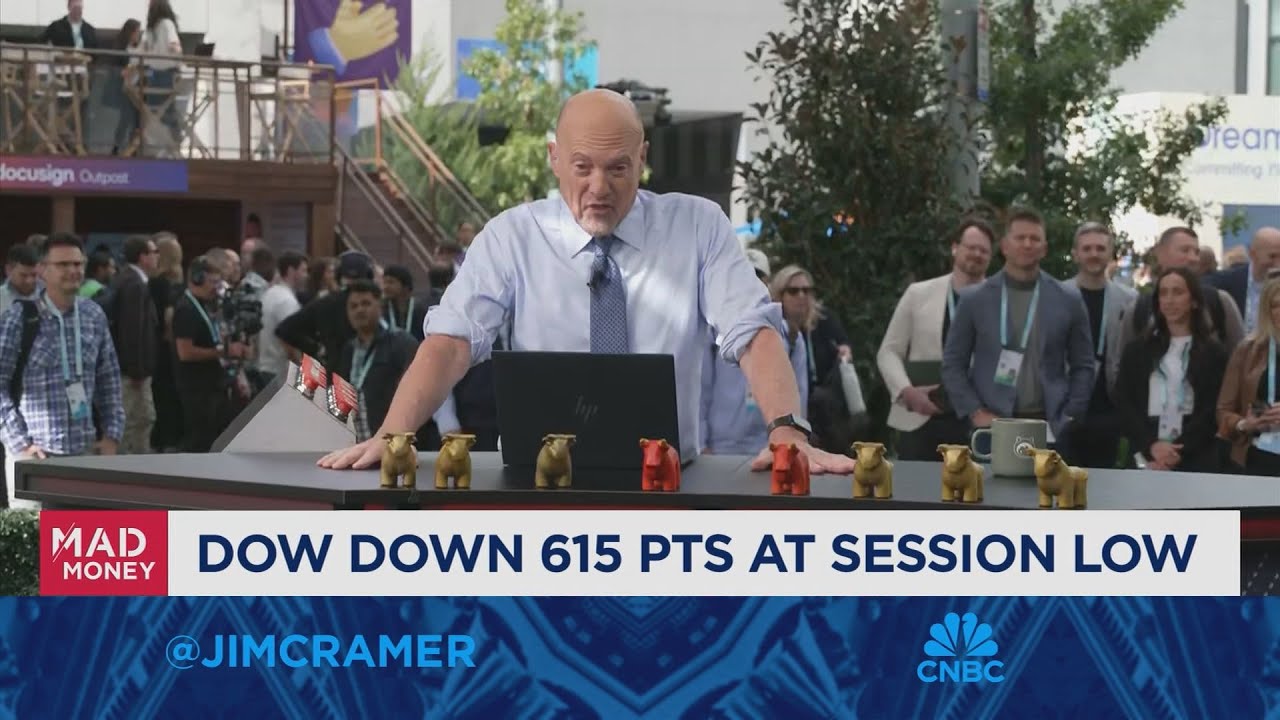
The day began on a decidedly grim note for tech and AI enthusiasts. Overnight trading saw "speculative stocks just getting clobbered," setting the stage for what Cramer described as a "hideous opening." Technology companies, particularly those often associated with the burgeoning AI revolution, bore the brunt of this early downturn. The Nasdaq Composite, a bellwether for the tech sector, experienced a significant dip, reflecting a broader sell-off that seemed to target the very companies driving the narrative of exponential growth and disruption. This initial market reaction underscored a prevailing nervousness among investors, who appeared to be shedding riskier assets in favor of more stable holdings.
However, the market’s narrative took a dramatic turn mid-day, largely influenced by remarks from Federal Reserve Chairman Jay Powell. Powell’s indication that the economy might need "the Fed's help," coupled with discussions about potentially ceasing the Fed's "endless bond selling," acted as a powerful catalyst. This shift in tone from the central bank, hinting at a more accommodating monetary policy, immediately buoyed sectors historically sensitive to interest rate movements. The turnaround was palpable, with bank stocks leading the charge and injecting a much-needed sense of optimism into the broader market. "It was led by the bank stocks, and they are so important to the health of the real economy. I cheered," Cramer enthusiastically recounted, emphasizing the fundamental strength these traditional industries represent.
This surge in the "real economy" was a stark contrast to the earlier struggles of the tech sector. While the Dow Industrials ultimately finished the day in positive territory, the S&P 500 and Nasdaq Composite, heavily weighted towards technology and growth stocks, remained in the red. This outcome reinforced Cramer’s central thesis: the day’s action was less about the futuristic allure of AI and more about the foundational elements of the economy. The market's pivot revealed an underlying preference for stability and value, as investors sought refuge in sectors like financials, industrials, and consumer staples, which often benefit from lower interest rates and a more robust economic outlook.
The market’s volatility wasn’t solely attributable to Fed pronouncements. A late-day "antagonistic post" from the President on Truth Social regarding China talks further unsettled investors, erasing a "big chunk of the gains" that had accumulated. This geopolitical ripple effect served as a reminder that even in an era dominated by technological advancements, traditional geopolitical and economic factors retain immense power to sway market sentiment and trajectory. Such external shocks often disproportionately impact growth-oriented tech stocks, which are more sensitive to global trade and economic stability.
The daily brief
Get the free daily brief with the day's AI news, new AI startups and funding rounds every morning.
Join 64,000 other subscribers.
Cramer’s commentary effectively highlighted the market’s underlying schizophrenia: a simultaneous fascination with, and apprehension towards, the rapid advancements in AI. While the long-term potential of AI remains undeniable, the short-term market dynamics are often dictated by more mundane, yet potent, forces. The "non-data center parts of the economy," as Cramer put it, represented a "Rip Van Winkle economy that's been asleep for ages." Yet, on this particular Tuesday, these very sectors awoke to dominate the market’s positive movements, demonstrating a resilience and foundational importance that outshone the speculative fervor surrounding AI.
For founders, venture capitalists, and AI professionals, this market behavior offers a crucial insight: while technological innovation is a powerful engine of growth, it operates within a broader economic and geopolitical framework. The day’s trading underscored that even the most transformative technologies are not immune to macroeconomic headwinds or shifts in monetary policy. Valuations for AI companies, often predicated on future potential rather than current profitability, can be particularly susceptible to changes in interest rate expectations or investor risk appetite. This necessitates a strategic focus not just on groundbreaking technology, but also on building robust business models that can withstand broader market fluctuations and deliver tangible value even when the speculative tide recedes.
Related Reading
- The AI Bubble: A Dot-Com Analogy with Broader Implications
- AI Stocks: Navigating Breakouts and Breakdowns Amidst Market Euphoria
- Former Intel CEO Declares "Of Course" We're In An AI Bubble
The market’s reaction to Powell’s comments regarding bond selling further illustrates the intricate dance between monetary policy and market performance. Continuous bond selling by the Fed can keep mortgage rates artificially high, dampening economic activity in sectors like housing and construction. A potential halt to this practice suggests a more supportive environment for the "real economy," making traditional businesses more attractive to investors. This direct correlation between Fed action and sector performance reinforces the idea that macro-level decisions can exert a gravitational pull, drawing capital away from even the most exciting, nascent industries when economic stability is perceived as being at stake.
Ultimately, Tuesday's market action served as a potent reminder of the complex interplay of forces shaping investor behavior. It was a day when the tangible, established pillars of the economy demonstrated their enduring relevance, momentarily overshadowing the revolutionary promise of artificial intelligence. The market, in its unpredictable wisdom, signaled a return to fundamentals, emphasizing the "real economy's" health as a primary driver, while the AI revolution, though still advancing, experienced a brief, yet noticeable, pause in its relentless ascent.