

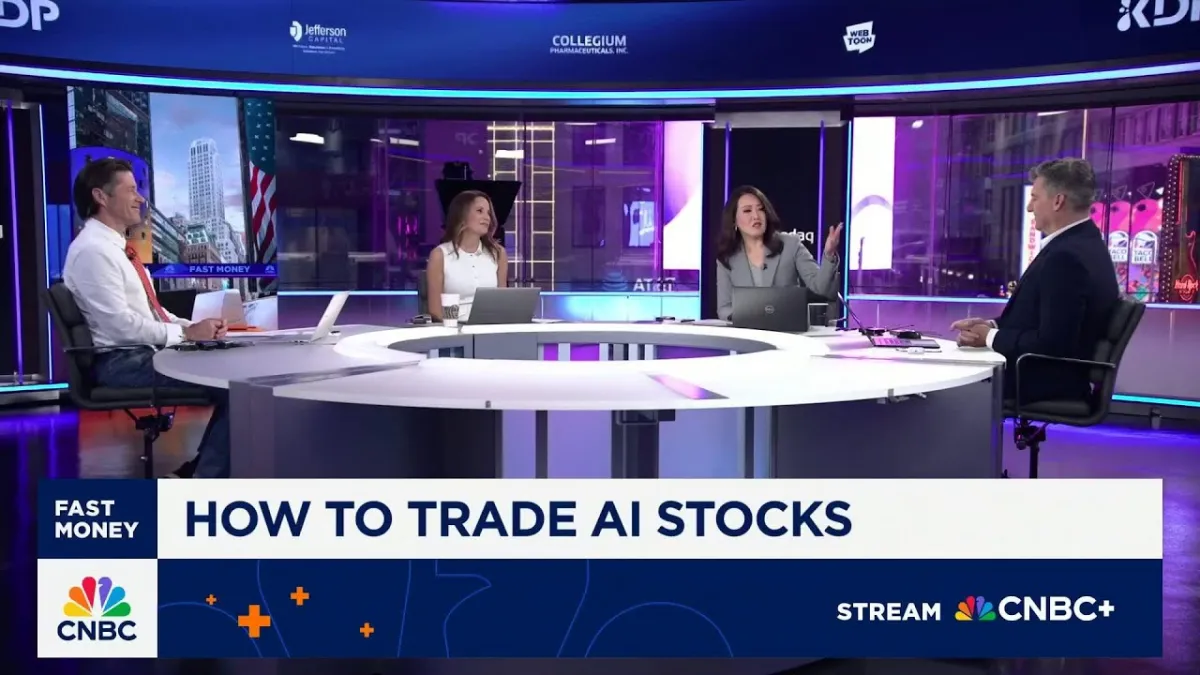
The artificial intelligence sector, a crucible of innovation and speculative fervor, presents a market landscape characterized by stark divergences in stock performance. On a recent segment of CNBC’s “Fast Money,” technical analyst Katie Stockton, alongside commentators Dan Nathan and Mellody Hobson, offered a sharp dissection of current AI stock trends, highlighting the critical need for discerning analysis beyond generalized market sentiment. Their discussion underscored that while some AI plays exhibit robust technical strength, others languish, revealing a market segment increasingly sensitive to underlying fundamentals and relative performance during corrective phases.
Katie Stockton initiated the commentary by contrasting two AI-related companies, UIPath (PATH) and Appian Corp (APPN), as archetypal examples of this divergence. UIPath, a robotic process automation firm, was presented as a potential "breakout star." Stockton observed, "a big basing phase that's been completed with a breakout above previous highs, above some moving averages and even a Fibonacci retracement level." This technical posture, she elaborated, "does bode well for intermediate term upside follow through," suggesting a positive trajectory despite broader market volatility. The stock's chart depicted a clear upward momentum, validating the technical indicators of a potential sustained rally.
Conversely, Appian Corp, a low-code automation platform, painted a less optimistic picture. Stockton pointed to Appian’s chart, noting "a downtrend, it's near its lows or headed towards its lows it seems in terms of momentum to the downside." This stark contrast between two companies operating within the AI/automation sphere underscores a crucial insight: the AI tide does not lift all boats equally. Technical strength, evidenced by clear breakout patterns and sustained momentum, is becoming an increasingly important differentiator for investors seeking durable growth in a crowded field.
Dan Nathan then interjected, bringing a vital perspective on the market's broader psychological undercurrent. He remarked on the prevalent euphoria, stating, "There's a lot of quality names that got really overdone to the upside and people didn't care about valuations, they were discounting... like Nvidia missed their data center number last quarter and the stock was down 1% the next day. Just a lot of euphoria." This observation cuts to the core of market irrationality, where the promise of AI can overshadow traditional valuation metrics, leading to inflated prices that may not be sustainable. Nathan’s point resonated deeply for founders and VCs, emphasizing the often-tenuous link between innovation and immediate market capitalization.
He further cautioned against a superficial reading of "AI plays" by drawing parallels between UIPath and past high-flyers like Zoom and PayPal, which saw dramatic declines from their 2021 peaks. The implication was clear: a strong technical breakout, while promising, does not inoculate a stock against broader market corrections or shifts in investor sentiment, especially if underlying valuations become stretched. This highlights a second core insight: the market's enthusiasm for AI can lead to overvaluation, making it imperative for sophisticated investors to scrutinize fundamentals and historical precedents.