


OpenAI’s audacious entry into the web browser arena with ChatGPT Atlas marks a pivotal moment in the AI arms race, signaling a direct challenge to Google's entrenched position as the internet's gateway. The announcement, reported live by CNBC's MacKenzie Sigalos, immediately sent tremors through the market, with Alphabet's shares experiencing a notable downturn, reflecting investor apprehension about the shifting competitive landscape. This isn't merely a new browser; it's a strategic maneuver designed to redefine how users interact with the web, leveraging advanced AI capabilities to create a personalized, agentic experience.
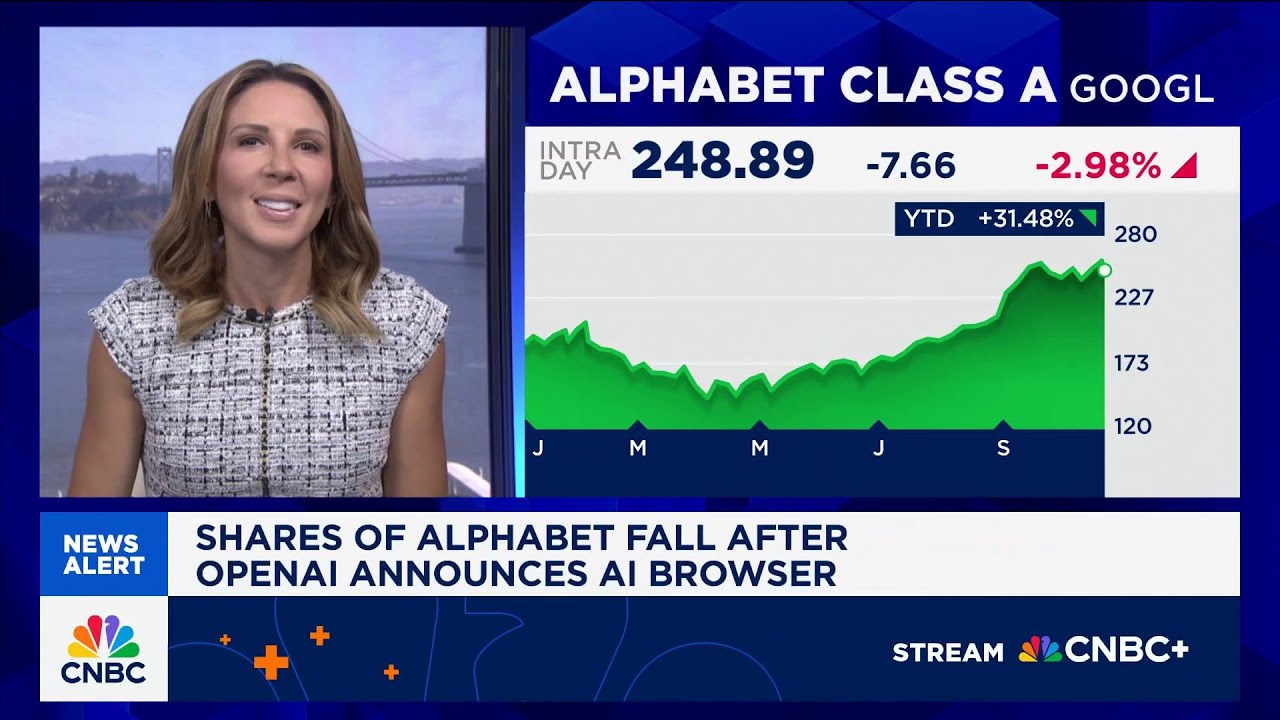
MacKenzie Sigalos, reporting for CNBC, detailed OpenAI's live announcement regarding the launch of ChatGPT Atlas, an AI-powered web browser. This development positions OpenAI squarely against established giants like Google Chrome and emerging contenders such as Perplexity's Comet browser, intensifying the battle for control over the user's primary interface with the internet. Sam Altman's long-held ambition to challenge Google's dominance now manifests in a tangible product, aiming to intercept the user journey at its most fundamental point: the browser.
The strategic intent behind ChatGPT Atlas is clear and formidable. As Sigalos articulated, "OpenAI wants to be your front door to the internet and if they own the browser, they can theoretically cut Google out entirely." This statement underscores the profound implications of Atlas. By integrating its powerful AI directly into the browsing experience, OpenAI seeks to disintermediate the traditional search engine model, where Google currently holds sway over advertising revenue and data collection. The browser becomes not just a window, but an intelligent agent, capable of understanding context and executing complex tasks.
Central to Atlas’s appeal are its distinguishing features. ChatGPT can persistently reside as a sidebar, offering continuous AI assistance across various web pages. This omnipresent AI companion learns and adapts, building what OpenAI terms "personalized browser memory," allowing it to recall user preferences, browsing history, and contextual information to provide more relevant and proactive support. Beyond passive assistance, Atlas boasts "agent capabilities to take actions for the user," transforming the browser from a passive navigation tool into an active participant in digital workflows. Imagine an AI that not only finds information but also processes it, organizes it, and acts upon it, scheduling meetings, drafting emails, or even completing purchases, all within the browser environment.
This move by OpenAI is a direct escalation in the burgeoning AI-powered browser conflict. Perplexity, a notable startup in the AI search space, recently launched its free Comet browser, which also positions itself as a personal assistant, capable of facilitating search, shopping, tab organization, and email drafting. Google, not one to be outmaneuvered, has been aggressively integrating its Gemini AI directly into Chrome since September, aiming to enhance user experience by helping navigate tabs, comprehend page content, and schedule meetings. The landscape is rapidly evolving from a simple search query to an intelligent conversation with the web itself.