

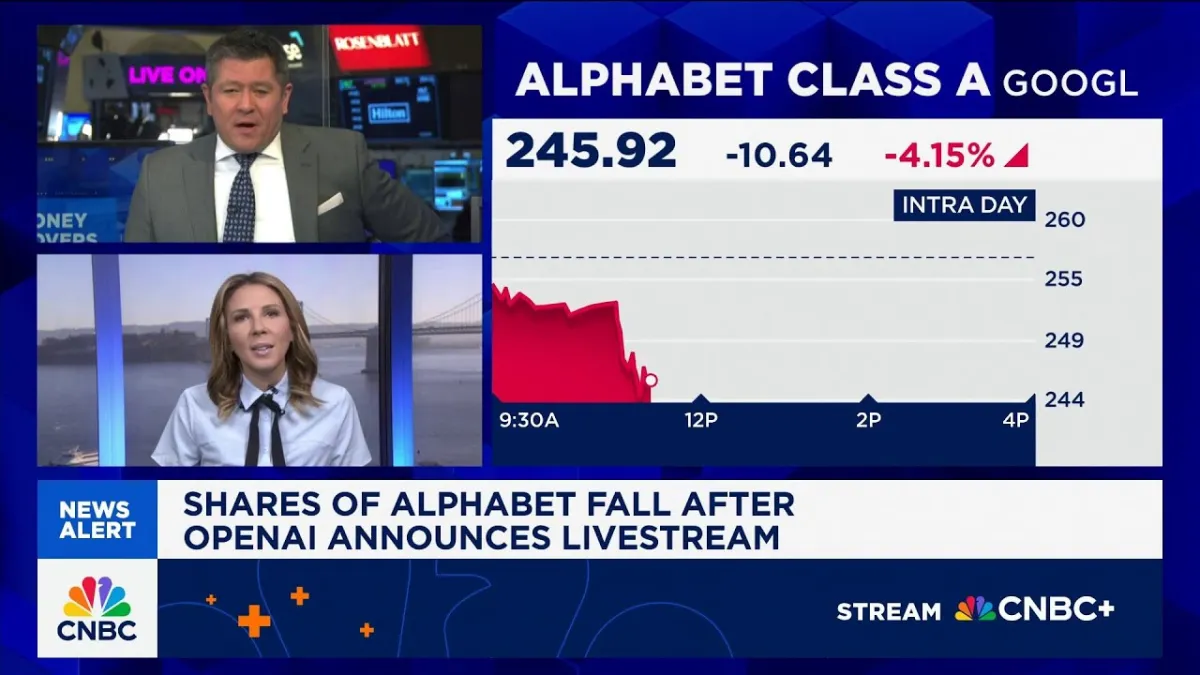
The shares of Alphabet, Google's parent company, experienced a significant drop of over 4% following the announcement of an OpenAI livestream event. This market reaction underscores the intense competition and investor anxiety surrounding the rapidly evolving landscape of artificial intelligence and its integration into core internet services. MacKenzie Sigalos of CNBC reported on the development, highlighting the market's sensitivity to potential disruptions in the AI space.
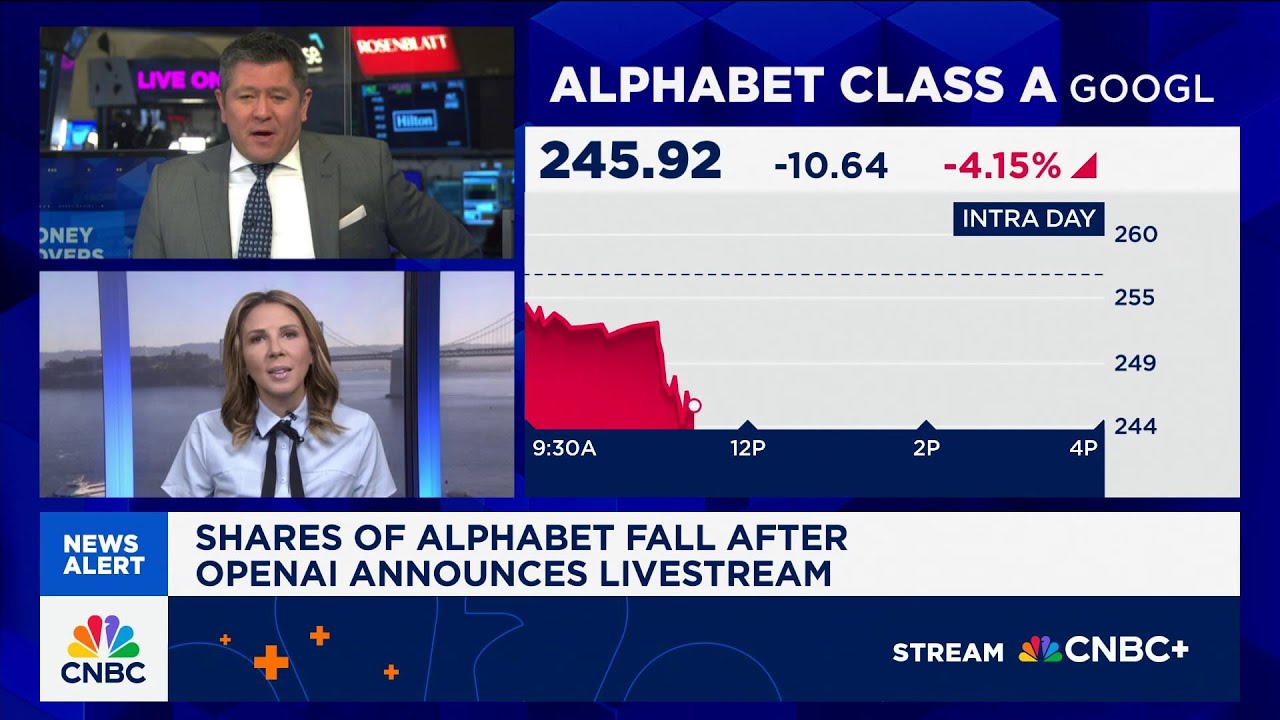
Sigalos spoke with 'Money Movers' about the immediate impact of OpenAI's announcement on Alphabet's stock. The anticipation surrounding OpenAI's potential product reveal, rumored to be an AI-powered browser, has clearly unsettled investors who have long viewed Google's dominance in search and its Chrome browser as unassailable. The timing of this announcement, coupled with the ongoing antitrust scrutiny faced by Google, amplifies the pressure on the tech giant.
A primary insight from this market movement is the clear indication that the era of unimpeded AI innovation for established tech giants may be drawing to a close. OpenAI's consistent stride in releasing groundbreaking AI models, from GPT-3 to the more recent developments, has positioned them as a formidable challenger. The potential for an AI-integrated browser represents a direct threat to Google's search advertising revenue, a cornerstone of its business. As Sigalos noted, "This could mark a major shift in the browser and search wars, and flip advantage from Google to OpenAI."
The narrative surrounding Alphabet's stock decline is intrinsically linked to the perceived threat from OpenAI's burgeoning capabilities. While Google has been a leader in AI research for years, its public-facing product integrations have often been seen as more incremental. OpenAI, on the other hand, has captured the public imagination and investor attention with its more disruptive product launches. This has created a perception that Google might be playing catch-up in certain critical areas of AI application.
The sheer scale of OpenAI's user base, with "800 million weekly active users," presents a significant platform for any new product they might introduce. This vast audience provides an immediate advantage, allowing for rapid iteration and adoption. The competition is not merely about technological prowess but also about capturing user attention and habits in the digital realm.