The integration of AI agents and large language models (LLMs) into mainframe computing marks a pivotal shift, moving beyond traditional reactive system management to a proactive, intelligent paradigm. As Rosalind Radcliffe, an IBM Fellow, articulated, "This ability to really deal with the hardware on a proactive basis is a critical part of enterprise computing." This insight, shared during an IBM discussion with Data Scientist Rohit Nutalapati, unpacks how this convergence is poised to revolutionize the operational efficiency and strategic capabilities of enterprise IT infrastructures.
Radcliffe and Nutalapati, in their insightful dialogue, highlighted the historical limitations of mainframe management. Traditionally, enterprise systems, segmented into various "sysplexes" and environments, have relied on rudimentary event reporting. The "Call Home" facility, for instance, could flag simple issues like overheating hardware or impending problems based on thresholds. While useful, these were often isolated alerts, lacking the broader context needed for truly optimized, system-wide responses.
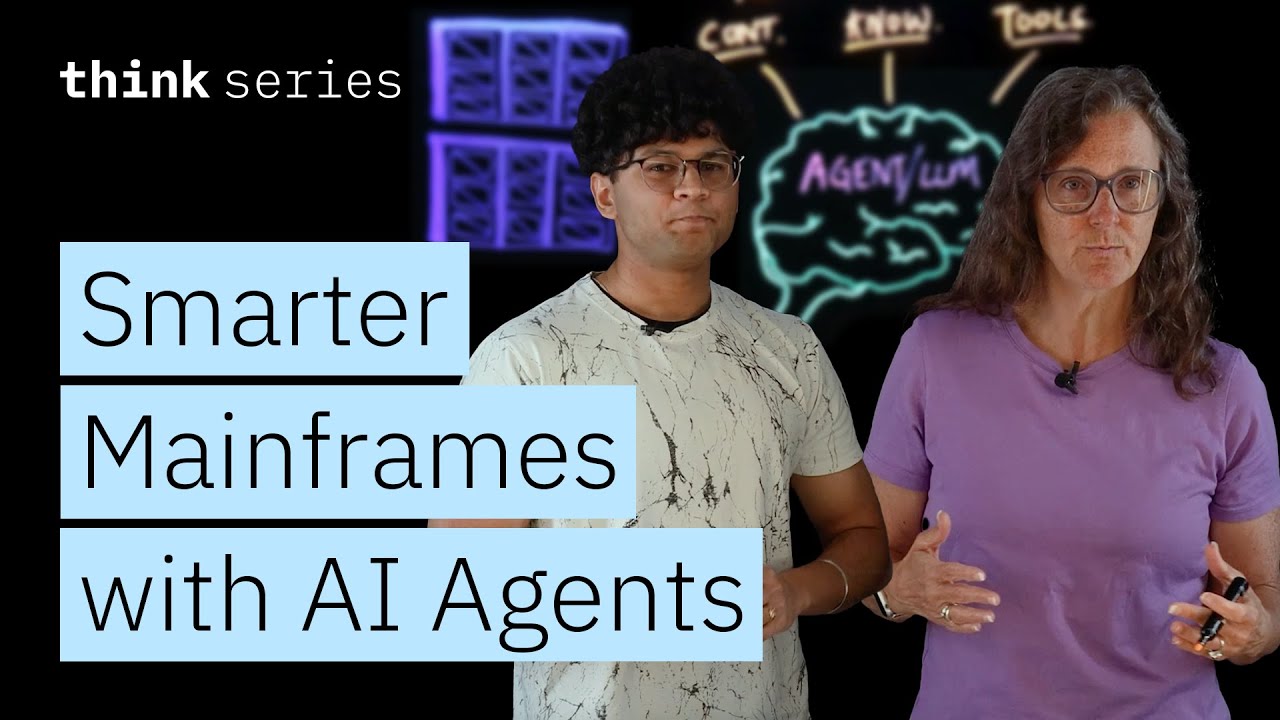
The fundamental distinction of AI agents, as Nutalapati explained, lies in their ability to transcend these narrow, reactive functions. Unlike previous LLMs or traditional machine learning models that merely raise a flag or make a simple prediction, AI agents are designed to "perceive inputs, make informed decisions, and then act or generate." This capacity for autonomous, context-aware action is what unlocks unprecedented potential for mainframe environments. The core components enabling this advanced capability are memory (comprising context and knowledge) and tools.
Context, in this framework, represents the overarching business objective an agent aims to optimize. This could involve minimizing downtime, preventing errors, or efficiently managing CPU usage. Establishing a persistent context ensures the agent's actions are always aligned with strategic business needs, preventing unidimensional problem-solving. This strategic alignment is crucial for enterprise systems, where individual system performance must contribute to broader organizational goals.
Complementing context is knowledge, which refers to the vast troves of structured and unstructured data an agent can access, such as "Call Home" events or SMF records. The agent processes this data, often leveraging additional "tools", which themselves can be other specialized AI models for summarization or problem identification, to derive actionable insights. These tools enable the agent to interpret complex data patterns and formulate appropriate responses, moving beyond raw data ingestion to intelligent interpretation.