

The AI Revolution Demands New Skills
"AI is not only changing the way employees work, it's also transforming the way human resource leaders consider how AI will change jobs." This statement, delivered by CNBC's Sharon Epperson, encapsulates the core sentiment of a recent discussion on "Squawk Box" regarding the profound impact of artificial intelligence on the modern workforce. The segment featured insights from members of the CNBC Workforce Executive Council, who shared their perspectives on how AI is currently affecting jobs and their predictions for the immediate future.
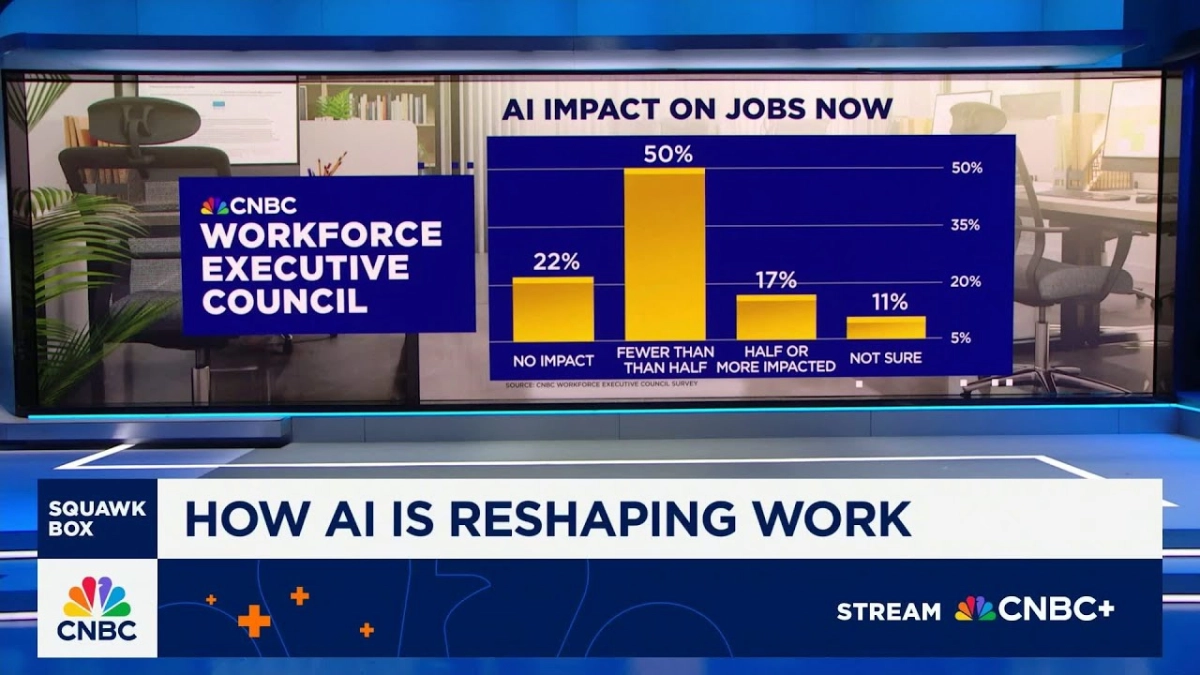
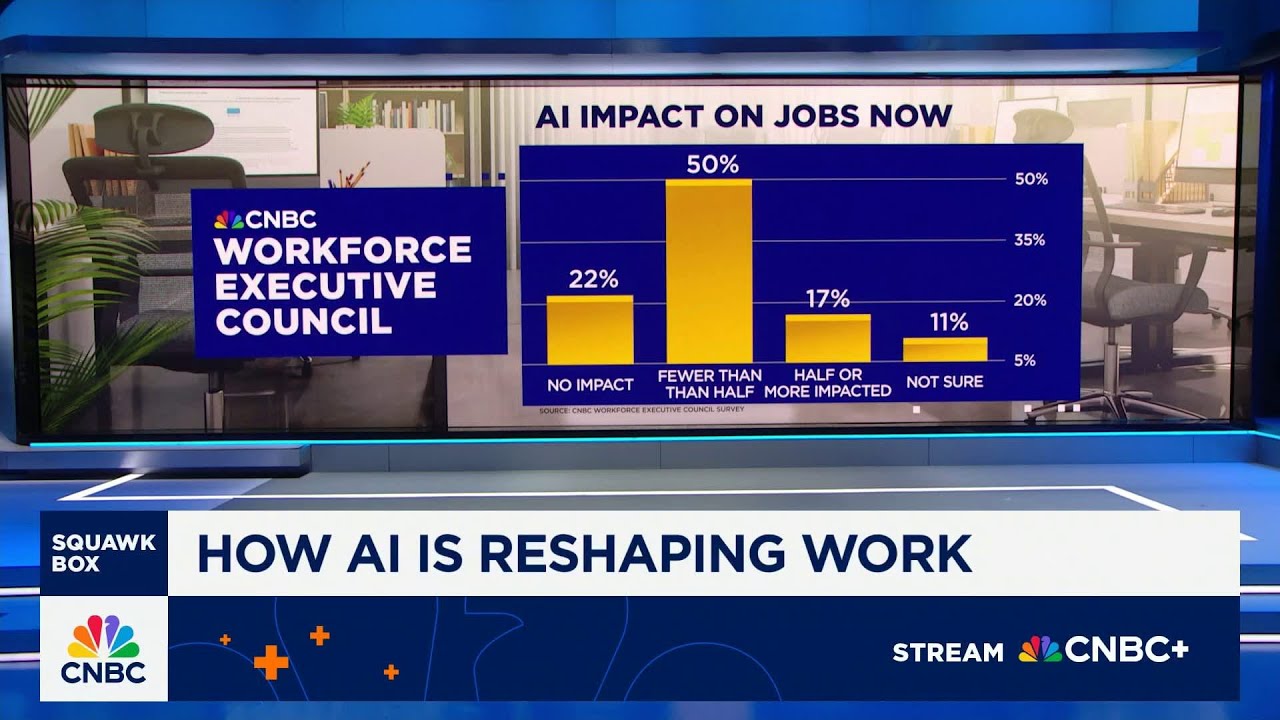
A CNBC poll conducted among these senior HR leaders revealed that a significant portion of their organizations are already experiencing the transformative power of AI. Specifically, 50% of respondents indicated that AI is impacting "fewer than half" of the jobs within their companies, while an additional 17% reported that "half or more" of their jobs have been impacted. This suggests a widespread, albeit varied, adoption of AI technologies across different sectors. The survey also highlighted that 22% of HR leaders felt AI was having "no impact" on their jobs currently, and 11% were "not sure."
Looking ahead to the next twelve months, the sentiment shifts towards a more pronounced AI integration. The poll indicated that 45% of HR leaders expect AI to impact "half or more" of all jobs, with a further 44% anticipating an impact on "less than half." Crucially, only 11% believe that "no impact" will be felt in the coming year. This indicates a growing expectation that AI will become a more pervasive force in shaping the employment landscape.
The discussion also delved into the perceived attributes of AI in the workplace. A striking 61% of HR leaders believe AI makes their companies "more efficient," and a substantial 78% feel it has made their workforce "more innovative." However, a notable 39% also acknowledged that it is "too early to tell" the full extent of AI's impact, suggesting a period of ongoing evaluation and adaptation. This duality highlights the nascent stage of widespread AI integration, where both optimism and uncertainty coexist.