AI's Double-Edged Sword in Cybersecurity

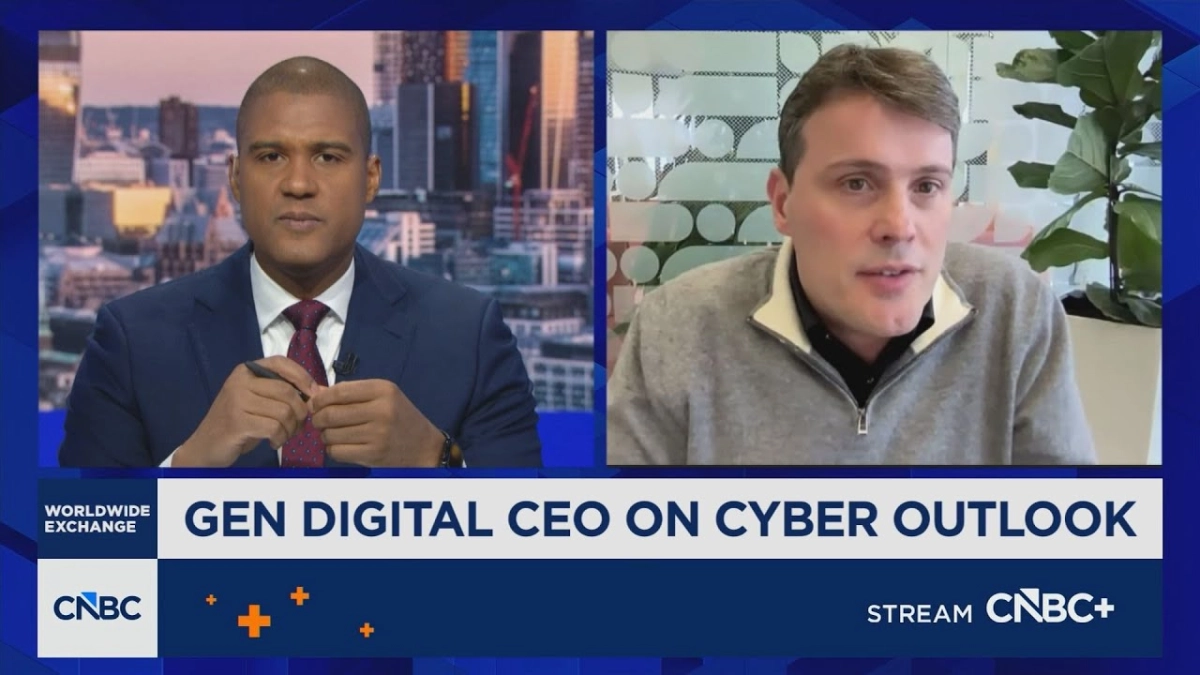
"The line between reality and fake will become increasingly blurred," stated Vincent Pilette, CEO of Gen Digital, in a recent interview on CNBC's Worldwide Exchange. He spoke with the interviewer about the escalating role of artificial intelligence in cybersecurity, particularly concerning data breaches and the evolving threat landscape for both consumers and enterprises. Pilette highlighted that AI, while a powerful tool for defense, is also being weaponized by malicious actors to conduct more sophisticated and pervasive attacks.
Gen Digital, a company with a portfolio including Avast, Norton, and LifeLock, is at the forefront of this digital battle. Pilette detailed how cybercrimes against U.S. consumers are projected to cost an astonishing $15 billion annually. This figure underscores the significant financial and personal impact of digital threats. The sophistication of these attacks is amplified by AI, which enables malicious actors to create highly convincing fake websites and personas, ultimately aiming to trick individuals into divulging sensitive information. This creates a challenging environment where distinguishing legitimate online interactions from fraudulent ones becomes increasingly difficult.
A core insight from Pilette's discussion is the dual nature of AI in cybersecurity. While Gen Digital leverages AI to proactively detect and block threats, adversaries are employing similar technologies to enhance their attack vectors. "We've now right now blocked 140,000 AI-powered e-commerce fake websites," Pilette revealed, illustrating the sheer volume and scale of AI-driven phishing attempts. This demonstrates a critical arms race where defensive AI must constantly adapt to counter the offensive capabilities of AI-powered malware and social engineering tactics.
The concept of "platformization" in cybersecurity was also a key theme. Pilette noted that many cybersecurity companies are moving towards offering a more integrated suite of services, rather than singular solutions. This approach is driven by the interconnected nature of modern cyber threats. For enterprise clients, the challenge is similar to that faced by consumers: protecting their digital footprint across a vast and complex landscape. Pilette explained that enterprises are increasingly seeking comprehensive solutions, stating, "We are focusing on the consumer and we follow exactly the same strategy for the enterprise, for the SMB market." This unified strategy aims to provide end-to-end protection, addressing risks from the device level to the entire network infrastructure.
The daily brief
Get the free daily brief with the day's AI news, new AI startups and funding rounds every morning.
Join 11,999 subscribers.
The data breaches themselves are becoming more targeted and sophisticated. Pilette emphasized that the threat landscape is dynamic, with attackers constantly evolving their methods. "We've now right now blocked 140,000 AI-powered e-commerce fake websites," he said, highlighting the scale of the problem. This highlights a critical challenge: the ability of AI to generate highly convincing fake content, making it harder for users to discern legitimate sources from malicious ones.
Furthermore, the attack surface is expanding, making a holistic approach to security paramount. Pilette elaborated on this by stating, "We are focusing on the consumer and we follow exactly the same strategy for the enterprise, for the SMB market." This indicates a shift towards integrated security platforms that can offer comprehensive protection across various digital touchpoints. For businesses, this means safeguarding not only their internal systems but also their customer-facing platforms and supply chains, which are increasingly vulnerable to AI-driven attacks. The ability to predict and mitigate these threats requires a deep understanding of how AI is being utilized on both sides of the cybersecurity divide.
The core challenge lies in the fact that AI can be used to create sophisticated, personalized attacks at scale. Pilette observed, "The attackers are using AI to really increase their surface, using generative AI to really attack consumers at scale, being personal, one-to-one relationships." This personalized approach makes phishing and social engineering attacks far more effective, as they can be tailored to individual users' perceived interests and vulnerabilities. Companies like Gen Digital are responding by employing AI to identify and neutralize these threats before they can cause harm, aiming to protect not only data but also the trust between consumers and businesses.