

The true power of generative AI in the enterprise lies not merely in its ability to generate text or code, but in its capacity to synthesize and reason over an organization’s proprietary data, transforming raw information into actionable intelligence. This fundamental shift is vividly demonstrated in the recent video showcasing Claude’s new Microsoft 365 connector. The brief, yet impactful, demonstration illustrates how Claude can seamlessly integrate with the pervasive M365 ecosystem, pulling context from SharePoint, Outlook, and Teams to provide a deeply personalized and efficient assistant experience.
The video serves as a compelling product summary, detailing the latest release from Anthropic: a direct integration for Claude with Microsoft 365 services. It opens with a user enabling the Microsoft 365 connector within Claude, a simple toggle that unlocks a vast repository of organizational knowledge. This foundational step immediately signals a commitment to embedding advanced AI directly into the existing digital workflows that define modern business operations, moving beyond isolated AI tools towards a truly integrated intelligence layer.
The core of the demonstration centers around a practical, high-stakes business scenario. A user prompts Claude with a complex request: "Search my emails and messages, calendar, and documents to help me prepare for our renewal meeting with Acme Co tomorrow. I need to know what we've discussed recently, any open action items, and details on our latest proposal." This single query encapsulates the daily struggle of professionals drowning in disparate information, highlighting a critical pain point that traditional search tools often fail to address comprehensively. Claude's immediate, reassuring response, "I'll help you prepare for your Acme Co renewal meeting. Let me search through to find relevant information," sets the stage for its deep dive into the user's M365 environment.
A core insight derived from this demonstration is the shift from generic AI to **contextual intelligence powered by proprietary data**. Rather than offering broad, internet-based answers, Claude is shown sifting through a user's specific emails, calendar entries, OneDrive files, and Teams chats. This capability transforms Claude from a general-purpose assistant into an indispensable, personalized knowledge worker, intimately familiar with an individual's projects, communications, and historical context. It effectively turns the unstructured data scattered across an enterprise’s digital footprint into a coherent, queryable database.
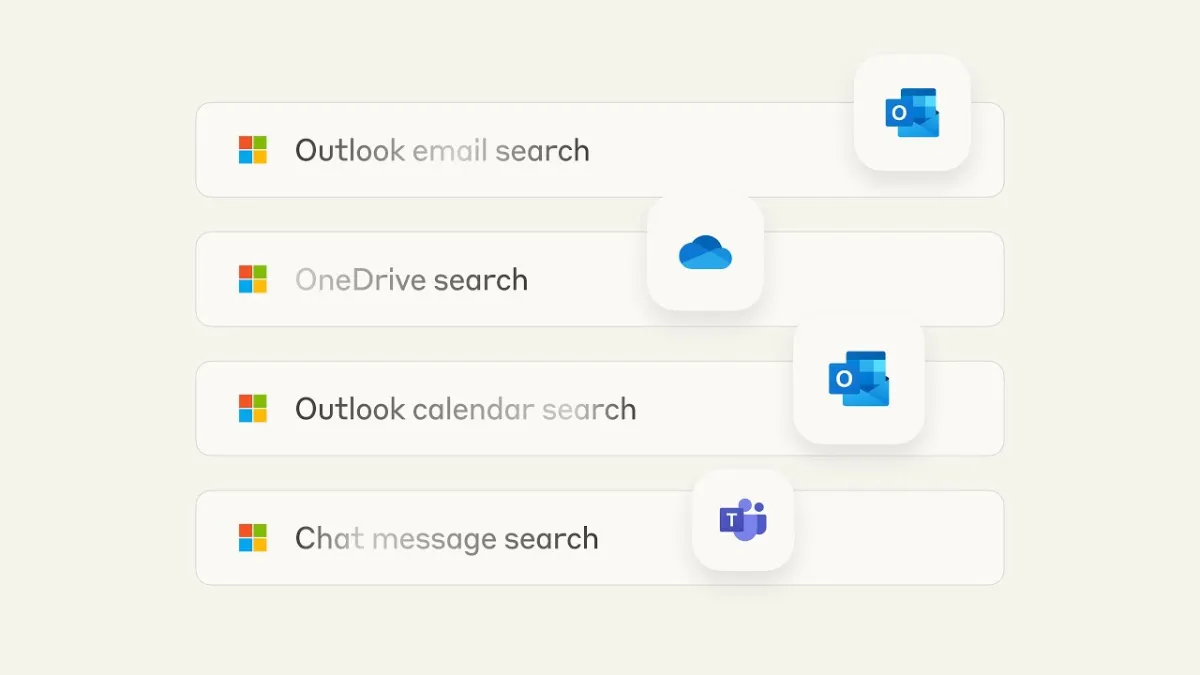
The efficiency gains are profound. The video meticulously illustrates Claude’s process, showing it performing distinct searches across Outlook email, OneDrive, Outlook calendar, and Teams chat messages. The culmination is a synthesized report, titled "Acme Co Renewal Meeting - Strategic Synthesis," which Claude introduces by stating, "I've pulled together everything from your recent emails, calendar, Teams chats, and documents. Here's what you need to know." This output is not just a collection of links or snippets; it's a structured overview that provides an account summary, key stakeholders, recent business context, and strategic initiatives. For instance, the report details, "Acme Co is a mid-cap public financial services company (market cap ~$8.2B) that's been our client for 18 months. Current contract is $450K annually across marketing automation and analytics platforms, set to expire November 15th. Based on recent communications, they're evaluating a 3-year renewal with expansion potential up to $1.2M annually." This level of detail, pulled from disparate sources and presented cohesively, is invaluable.