

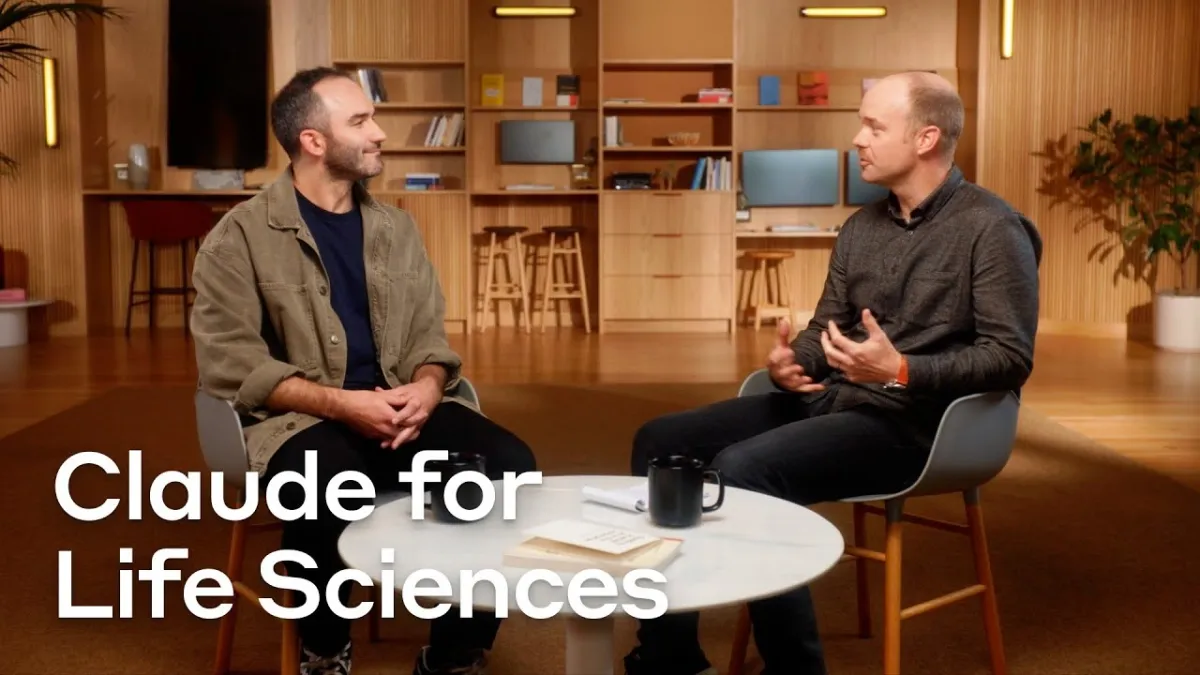
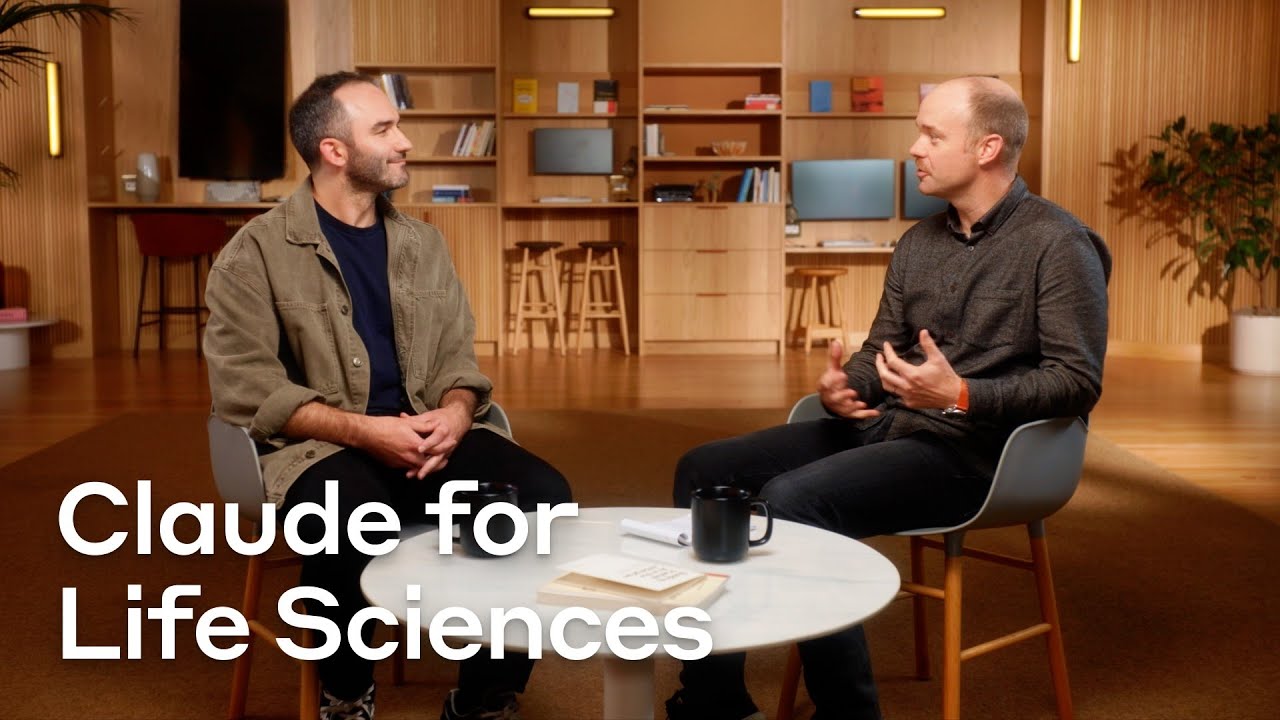
"I posed this problem to Claude. I said, 'Hey, what should we do to get unstuck?' And just in one minute, you know, one response, Claude actually just one-shotted the answer." This compelling anecdote from Eric Kauderer-Abrams, Anthropic’s Head of Biology and Life Sciences Research, encapsulates the transformative potential Anthropic sees in its Claude for Life Sciences initiative. In a recent discussion, Kauderer-Abrams, alongside Jonah Cool, Head of Life Sciences Partnerships and Deployment, laid out Anthropic’s ambitious vision to integrate AI deeply into the scientific workflow, moving beyond mere problem-solving to fundamentally altering the practice of science itself.
Anthropic’s commitment to the life sciences is not incidental; it is central to their mission. Kauderer-Abrams emphasized this point, stating, "Actually, the number one place that we at Anthropic are excited about applying it is within biology and the life sciences." This focus stems from a belief that AI's beneficial impact can be profoundly realized in accelerating research, driving innovation, and ultimately improving human well-being. Their strategy aims to empower individual scientists, enhancing their daily experience by automating tedious tasks and allowing more focus on creative, high-leverage work.
The core insight driving Anthropic’s approach is the ambition to transform Claude into a versatile AI research assistant. This involves building tools that empower individual scientists, making them more productive and enriching the scientific process. The goal is to "take away some of the grunt work that, you know, everyone would rather get out of and allow you to focus more on the creative high-leverage side." This vision parallels the evolution of software engineering, where AI partners now assist with brainstorming and task delegation, an experience Anthropic aims to bring to biologists.
Anthropic is taking a holistic approach, addressing the entire spectrum of tasks within the life sciences. This spans from the nascent stages of early-stage discovery, such as molecule design and protein folding, all the way through development and translational research. This comprehensive strategy covers everything from drafting and reviewing experimental protocols and debugging lab procedures, to performing complex bioinformatics analyses and generating publication-ready figures and reports. No task is too small or too large for Claude’s intended capabilities.
A pivotal shift in thinking, highlighted by Jonah Cool, is moving past the question of "what problem will AI solve for me?" to a more profound inquiry: "how do we change how we do science?" This reorientation emphasizes leveraging AI not just as a tool for specific tasks, but as a catalyst for new methodologies and accelerating the pace of discovery. It’s about creating a fluidity in research that breaks down traditional barriers.