


Anthropic’s Chief Product Officer, Mike Krieger, recently shared a palpable excitement about the launch of Claude Sonnet 4.5, revealing a strategic evolution in how cutting-edge AI models are not just developed, but deeply integrated into the product ecosystem. Speaking with Alessio and Swyx from Latent Space, Krieger delved into Anthropic's roadmap for agents and developers, illuminating a future where the lines between research and product dissolve into a collaborative, iterative loop.
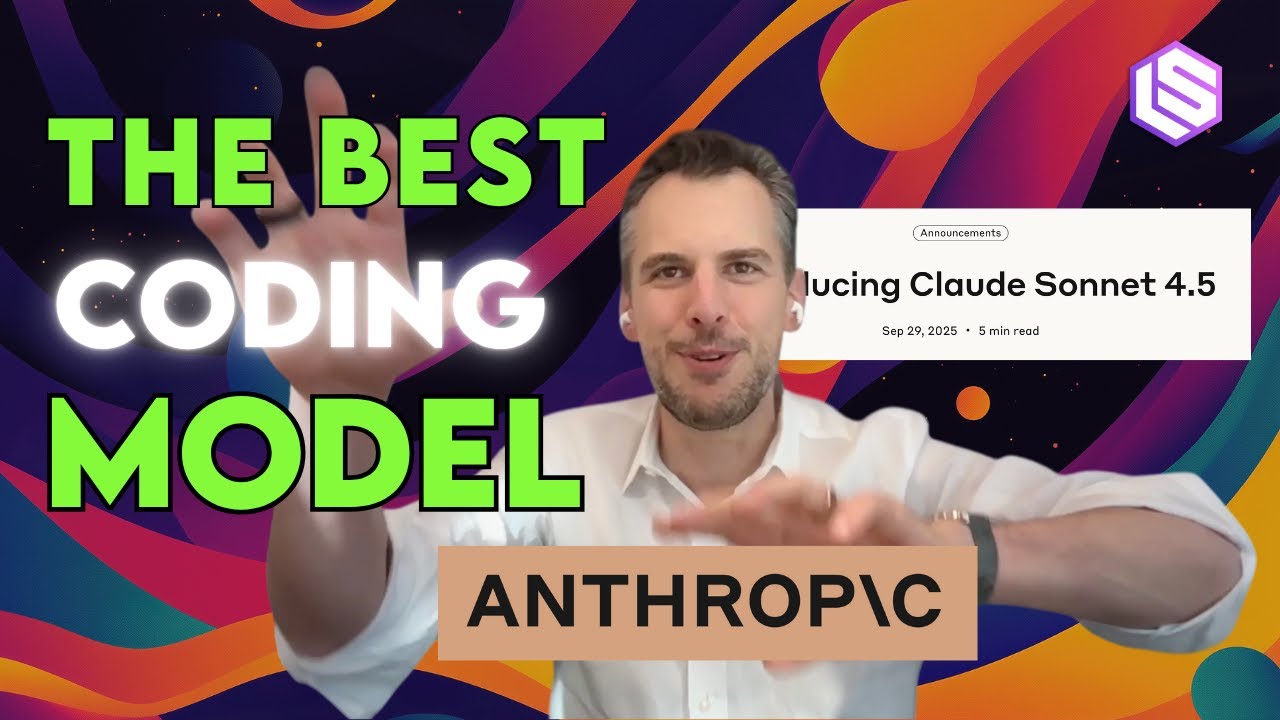
The immediate reception of Sonnet 4.5 was nothing short of phenomenal. Krieger noted that within a single day, Sonnet 4.5 had already surpassed its predecessor, Sonnet 4, in traffic. This rapid adoption signals strong market validation for its enhanced capabilities, highlighting a community eager to leverage the latest advancements.
A core insight from Krieger's discussion is the transformation of the traditional model-to-product handoff. Instead of a linear progression, Anthropic champions a symbiotic relationship where product development actively influences research direction. "Product was upstream of research and downstream of research," Krieger stated, outlining how real-world customer problems and use cases, observed in deployed products like Claude Code and Claude.ai, feed directly back into the research pipeline. This iterative feedback loop ensures that model advancements are not theoretical but are deeply rooted in solving tangible user needs, creating a more responsive and effective development cycle.
This integrated approach extends to the very aesthetics of AI-generated outputs. Krieger revealed his personal "vibe evals" for new models, quirky tests like challenging Claude to design a Virtual Boy-style 3D shooter or a Nintendo board presentation. These aren't just playful prompts; they underscore a critical need for AI models to develop an understanding of UI taste and aesthetic principles. As models move beyond generating text to creating complex interfaces and documents, their ability to produce outputs that are not only functionally correct but also visually appealing and user-friendly becomes paramount. The progression of Claude's design outputs, from early "basic-looking Arial 32-point font with bullets" to more sophisticated, brand-aligned designs, illustrates this journey.
Another pivotal revelation concerns Anthropic's vision for Claude as a developer platform, moving towards a composable, pluggable agent ecosystem. The renaming of the Claude Code SDK to the Claude Agent SDK is a telling sign of this broader ambition. The goal is to empower developers with flexible building blocks that can manage context and memory, ultimately enabling them to tackle complex, domain-specific problems more efficiently. This shift is not merely about providing raw compute or models, but about delivering a comprehensive platform where agents can perform tasks, interact with tools, and even build their own user interfaces, accelerating prototyping and innovation for startups and enterprises alike.