


The future of work, often painted in stark contrasts of AI-driven utopia or dystopian unemployment, is far more nuanced than prevailing narratives suggest. Garry Tan, President & CEO of Y Combinator, recently presented a compelling argument refuting both extremes, positing that artificial intelligence, rather than eradicating human labor, is poised to redefine its very nature through a powerful economic principle: Jevons' Paradox.
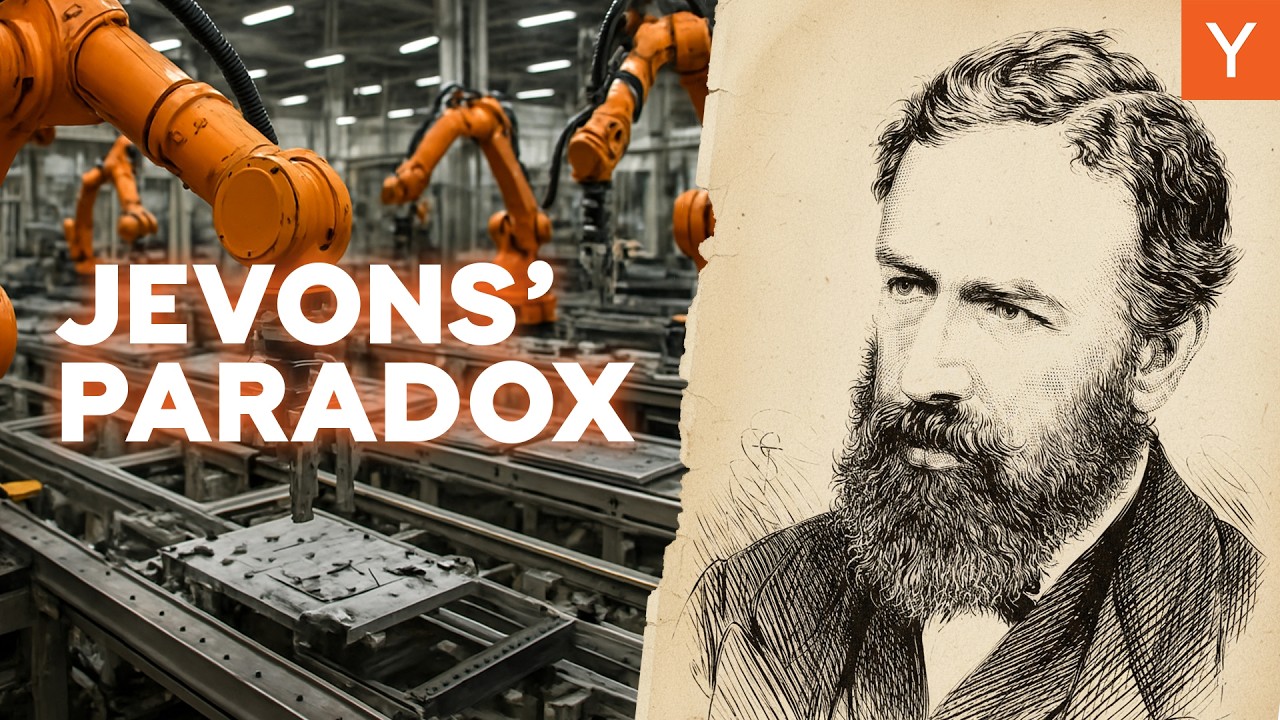
Tan’s commentary addresses the prevailing hysteria surrounding AI and jobs, where "doomers" predict universal unemployment within years, while "deniers" dismiss AI as mere hype that won't fundamentally transform the economy. Both perspectives, he argues, are flawed. The truth, supported by historical and industrial evidence, points to a transformative, yet not destructive, impact.
A prime illustration of this dynamic comes from the field of radiology. In 2016, Geoffrey Hinton, a Turing Award winner and one of the "godfathers of AI," famously declared that people should "stop training radiologists now," confidently predicting that deep learning would surpass human capabilities in image analysis within five years. Yet, nearly a decade later, the demand for radiologists has not plummeted; it has reached an all-time high. This surge occurred despite the proliferation of sophisticated AI products capable of detecting and classifying hundreds of diseases faster and more accurately than humans.
What explains this counterintuitive outcome? Beyond industry-specific factors like malpractice concerns and regulatory requirements for human oversight, a more fundamental economic principle is at play. When AI makes a resource cheaper and faster to utilize, the demand for that resource, and the services associated with it, often explodes. This phenomenon is known as Jevons' Paradox.
Jevons' Paradox was first identified in mid-19th century England by economist William Stanley Jevons. He observed that technological improvements increasing the efficiency of coal usage paradoxically led to an *increase* in coal consumption across industries, rather than a decrease. This defied the contemporary assumption that efficiency would lower consumption, revealing instead a latent demand that surged once the cost barrier was reduced.