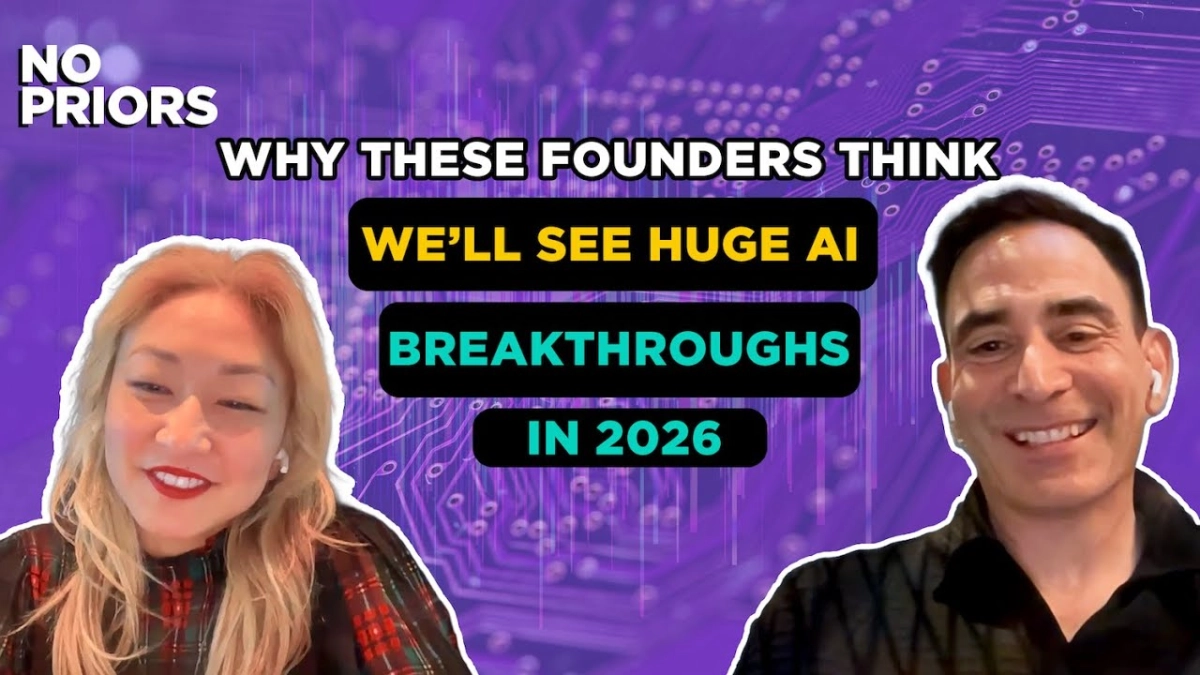
The year 2025 has already proven to be a pivotal period for artificial intelligence, marked by significant leaps and profound discussions on its implications. In the "No Priors" episode titled "The Best of 2025 (So Far)," hosts Sarah Guo and Elad Gil curate a series of illuminating excerpts from their conversations with leading founders and scientific minds, painting a comprehensive picture of AI's current trajectory and future challenges. These dialogues, featuring visionaries from Harvey, OpenAI, World Labs, Mercor, the Center for AI Safety, Flagship Pioneering, Gleen, and Abridge, collectively highlight AI's burgeoning capabilities, its societal disruption, and its potential to redefine human endeavor.
One of the most compelling narratives emerging from these discussions is AI's capacity to unlock immense value in unexpected domains. Winston Weinberg, CEO of Harvey, recounts his "aha moment" with GPT-3. He was "incredibly surprised that no one was talking about GPT-3 and no one was using it in any way, shape or form," despite its public availability. By applying the model to landlord-tenant legal questions, Weinberg discovered that it produced answers deemed acceptable by attorneys 86% of the time without edits, a finding that quickly captured the attention of OpenAI’s General Counsel. This demonstrates how identifying novel applications for powerful AI models can yield extraordinary value in domains previously thought impenetrable.