
The resurgence of the artificial intelligence trade is not merely a question of burgeoning demand for AI infrastructure, but critically, how that demand is financed. Michael Sansoterra, Chief Investment Officer at Silvant Capital Management, recently articulated this nuanced perspective on CNBC's "The Exchange," emphasizing that while the AI boom is undeniably robust, market participants are increasingly scrutinizing the financial underpinnings of companies seeking to capitalize on it. His commentary offered a sharp analysis for founders, venture capitalists, and AI professionals navigating this dynamic landscape.
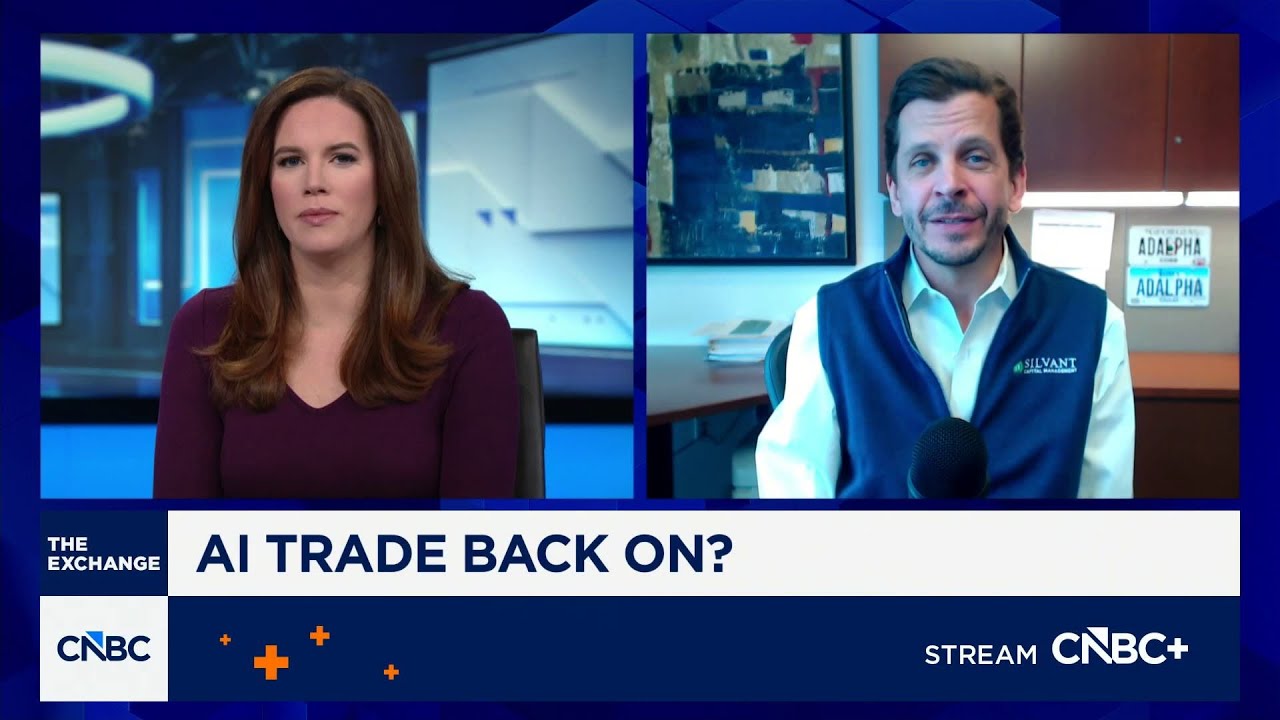
Sansoterra spoke with CNBC about the latest indicators suggesting the AI trade is fundamentally strong, even after periods of short-term investor jitters. He highlighted Micron Technology's recent performance and forward guidance as a potent signal. "Micron's demand and really what they're seeing from a contractual obligation going forward tells you that the fundamentals of the AI trade is very much alive," Sansoterra stated, underscoring the tangible, long-term commitments driving the sector.
Micron's projected north of 40% compound annual growth rate (CAGR) for memory over the next couple of years is, in Sansoterra’s words, “unheard of in memory.” This exceptional forecast signals that the demand for critical AI components is not just strong, but "off the charts." Such aggressive growth in core hardware is a powerful testament to the underlying momentum.
However, the narrative isn't uniform across all players. Sansoterra drew a clear distinction regarding how companies fund their expansion. He explained that Oracle, despite its proprietary enterprise data and long-term potential in AI, has faced market skepticism due to its reliance on debt for capital expenditures (CAPEX). "We are being reminded that free cash flow is the most important way to fund CAPEX," Sansoterra noted, highlighting a key differentiator for investors. This insight suggests that while demand exists, the market is becoming highly selective, rewarding financial prudence and self-sufficiency.
This creates a "tale of two cities" within the AI investment sphere. On one side are the hyperscalers and established tech giants, companies like Alphabet (Google), Amazon, Microsoft, and Nvidia, which possess substantial free cash flow. These entities are funding 80-90% of their escalating CAPEX requirements from their operational cash flows, rather than taking on new debt. "It makes perfect sense that those guys would continue to see massive demand. They've got the capital to pay for it and the growth continues," Sansoterra affirmed, explaining why these players are considered the "winners" in the current environment. Their ability to internally finance aggressive AI investments insulates them from the rising cost of capital and market apprehension around debt.
Conversely, smaller, faster-growing companies at the "fringes" of the AI ecosystem, which also need to increase CAPEX aggressively, often have to tap into debt markets. While their growth prospects might be compelling, the market is less willing to pay for this "incremental risk," as Sansoterra termed it. The implication for founders and VCs is clear: while innovation is paramount, a robust balance sheet and a path to funding growth without excessive leverage are becoming critical determinants of investor confidence and valuation. This isn't to say smaller players cannot succeed, but their funding strategies will face heightened scrutiny and potentially lower valuations compared to their cash-rich counterparts.
The enduring strength of the AI trade into 2026 and beyond is thus contingent on more than just technological advancement or demand for services. It is deeply intertwined with financial resilience and strategic capital allocation. The market is signaling a preference for established leaders who can self-fund their immense AI ambitions, suggesting a period of potential consolidation or increased pressure on those less financially robust.




