

Terence Tao: AI is Reducing Cognitive Friction in Math

Mathematician Terence Tao discusses how AI is reducing 'cognitive friction' in mathematics, enabling faster research and broader collaboration.

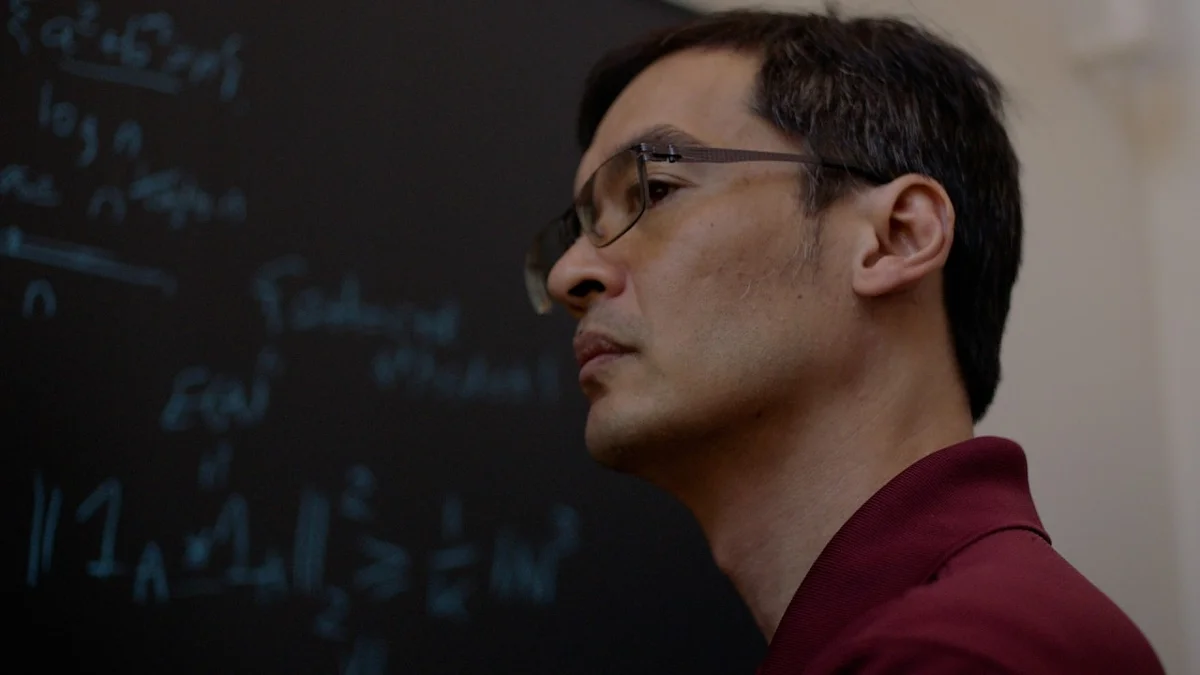
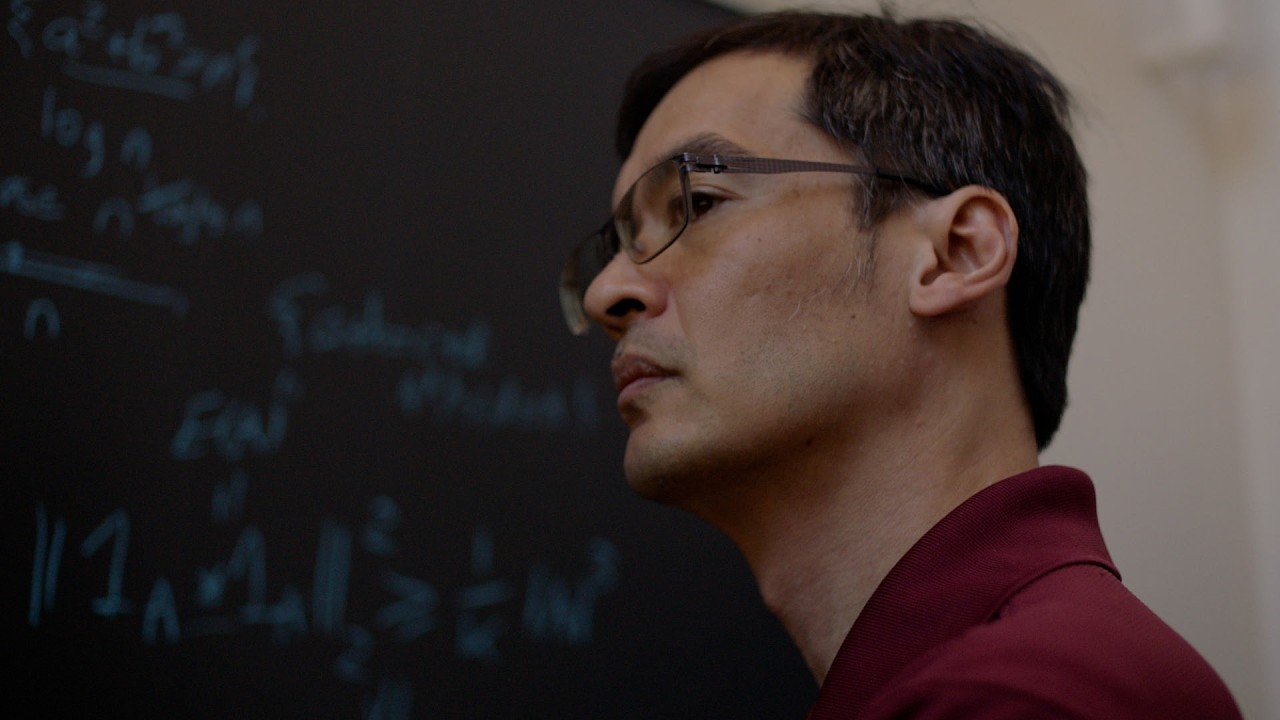
Terence Tao standing in front of a blackboard filled with mathematical equations.
OpenAI Youtube
Visual TL;DR
AI Accelerating MathDriver
rapid improvement of AI enabling mathematicians to move beyond manual computation
From the articleIn a recent discussion, Tao highlighted the accelerating pace of AI development and its growing impact on research, collaboration, and the very nature of intellectual work.
Terence Tao's VisionCore
renowned mathematician exploring AI's potential in mathematics research
From the articleRenowned mathematician Terence Tao, Director of Special Projects at IPAM, the Institute for Pure and Applied Mathematics, is sharing his perspective on how artificial intelligence is fundamentally reshaping the field of mathematics.
Reducing Cognitive FrictionContext
From the article 2 mentionsThis shift, he believes, can significantly reduce what he terms 'cognitive friction', the mental effort required for routine tasks that can hinder deeper conceptual exploration.
AI as CollaboratorEffect
AI enabling mathematicians to move beyond limitations of manual tasks
Broader ImpactOutcome
reducing friction enables wider participation and understanding in mathematics
From the article 2 mentionsMark Chen, Chief Research Officer at OpenAI, echoed this sentiment, stating that the organization is focused on being at the 'frontier in terms of automating science, the economy and ourselves.' This points to a broader vision where AI is not just a tool for individual researchers but a force for transforming entire scientific disciplines.
Faster ResearchEffect
AI allows mathematicians to focus on deeper conceptual exploration
From the article 4 mentionsThis partnership extends to research, where AI can search through vast amounts of scientific literature far more accurately and effectively than was previously possible.
Broader CollaborationOutcome
AI facilitates wider sharing and understanding of mathematical ideas
From the article 3 mentionsThe collaboration between humans and AI in mathematics is becoming increasingly sophisticated.

Contents(4)

Renowned mathematician Terence Tao, Director of Special Projects at IPAM, the Institute for Pure and Applied Mathematics, is sharing his perspective on how artificial intelligence is fundamentally reshaping the field of mathematics. In a recent discussion, Tao highlighted the accelerating pace of AI development and its growing impact on research, collaboration, and the very nature of intellectual work.

StartupHub data

Companies working on this

Profiles of the companies named in this story, with funding and a one-liner from our database.

OpenAI
Private / $100B+ est
OpenAI is an AI research and deployment company dedicated to ensuring that artificial general intelligence benefits all of humanity.

Terence Tao's Vision for AI in Mathematics

Tao, a celebrated mathematician known for his work across many areas of mathematics, is at the forefront of exploring AI's potential. He notes that AI's rapid improvement is enabling mathematicians to move beyond the limitations of manual computation and literature review. This shift, he believes, can significantly reduce what he terms 'cognitive friction', the mental effort required for routine tasks that can hinder deeper conceptual exploration.

The full discussion can be found on OpenAI Youtube's YouTube channel.

Terence Tao on How AI Is Changing Mathematics - OpenAI Youtube
Terence Tao on How AI Is Changing Mathematics, from OpenAI Youtube

He illustrates this by explaining how AI tools can now handle complex computations that researchers might previously have avoided. This allows mathematicians to 'experiment' and 'try crazier things,' pushing the boundaries of theoretical inquiry. The ability to offload these burdensome tasks to AI means that human researchers can focus more on the creative and conceptual aspects of mathematics.

AI as a Collaborator and Tool

The collaboration between humans and AI in mathematics is becoming increasingly sophisticated. Tao suggests a workflow where initial ideas are developed on a blackboard, and then AI tools are employed to complete any necessary computations. This partnership extends to research, where AI can search through vast amounts of scientific literature far more accurately and effectively than was previously possible.
Mark Chen, Chief Research Officer at OpenAI, echoed this sentiment, stating that the organization is focused on being at the 'frontier in terms of automating science, the economy and ourselves.' This points to a broader vision where AI is not just a tool for individual researchers but a force for transforming entire scientific disciplines.

Reducing Cognitive Friction for Broader Impact

Tao articulates a shift in focus from individual accolades to collective progress. He stated, 'We care less about winning a Nobel Prize or a Fields Medal and more about enabling 100 mathematicians out there to do that for themselves.' This perspective underscores the democratizing power of AI in research, aiming to empower a wider community of mathematicians.

He elaborated on the historical context, suggesting that for a long time, 'we lived in the world of cognitive friction until very recently, where every task required us to use our brain.' This was perceived as the inherent cost of intellectual work. However, with the advent of AI and other advanced technologies, this friction can be reduced to near zero. Tao envisions a future where, as AI usage becomes commonplace, researchers will share not just their final results but also the diverse paths and methodologies they used to reach them, recognizing this as valuable information in itself.

This evolution, Tao believes, allows for a more efficient and collaborative approach to mathematical discovery, offering the 'best of both worlds' where human intuition and AI's computational power converge.

© 2026 StartupHub.ai. All rights reserved. You may not republish this article in full without a license. Search engines and AI research tools may crawl and summarize for reference. Bulk reproduction or model training requires a license. See our terms.
Daniel Singer

Written by

Daniel Singer

Editor, StartupHub.ai

Daniel Singer is the editor of StartupHub.ai, a technology expert and thought leader on AI and its applications across sectors, from fintech and healthcare to developer tooling and consumer software. He writes and tests the tools covered here thoroughly and regularly, and built StartupHub.ai to give founders, operators and buyers a clearer read on what they are actually being sold.

More from Daniel Singer