

OpenAI Offers Free Frontier Models to 100,000 Researchers

OpenAI is granting free access to its frontier AI models for 100,000 academic researchers, aiming to accelerate scientific discovery and foster creativity.

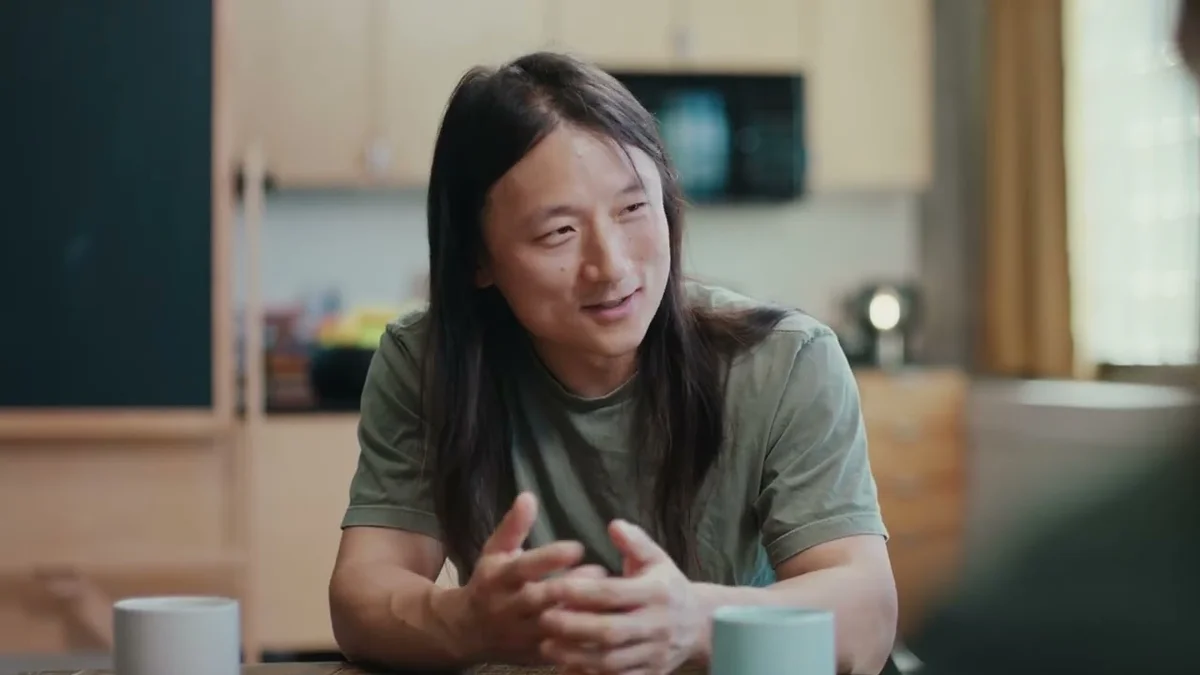
Four scientists gathered around a round table in a bright room, discussing AI's role in research.
OpenAI Youtube
Visual TL;DR
OpenAI offers free AICore
From the articleOpenAI has announced a significant initiative to provide free access to its frontier AI models for 100,000 academic researchers across the globe.
Democratize AI accessDriver
From the article 2 mentionsThis move aims to democratize advanced AI capabilities and accelerate scientific discovery by empowering researchers with powerful computational tools.
Accelerate discoveryEffect
aiming to accelerate scientific discovery and foster creativity
From the article 2 mentionsThis move aims to democratize advanced AI capabilities and accelerate scientific discovery by empowering researchers with powerful computational tools.
Scientists embrace AIContext
researchers like Xin Yin integrating AI into their work
From the article 5 mentionsThe video features several scientists who are already integrating AI into their work.
Break boundariesEffect
AI helps erase boundaries between subfields of physics
From the articleXin Yin, a theoretical physicist and cosmologist, describes his work in understanding the universe and how AI is helping to "erase the boundaries between sub fields of physics." He uses AI not just to improve existing methods but to explore entirely new avenues of research.
New research avenuesEffect
From the article 3 mentionsXin Yin, a theoretical physicist and cosmologist, describes his work in understanding the universe and how AI is helping to "erase the boundaries between sub fields of physics." He uses AI not just to improve existing methods but to explore entirely new avenues of research.
Predict cosmic signaturesEffect
From the articleEva Silverstein, a cosmologist and AI researcher, shares her experience using AI to predict signatures in the cosmic microwave background.
Scientific breakthroughsOutcome
AI acts as a catalyst for significant scientific breakthroughs
From the article 6 mentionsNathaniel Craig, a theoretical particle physicist, points out that scientific breakthroughs often stem from making the right assumptions rather than solving intractable problems.
Global progressOutcome
advancing scientific progress across the globe with advanced AI
From the articleCraig believes AI acts as a "huge force multiplier" for experimentalists, expanding the scope of their insights and potentially compressing decades of progress into years.
Contents(3)

OpenAI has announced a significant initiative to provide free access to its frontier AI models for 100,000 academic researchers across the globe. This move aims to democratize advanced AI capabilities and accelerate scientific discovery by empowering researchers with powerful computational tools.

Scientists Embrace AI for Research Acceleration

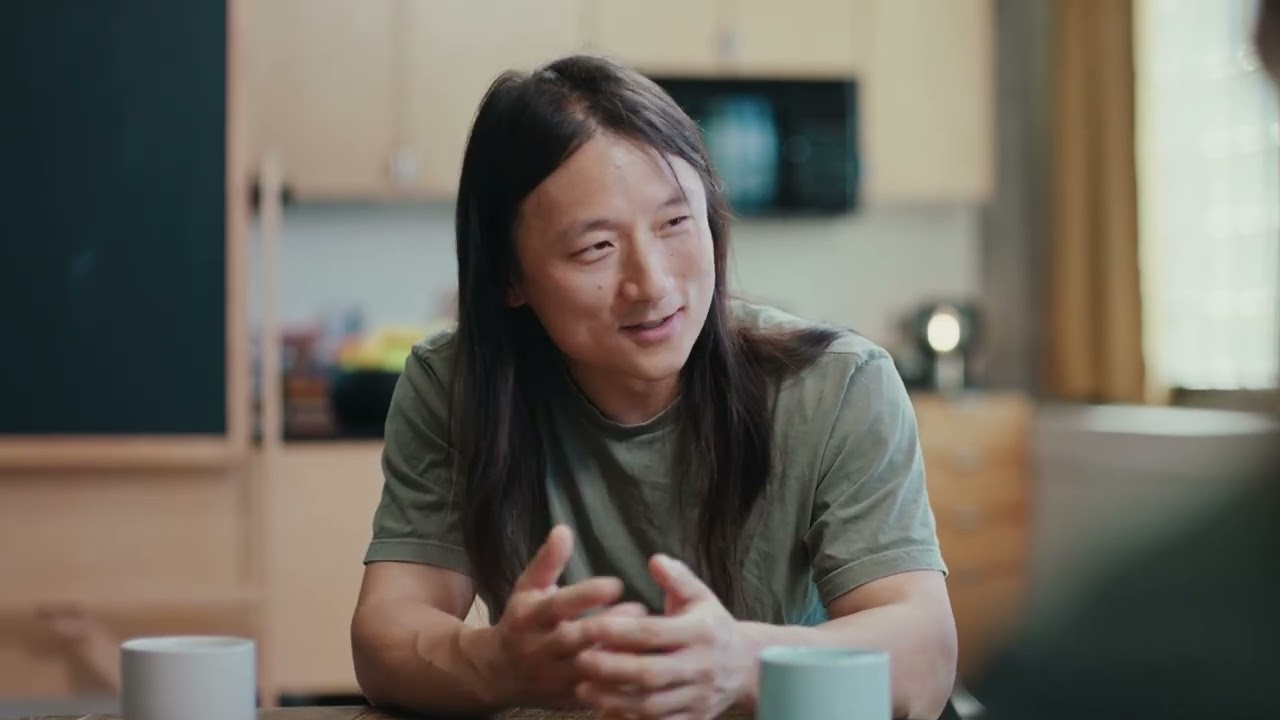
The video features several scientists who are already integrating AI into their work. Xin Yin, a theoretical physicist and cosmologist, describes his work in understanding the universe and how AI is helping to "erase the boundaries between sub fields of physics." He uses AI not just to improve existing methods but to explore entirely new avenues of research.

The full discussion can be found on OpenAI Youtube's YouTube channel.

We're giving 100,000 academic researchers free access to our frontier models - OpenAI Youtube
We're giving 100,000 academic researchers free access to our frontier models, from OpenAI Youtube

Eva Silverstein, a cosmologist and AI researcher, shares her experience using AI to predict signatures in the cosmic microwave background. She highlights how an AI model's analogy to photonics research helped her team overcome a significant problem.

Stirling Churchman, a geneticist, details how she uses AI primarily for quickly generating code to analyze data and test hypotheses. She recounts an instance where feeding her paper into an AI model resulted in histograms for every tissue type within minutes, revealing compelling insights about a specific metric in brain tissue. She emphasizes the excitement of making discoveries through plain language interaction with computers.

AI as a Catalyst for Scientific Breakthroughs

Nathaniel Craig, a theoretical particle physicist, points out that scientific breakthroughs often stem from making the right assumptions rather than solving intractable problems. He notes that AI models are now capable of generating novel conjectures that scientists might not have considered, complete with numerical tests to validate them. Craig believes AI acts as a "huge force multiplier" for experimentalists, expanding the scope of their insights and potentially compressing decades of progress into years.

The scientists express a shared sentiment that AI tools are crucial for the advancement of science. They envision AI agents assisting researchers, allowing them more time for the core aspects of their work, such as scientific discovery, reading papers, and mentoring students. The consensus is that removing the energy barrier to using these tools will be transformative for the scientific community.

Democratizing Discovery and Accelerating Progress

The initiative is seen as a way to ensure that scientists anywhere in the world have the opportunity to lead the next major breakthrough. The impact of widely distributing these AI capabilities is anticipated to be enormous, with researchers expected to find creative and unforeseen applications for the technology.

The overarching theme is that AI can reignite the innate curiosity that drives scientific endeavor. By automating tedious tasks and providing new avenues for exploration, AI allows scientists to focus on the creative and insightful aspects of their work, potentially leading to advancements that were once thought to be decades or even a lifetime away.

© 2026 StartupHub.ai. All rights reserved. You may not republish this article in full without a license. Search engines and AI research tools may crawl and summarize for reference. Bulk reproduction or model training requires a license. See our terms.
Daniel Singer

Written by

Daniel Singer

Editor, StartupHub.ai

Daniel Singer is the editor of StartupHub.ai, a technology expert and thought leader on AI and its applications across sectors, from fintech and healthcare to developer tooling and consumer software. He writes and tests the tools covered here thoroughly and regularly, and built StartupHub.ai to give founders, operators and buyers a clearer read on what they are actually being sold.