

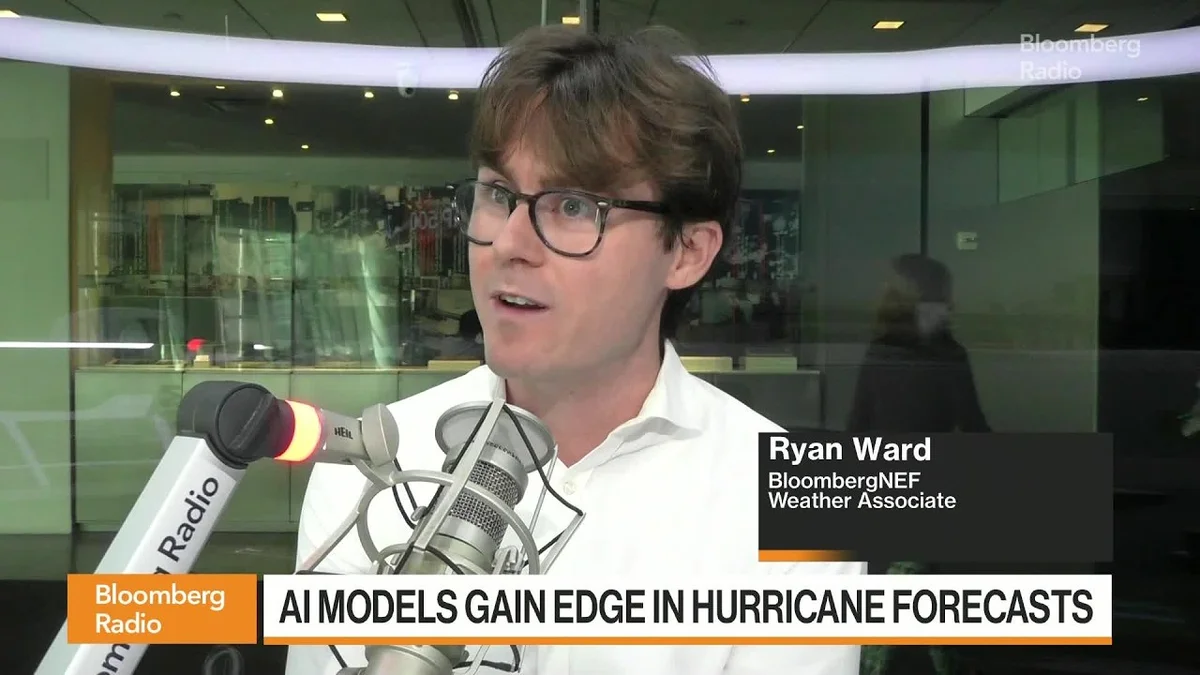
AI Models Storms with Unprecedented Accuracy

AI models are achieving surprising accuracy in predicting mega storms, outperforming traditional methods and offering crucial insights into future weather patterns.

Split screen showing two men discussing AI and weather, with a hurricane map graphic.
Bloomberg Podcast
Visual TL;DR
AI in WeatherDriver
AI models process massive datasets, identifying intricate patterns
From the article 7 mentionsThis development is crucial for better preparedness and response to extreme weather events.
Storm Modeling BreakthroughsCore
AI models in 2023 outperformed established hurricane forecasting models
From the articleA recent discussion highlighted how AI is revolutionizing the modeling of mega storms, achieving accuracy levels that surpass traditional methods.
Data & SophisticationContext
Impact of data and AI sophistication on model performance
From the article 5 mentionsThis advancement is a testament to the machine learning techniques that allow AI to learn from historical data and adapt to new conditions.
Unprecedented AccuracyOutcome
Achieving surprising accuracy in predicting mega storms
From the article 5 mentionsUnlike traditional models that rely on decades of historical data, AI can identify subtle correlations and predict outcomes for events that may be unprecedented in human records.
AI vs TraditionalContext
AI models surpass traditional methods in storm prediction
From the article 5 mentionsThese AI systems were not only more accurate in predicting the intensity and path of storms but also in forecasting aspects that traditional models struggled with.
Hurricane Season ForecastsEffect
Crucial insights into future hurricane season patterns
From the article 2 mentionsThe conversation touched upon the current hurricane season, noting that while forecasts suggest a potentially less active season with fewer storms, the predictive capabilities of AI remain critical.
Future ChallengesContext
Addressing challenges for continued AI advancement in meteorology
From the article 2 mentionsThe discussion also highlighted the challenges and limitations of current AI weather models.
Contents(7)

Artificial intelligence is rapidly advancing beyond typical consumer applications, now demonstrating remarkable capabilities in complex scientific domains like meteorology. A recent discussion highlighted how AI is revolutionizing the modeling of mega storms, achieving accuracy levels that surpass traditional methods. This development is crucial for better preparedness and response to extreme weather events.

AI's Role in Weather Forecasting

The integration of AI into weather forecasting is proving to be a significant leap forward. These advanced models can process and analyze massive datasets, identifying intricate patterns that human forecasters might miss. This enhanced predictive power is particularly vital for understanding and preparing for severe weather phenomena such as hurricanes.

Breakthroughs in Storm Modeling

The discussion revealed that AI models deployed in 2023 demonstrated superior performance compared to established hurricane forecasting models. These AI systems were not only more accurate in predicting the intensity and path of storms but also in forecasting aspects that traditional models struggled with. This advancement is a testament to the machine learning techniques that allow AI to learn from historical data and adapt to new conditions.

The full discussion can be found on Bloomberg Podcast's YouTube channel.

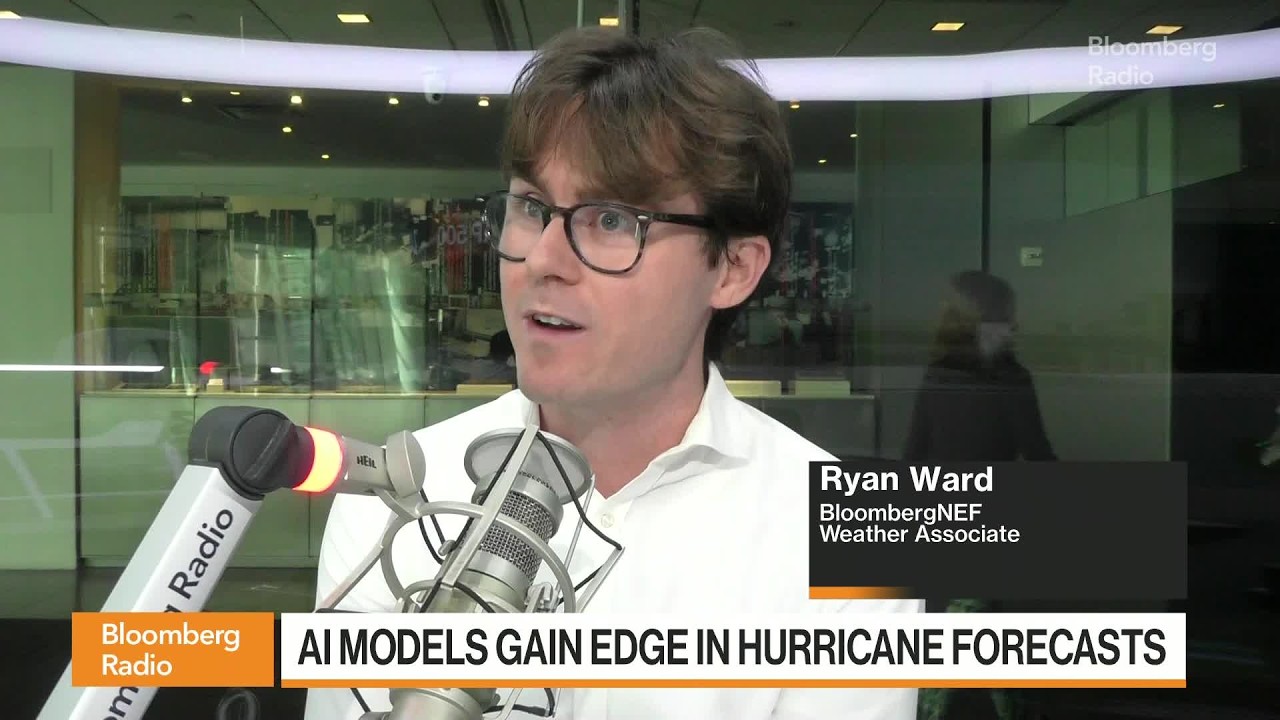
AI Is Modeling Mega Storms With Surprising Accuracy - Bloomberg Podcast
AI Is Modeling Mega Storms With Surprising Accuracy, from Bloomberg Podcast

The Impact of Data and AI Sophistication

The surprising accuracy of these AI models is largely due to the sheer volume and complexity of data they can process. Unlike traditional models that rely on decades of historical data, AI can identify subtle correlations and predict outcomes for events that may be unprecedented in human records. This is particularly relevant in the context of climate change, where weather patterns are becoming more extreme and unpredictable.

Forecasting the Hurricane Season

The conversation touched upon the current hurricane season, noting that while forecasts suggest a potentially less active season with fewer storms, the predictive capabilities of AI remain critical. The models are capable of identifying subtle shifts in wind patterns and ocean temperatures that influence storm development. For instance, the influence of El Niño on the Atlantic hurricane season was discussed, with AI models contributing to a forecast of fewer storms than average.

Comparing AI and Traditional Models

A key point of discussion was the performance of AI models against traditional meteorological benchmarks. Ryan Ward from BloombergNEF noted that a particular AI model, developed by Google's DeepMind, outperformed all existing hurricane models in terms of accuracy for intensity and path prediction in the previous year. This is significant because these AI models are relatively new, while traditional models have been refined over many decades.

Addressing Future Challenges

The discussion also highlighted the challenges and limitations of current AI weather models. While they excel at predicting events similar to those in their training data, there is a concern that they may struggle with entirely novel or unprecedented extreme weather events. The increasing frequency and intensity of storms due to climate change pose a particular challenge, requiring continuous refinement and validation of AI models.

Regional Differences in Forecasting

The conversation also explored how AI models account for regional variations in weather phenomena, such as the difference between Atlantic hurricanes and Pacific typhoons. While the underlying AI principles are similar, the specific data and environmental factors for each region can lead to different outcomes. Understanding these nuances is crucial for accurate and localized forecasting.

© 2026 StartupHub.ai. All rights reserved. You may not republish this article in full without a license. Search engines and AI research tools may crawl and summarize for reference. Bulk reproduction or model training requires a license. See our terms.
Daniel Singer

Written by

Daniel Singer

Editor, StartupHub.ai

Daniel Singer is the editor of StartupHub.ai, a technology expert and thought leader on AI and its applications across sectors, from fintech and healthcare to developer tooling and consumer software. He writes and tests the tools covered here thoroughly and regularly, and built StartupHub.ai to give founders, operators and buyers a clearer read on what they are actually being sold.