

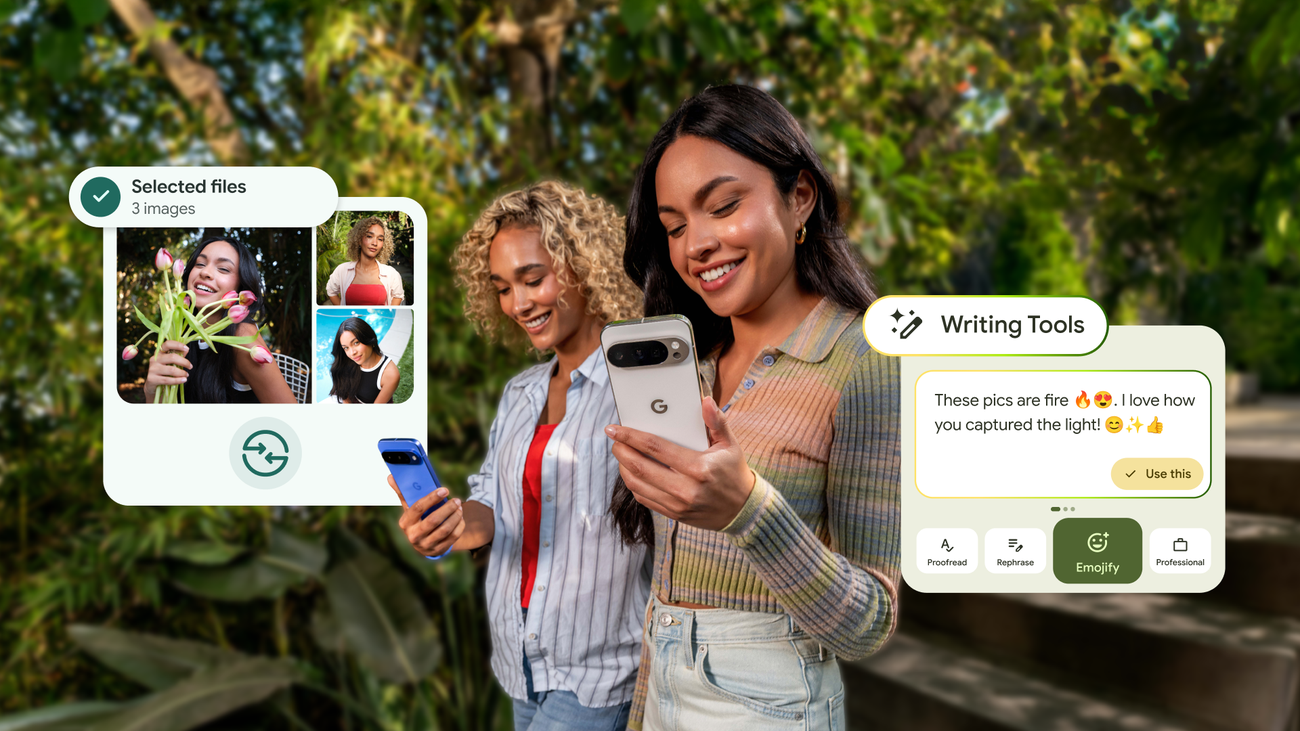
Google is quietly embedding Android generative AI deeper into its mobile ecosystem, moving beyond standalone apps to enhance everyday tasks. From smarter writing to personalized emoji, these updates signal a strategic shift to make AI an invisible, indispensable assistant. According to the announcement(https://blog.google/products/android/new-android-features-february-2024/)
Google is making its move. While the tech world has been fixated on standalone AI chatbots and flashy image generators, Google is taking a more insidious, and arguably more impactful, approach: baking Android generative AI directly into the fabric of its mobile operating system. The latest suite of updates, quietly rolled out, isn't about a single, groundbreaking AI app, but rather a series of subtle enhancements designed to make your phone feel smarter, more intuitive, and genuinely helpful.
This isn't about grand pronouncements; it's about integration. The focus is on practical, everyday applications that leverage generative AI to streamline communication and inject a dose of personalized creativity. Think less "AI overlord" and more "AI co-pilot" for your daily digital grind. The strategy here is clear: make AI so seamless, so integrated, that users benefit without necessarily even realizing they're interacting with a sophisticated model.
The most significant leap comes in communication. According to the announcement, Android is getting smarter writing tools, designed to help users "write smarter." This isn't just predictive text; it's about context-aware suggestions, rephrasing capabilities, and potentially even drafting entire messages based on a few prompts. For anyone who's ever struggled with crafting the perfect email on a small screen or wanted to quickly summarize a long text, this is a game-changer. It moves beyond basic grammar checks to genuinely assist in content creation, a core promise of generative AI.
Then there's the "share quicker" aspect. While details are still emerging, this likely points to AI-powered summarization features for articles, web pages, or even long message threads, allowing users to distill information rapidly before sharing. In an age of information overload, the ability to quickly grasp the essence of content without reading every word is a powerful productivity boost. It’s Google’s answer to the TL;DR problem, powered by large language models.